
Sketch
Now that you have three vision boards, it is time to choose the one you like the best. Once you have made that decision, then you can begin working on your landscape. Click through the tabs to see the steps of this project.
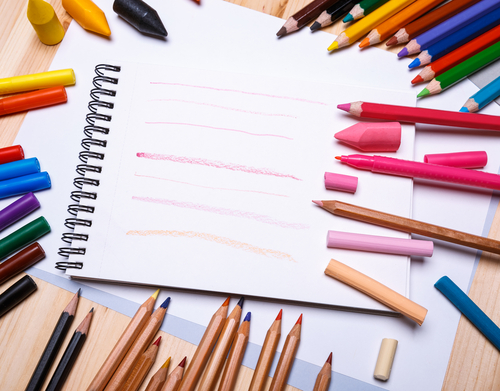
Choose your medium and size.
The first step is to choose the medium you want to use and the size of your artwork. Do you want to create a larger piece? Then, you are going to want to use soft pastels, oil pastels, or charcoal. Are you more concerned with creating a smaller, more detailed artwork? Then choosing colored pencils or ink/marker would make more sense. Your artwork must be at least 9" x12" (the size of your sketchbook) and can be larger. It is OK to mix media that work well together (charcoal/soft pastel, pen/colored pencil, etc.).
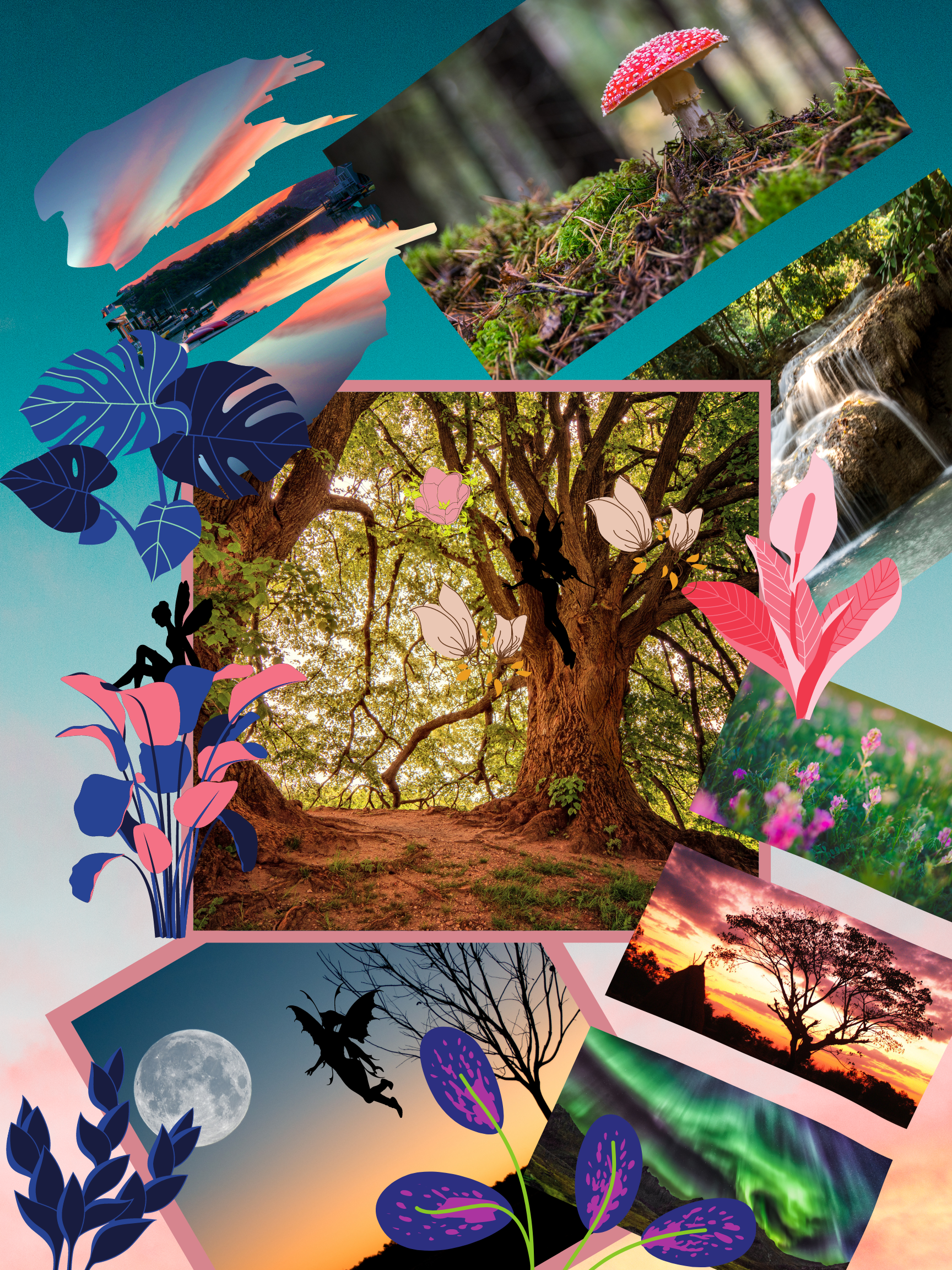
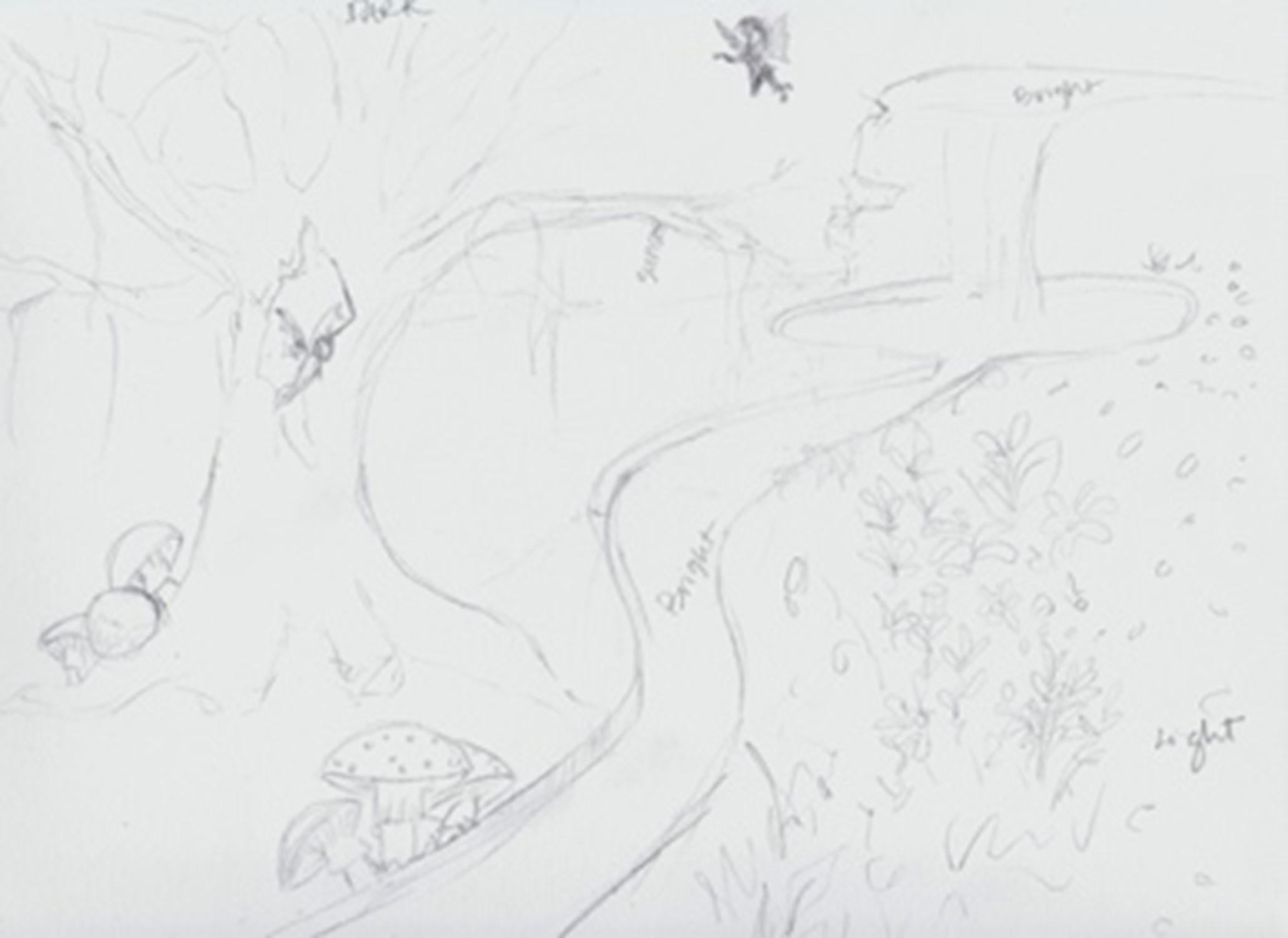
Sketch a layout.
Take 5-10 minutes to create a quick pencil sketch of what you want your drawing to look like. Don't worry about details; just think about where you want different things placed. Remember the Rule of Thirds, the Rule of Odds, framing, and perspective when planning out your composition. Also, consider the elements and principles of art during your composition planning. It's a good idea to leave yourself notes in your sketch, such as the color palette you want to have for each part of the composition or how many different objects you want to have in your final artwork.
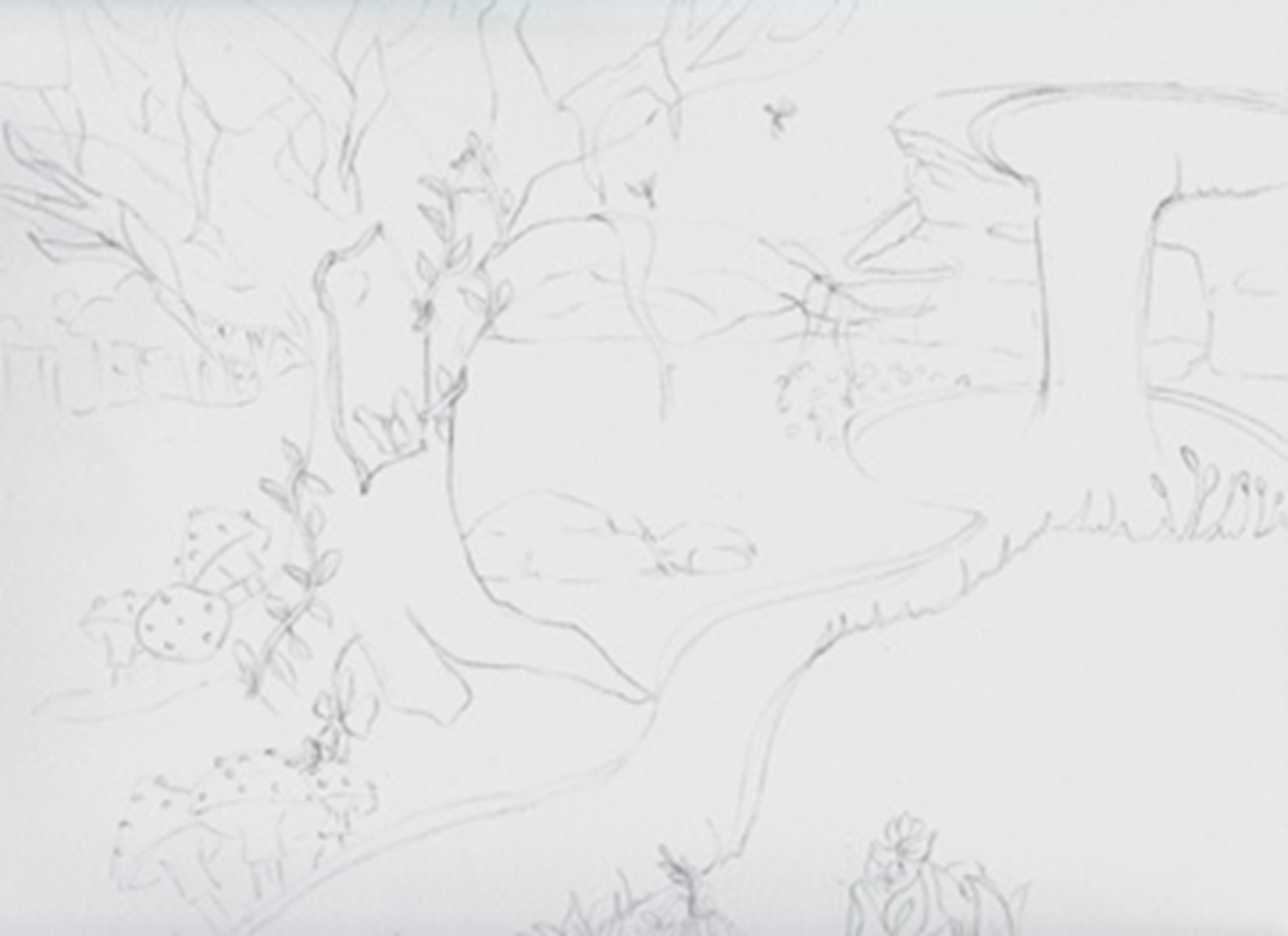
Lightly sketch your composition.
Using an HB-4H pencil, lightly sketch your composition on your chosen paper (sketchbook or pastel paper). Make sure to include small details but do NOT shade. Shading with graphite can muddy the colors of other media that you want to use.
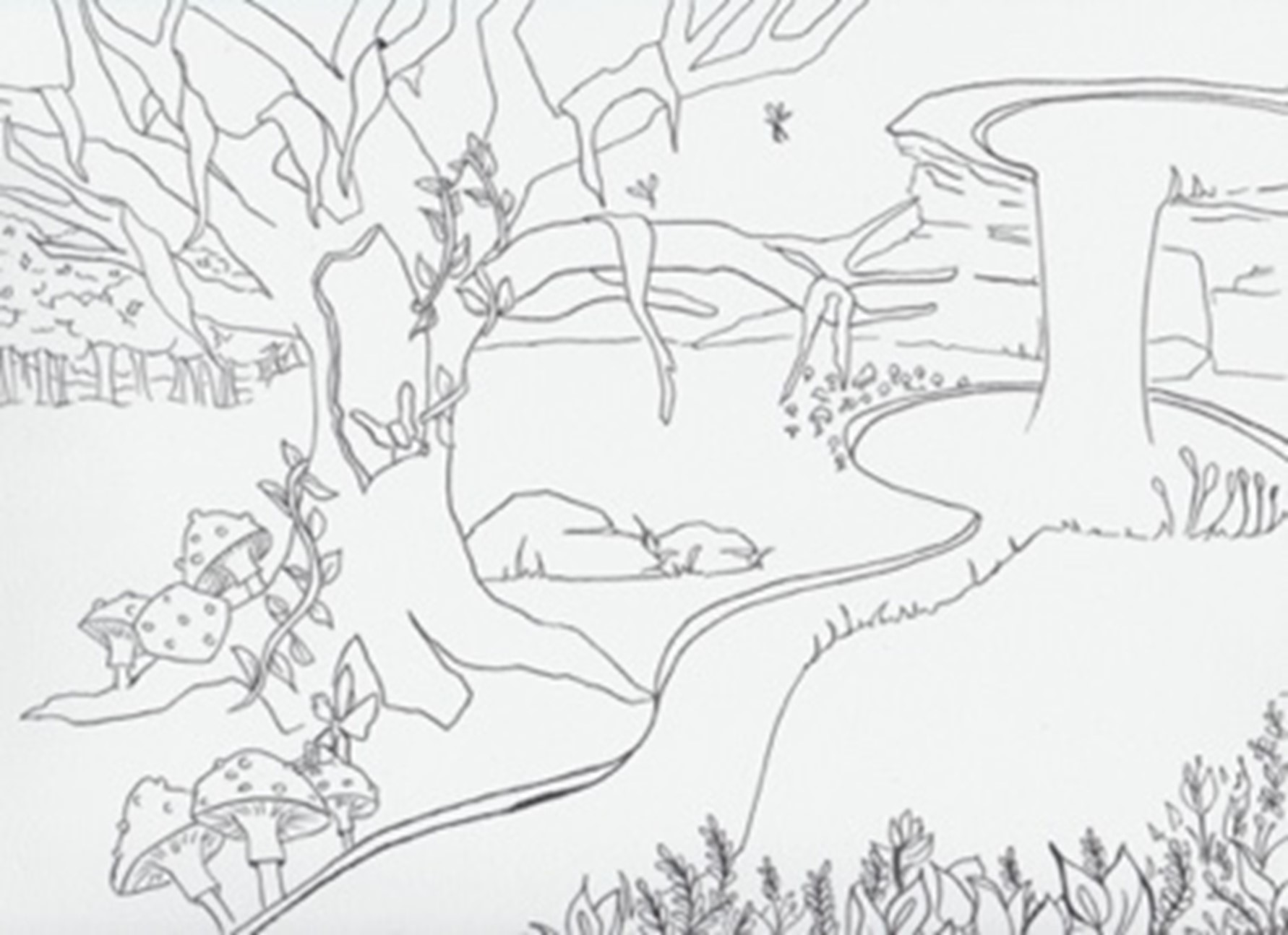
Lay in base colors or create an initial outline.
If you are working with soft pastels, oil pastels, or colored pencils, begin by laying down a base layer of color. This should be a light color that is fairly well blended with a temperature that matches your overall color scheme. For example, if you are planning on using mostly warm colors, use yellow; if cool colors, then use a light blue or green. Do not put down color in areas that you want white!
If you are using ink or marker, now is a good time to lay down your initial outline. If you want solid outlines, use a black pen (like Micron or Sharpie) to create your outline. If you want a more subtle outline, use a colored pen that matches the color you plan to use for the object.
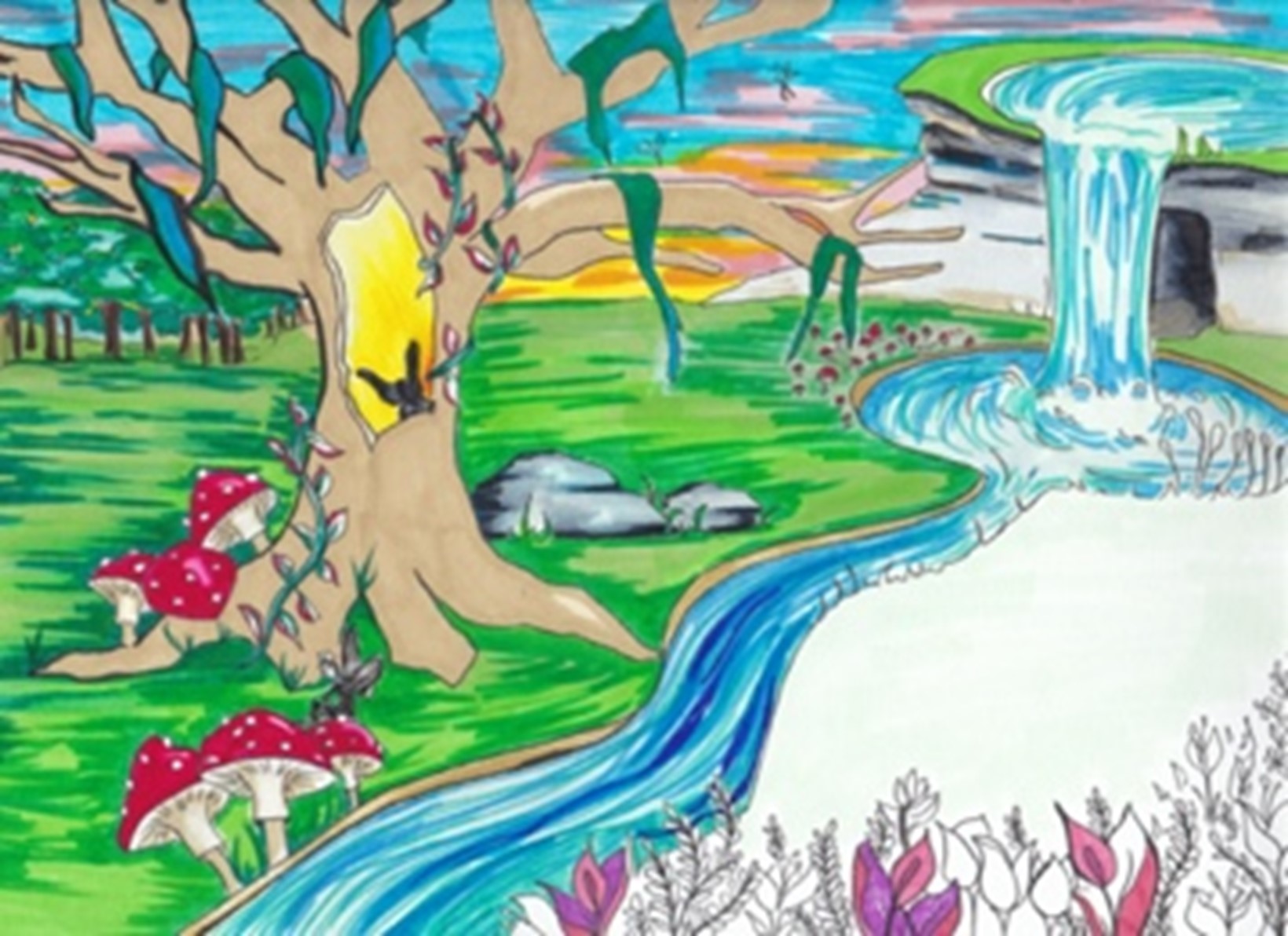
Work on your drawing.
Work on your drawing by adding layers of color or value. Shade using the method best suited to your chosen medium (blending, hatching, etc.). Work carefully, and don't be afraid to erase if possible. Make sure that all your initial drawing lines are either covered or erased and that all your shadows are created by the same source of light.
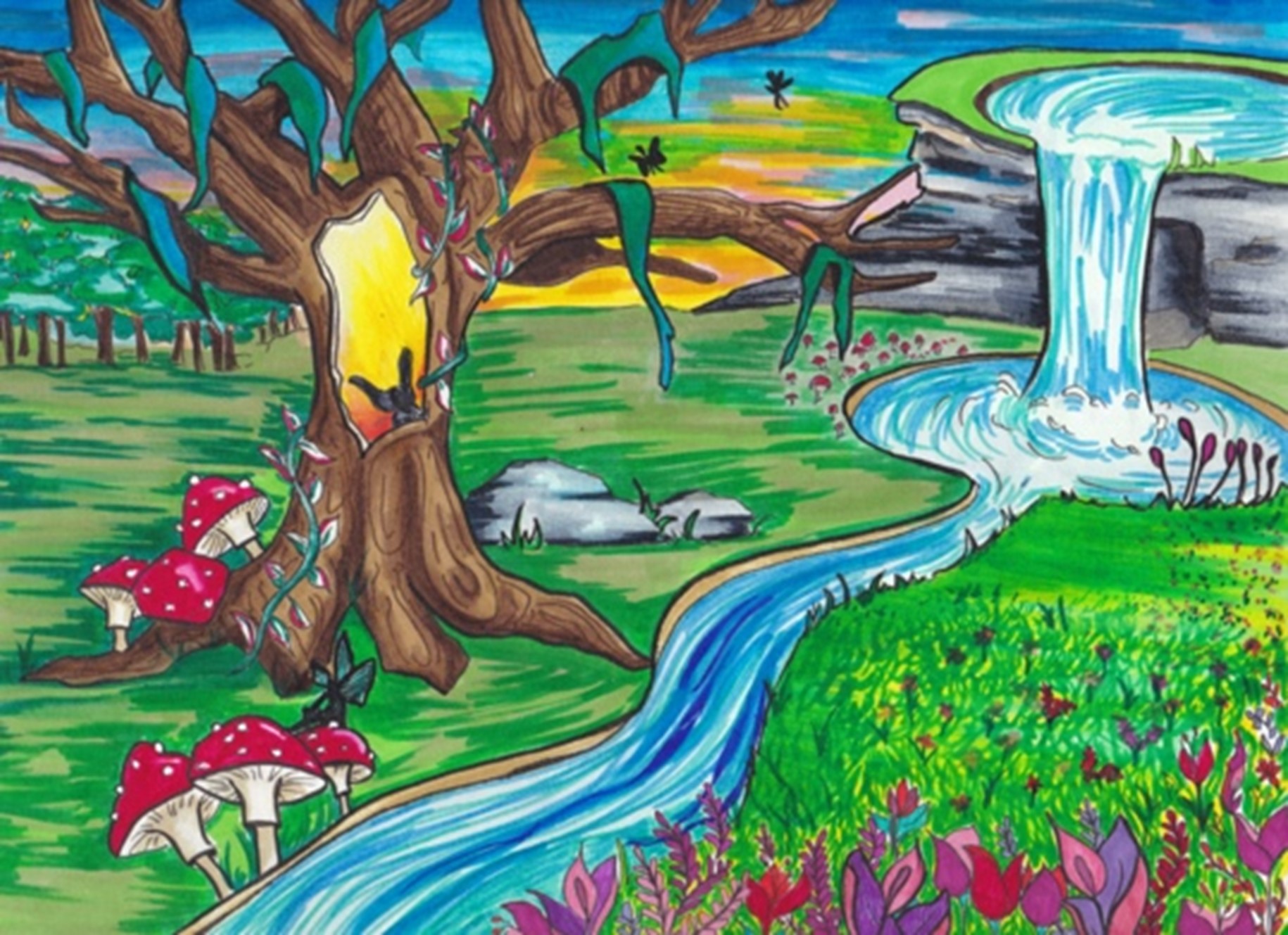
Add details and finish.
Finish your drawing by adding in details and adjusting any shading or colors as necessary. If you used soft pastels or charcoal, make sure to spray your artwork to keep it from smudging.
After you have finished your artwork, write an artist statement that answers the following questions:
- What is the main inspiration for your imaginary landscape?
- What mood were you trying to create? Were you successful? Why or why not?
- What are the strengths of this artwork?
- What could be improved?
- What was your biggest struggle while creating this artwork?
When you have finished your artist statement (using complete sentences in paragraph form), submit it along with an image of your artwork to your teacher.
Use the following rubric to determine if you are meeting the expectations of this assignment:
| Advanced | Proficient | Needs Work |
|---|---|---|
| Composition | ||
| The composition is original and is balanced and well-thought-out. Artist creates a complex and interesting composition that reflects their personal aesthetic and creates a mood and/or tells a story. Artist has obviously considered compositional aspects such as the Rule of Thirds, the Rule of Odds, perspective, and framing. |
The composition is original and is balanced and well-thought-out. Artist creates a simple composition that creates a mood or tells a story. Artist does not explore new perspectives. Artist has shown some consideration for compositional aspects. |
The composition is either not original or is not balanced. Artist creates a simple composition, but the mood or story is not easy to decipher for the viewer. Artist has shown that they have not considered compositional aspects. |
| Use of Chosen Medium | ||
| Artist uses medium in an advanced manner with realistic gradients and smooth blending (where necessary; smooth blending is not a consideration for some oil pastel works or markers). There are no erasure lines, and colors/values are layered to create depth. Artist uses a broad value range and includes very light lights (white) and very dark darks (almost black). Shadows correspond with the light source. The artist's choice of medium enhances their artwork. They chose the best medium based on their desired outcome. |
Artist uses medium proficiently with realistic gradients. There are very few erasure lines, and the gradients transition relatively smoothly, but some areas may need to be blended better. A few erasure lines are visible. The artwork has a range of values but may not have any areas of stark contrast. Shadows correspond with the light source. The artist chose the best medium for their artwork based on their desired outcomes. |
Artist does not use the medium proficiently. There are obvious erasure lines and little to no blending in the artwork. The artwork does not include a wide range of values, or the shadows do not correspond with the light source. The artist's choice of medium does not correspond well with their subject. |
| Use of Elements and Principles | ||
| Artist utilized the elements and principles with a high level of skill that adds visual interest and creativity to their artwork. | Artist utilized the elements and principles in a proficient manner. | Artist did not use the elements and principles correctly. |
| Creative Problem Solving | ||
| A high level of creative problem-solving skills is present in the artwork. The artist goes above and beyond the requirements of the assignment. | Very little creative problem-solving is present. All requirements are met, but the artist does not go above and beyond. | No creative problem-solving skills are present. |
| Completion | ||
| The artwork is completed with a high level of detail and value ranges. | The artwork is complete, but there is little detail and/or minimal value ranges present. | The artwork is incomplete or rushed. There is very little detail in the artwork. |
