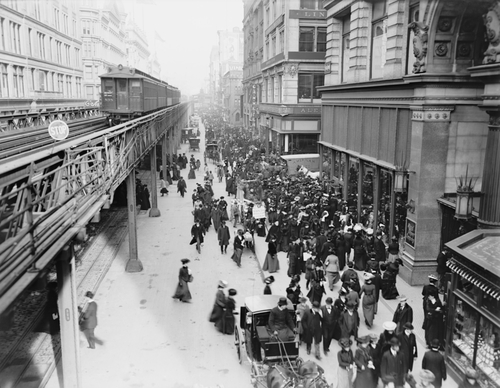
The Gilded Age saw American cities growing at an incredible rate. With the invention of the telephone, electricity, and the elevator, cities were on the rise. Many, including new immigrants, were moving to the cities in droves in search of cheap housing and job opportunities. With the new influx of Carnegie steel, cities were building huge skyscrapers and subways; in other words, they were beginning to look more like the cities we recognize today.
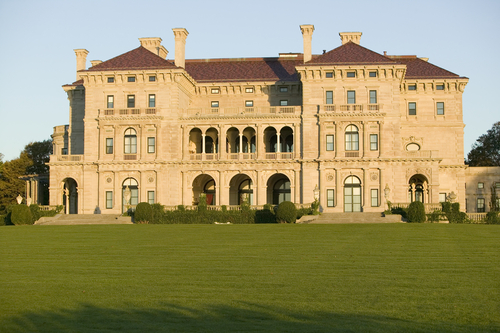
The Breakers, built by Cornelius Vanderbilt of the Gilded Age, in Newport, Rhode Island
In the cities, at the top of the economic and social ladder stood the very rich. The wealthy lived very different lives from most Americans. They built enormous mansions in the cities and huge estates in the country. Some homes, such as those of J.P. Morgan and Henry Clay Frick in New York City, are now museums. In these mansions, the rich lived lives of extreme luxury, throwing enormous parties and dinners. In 1883, Alva and William Kissam Vanderbilt gave a party for more than 1,000 guests at their New York mansion. The party was estimated to have cost $75,000 for food and entertainment, which is equal to about $1.3 million today. Mark Twain and Charles Dudley Warner published a novel in 1873 called The Gilded Age. The name, which refers to something covered with a thin layer of gold, became associated with America of the late 1800s. The Gilded Age suggested both the extravagant wealth of the time and the terrible poverty that lay underneath.
The cities also had a growing middle class. The middle class included the families of professional people such as doctors, lawyers, and ministers. An increasing number of managers and salaried office clerks also became part of the middle class. The middle class enjoyed a comfortable life. Many families moved from cities to the suburbs, residential areas that sprang up outside of city centers because of improvements in transportation. There they lived in houses with hot water, indoor toilets, and, by 1900, electricity. Middle-class families might have one or two servants and the leisure time to enjoy music, art, and literature.
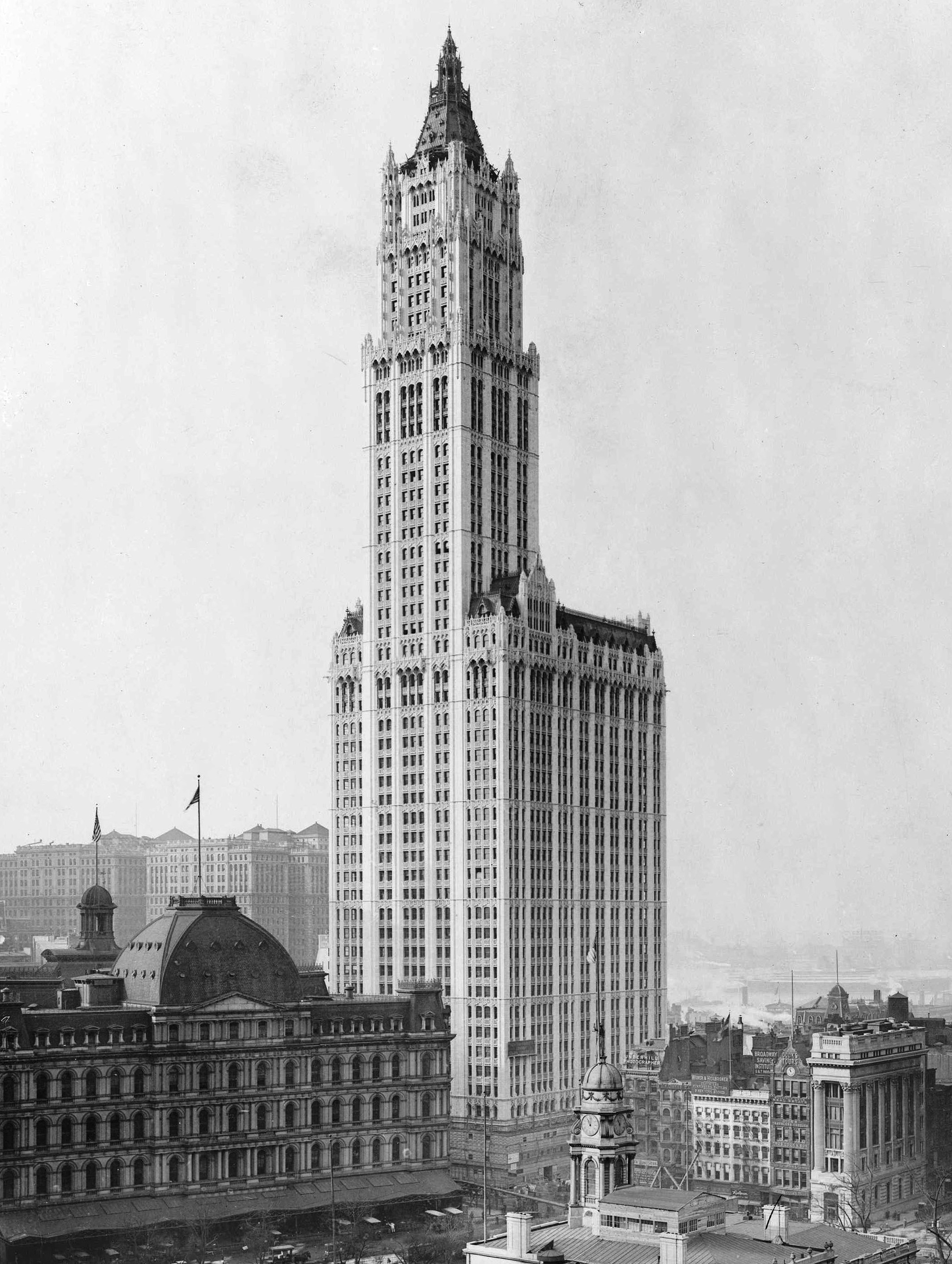
A view of the Woolworth Building and surrounding buildings in New York City in 1913
Copyright by The Pictorial News Co., N.Y. No. NN 98. {{PD-US}}; cropped by Beyond My Ken (talk) 21:01, 27 September 2011 (UTC) / Public domain
Urban growth led to important new developments. In the late 1800s, cities saw the introduction of a new type of building, new kinds of public transportation, and public parks. Because of the limited space in cities, imaginative architects began building upward rather than outward. In the 1860s, architects started to use iron frames to strengthen the walls of buildings. Iron supports, together with the safety elevator that Elisha Otis invented in 1852, made taller buildings possible.
In 1884, William LeBaron Jenney constructed a 10-story office building in Chicago. Supported by an iron-and-steel frame, it was the world’s first skyscraper. Architect Louis Sullivan gave style to the skyscraper. Sullivan and his colleagues changed the face of America’s cities. Soon people built even higher structures. New York’s Woolworth Building, completed in 1913, soared an incredible 55 stories, 792 feet high. People called the building the Cathedral of Commerce.
Some people looked to reshape the urban landscape. A group known as the “City Beautiful” movement believed city dwellers should be able to enjoy the beauties of nature. Frederick Law Olmsted, a leader in this movement, designed New York’s Central Park as well as several parks in Boston. In 1892 and 1893, Chicago hosted a World’s Fair on fairgrounds designed by Olmsted. The Fair revealed that American architecture was dynamic and original. The best architects thoroughly understood European styles and adapted them for modern use. The firm of McKim, Mead, and White used the Italian Renaissance style in its design for the Boston Public Library. Henry Richardson adapted styles from ancient Rome in his design for churches, libraries, and even department stores.

A streetcar in Connecticut
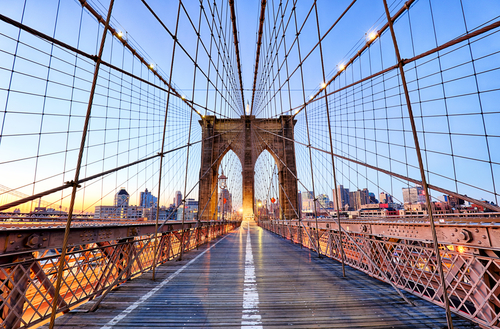
The Brooklyn Bridge in New York City
America’s expanding railroad network fed the growth of the cities. Railroads helped people move to the cities, and they transported the raw materials for industry. Trains carried cattle to Chicago and Kansas City, making these cities great meatpacking centers. Some cities flourished because of nearby resources. Pittsburgh developed rapidly as a center for iron and steel manufacturing because both iron ore and coal, to fuel the industry’s huge furnaces, were found in the area. Seaports, such as New York and San Francisco, developed as American trade with the rest of the world increased. In addition, the immigrant population of these cities provided a large pool of workers who were available for low wages.
As cities grew, people needed new means of transportation. Streetcars, which horses pulled on tracks, provided public transportation at the time. Horses were slow, however, and left piles of manure. In 1873, San Francisco began construction of cable-car lines. A large underground cable powered by a motor at one end of the rail line moved passengers along. In 1888, Richmond, Virginia, pioneered the use of the trolley car, a motorized train that was powered by electricity supplied through overhead cables. By the turn of the century, the trolley was everywhere. In 1897, Boston opened the nation’s first subway, or underground railway. In 1904, New York City opened the first section of what was to become the largest subway system in the world.
Another improvement that helped transportation was the paving of streets. During most of the 1800s, city streets remained poorly paved. For example, although the rapid growth of Cleveland, Ohio, made that city an important urban center, most of its streets were nothing more than sand and gravel. Other cities used wood blocks, brick, or cobblestone, all of which were bumpy, noisy, and hard to repair. The growing use of asphalt, a by-product of petroleum refining, beginning in the 1890s made city streets smoother and quieter.
Bridge construction provided another improvement in urban transportation. Many American cities were divided or bounded by rivers. Using new construction technology, architects and engineers designed huge steel bridges to link sections of cities. The 520-foot Eads Bridge across the Mississippi River in St. Louis opened in 1874. Ten years later New York’s majestic Brooklyn Bridge, 1,600 feet long, connected Manhattan and Brooklyn. Both bridges remain in use today.
| Why was the development of the skyscraper so important to the creation of cities? | Building up allowed cities to save space. |
| Who developed the light bulb, allowing cities to light up the sky? | Thomas Edison |
| What was developed and used in San Fransisco in the 1880s that allowed for faster transit around the city? | cable cars |


