As the Bantu peoples spread south and east across Africa, they brought their culture and governance-style with them. Read through the tabs below to learn more.
Bantu Expansion
Bantu Society
Kingdom of Kongo

The Bantu peoples first began to push out of their ancestral lands near present-day Cameroon about 2000 B.C.E. As they moved further to the south and east, they encountered other hunter-gatherer and fishing tribes that they either displaced or absorbed. As they advanced, the Bantu spread agriculture and herding throughout Africa, moving them beyond primitive societies and into civilizations. Iron metallurgy after 500 B.C.E. facilitated clearing land, leading to the cultivation of yams, sorghum, and millet. The introduction of bananas after 500 C.E. caused further migration and a population surge among the Bantu peoples. For example, the population grew from 3.5 million in 400 C.E. to 22 million by 1000 C.E., an increase of over 500% in just six centuries.

African political organization was initially centered around kin, or related families. This is sometimes called a "stateless society" because there was no formal government, but society and civilization were maintained. Early societies did not depend on elaborate bureaucracy. Village councils consisted of male family heads, and the chief of a village was from the most prominent family. A group of villages constituted a district, and village chiefs negotiated inter-village affairs. African societies were diverse, and kinship groups functioned as social and economic organizations. Communities claimed rights to land as they generally did not believe in private property. Instead, village councils allocated land to clan members as needed.
Sex and gender roles were like much those of the rest of the world, with a few exceptions. Men undertook heavy labor while women were responsible for child rearing and domestic chores. Men monopolized public authority, but women enjoyed high honor as the source of life. In fact, aristocratic women could influence public affairs, and women merchants commonly traded at markets. At times, women even organized all-female military units. Islam did little to curtail women's opportunities in sub-Saharan Africa. Age was also a factor in society. Tribal members assumed responsibilities and tasks appropriate to their age, and age-based peer groups formed tight circles of friends and later allies.
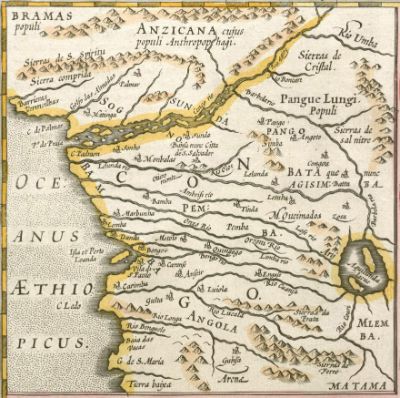
Eventually, population growth strained resources and increased conflict, leading some African communities to begin to organize military forces by 1000 C.E. Powerful chiefs, such as in Ife and Benin, overrode kinship networks and imposed authority as they conquered other villages and districts. One of the greatest of the early Bantu kingdoms was the Kingdom of Kongo, located in present-day Angola, Gabon, and the nations of Republic of Congo and Democratic Republic of Congo. Villages began forming small states along the Congo River around 1000 C.E. The small states formed several larger principalities by 1200 C.E.
One of these principalities overcame its neighbors and built the Kingdom of Kongo. The kingdom maintained a centralized government with a royal currency system, and it became intimately connected with the European nation of Portugal through missionaries. Because of the Portuguese, Kongo became the largest Christian kingdom in the relatively Islamic Bantu world, and the only Catholic kingdom at that. The Kingdom of Kongo provided effective organization until the mid-seventeenth century, when battles with other European powers, particularly over slavery, weakened and destroyed it.
Question
Why were early African political units often called “stateless societies”?
There was no formal government, but society and civilization were still maintained. The early societies did not depend on elaborate bureaucracy and governed through family and kinship groups instead.
