Click on each tab to learn more about the what makes up the color wheel.
The Color Wheel
Primaries
Secondaries
Intermediates
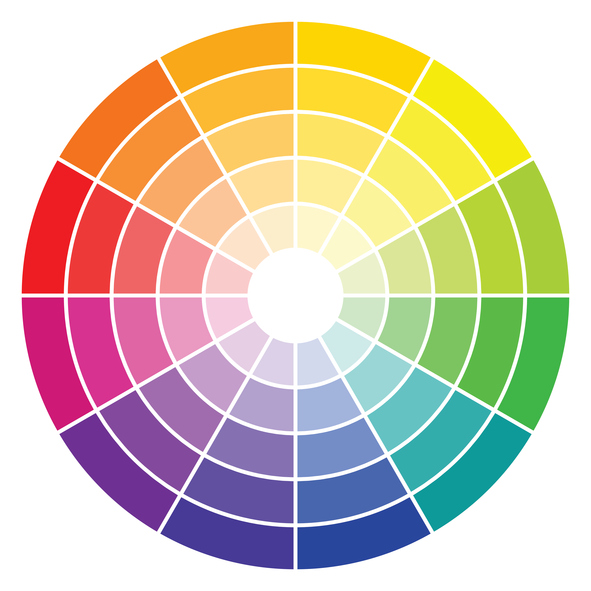
After Newton discovered the color spectrum, he found that the ends (red and violet) could be combined to make the hue red-violet. This allowed for a continuous circular arrangement of the spectrum. This color system is based on twelve pure hues. It can be used as a guide for mixing color, and the hues can be divided into groups. You will be exploring all of this in the next several lessons.
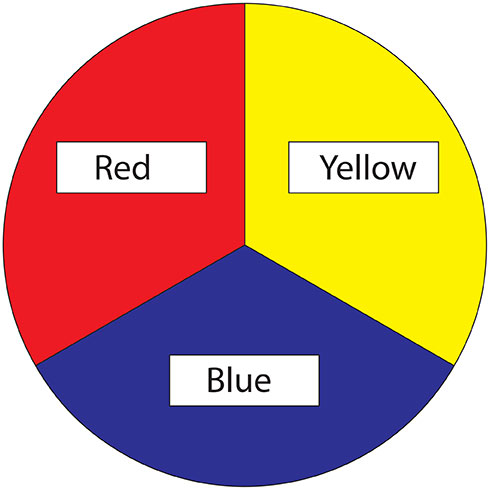
These are hues that cannot be created by intermixing other colors. They are red, yellow, and blue. Primaries can be mixed to create all othe hues of the spectrum.
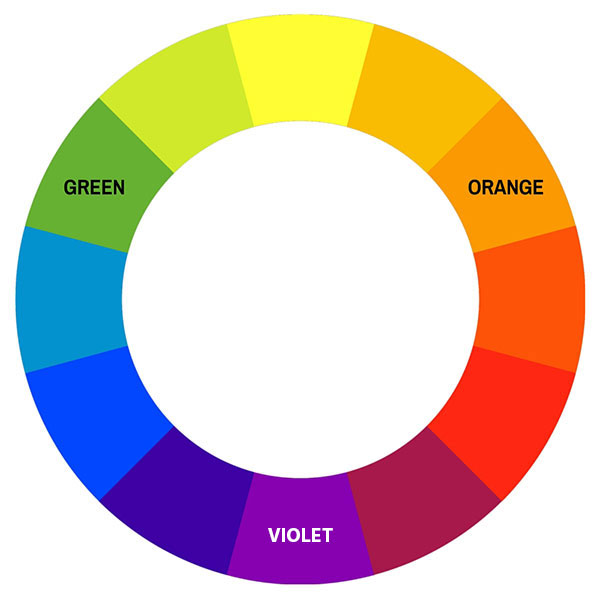
Mixing two primary colors together will produce a secondary hue. Secondaries are located between the two primaries on the color wheel that were used to make it.
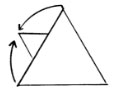
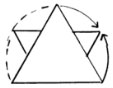
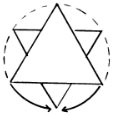
Can you see how this mixing pattern begins to form the circular arrangement known as the color wheel? Now let’s take this guide to the next step.
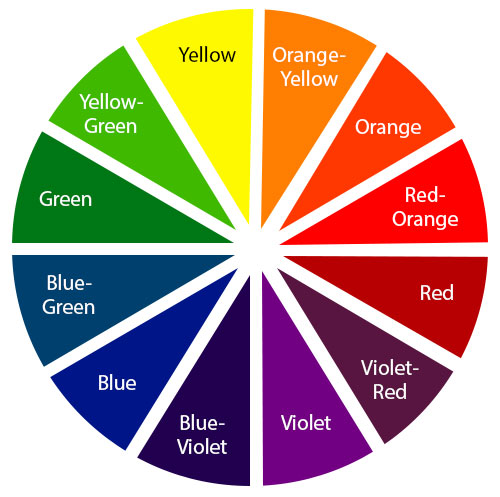
Red-orange, orange-yellow, yellow-green, blue-green, blue-violet, violet-red. The names of these hues tell you what colors are mixed to create them. They are placed between the primary and secondary hues on the color wheel from which they are mixed.
