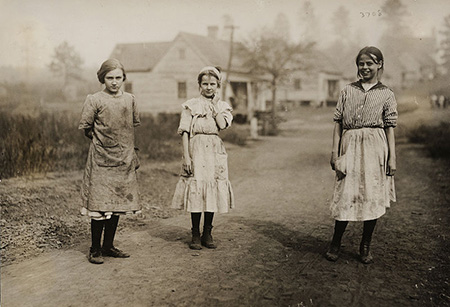
How far would you go for financial success? Would you replace your workers with children, or treat your products with harmful chemicals?
At the beginning of the Industrial Revolution, most factory owners were willing to do whatever they could to maximize profit. Hiring young children and paying them far less than adults was a standard practice. Concepts like "minimum wage" didn't exist yet, so businesses were free to compensate their workers with as little money as possible. As a result, the success of the Industrial Revolution didn't trickle down to the working classes, who made up the majority of the population. Workers eventually felt that they were being used to make other people rich.
In fact, it seemed to many people that workers were not being fairly compensated, or paid, for their contributions to the industrialization of Britain. When lawmakers and other powerful members of society did nothing to fight for better conditions for workers, the powerless decided to fight for themselves. Throughout the 19th century, political power shifted from aristocrats to business owners to workers as people demanded their share in the success of industry and voting rights expanded.
In the tabs below you'll learn more about the hardships facing 19th-century workers and why they inspired political change.
Low Standards
Dirty Work
A Little Help
Empty Words
Review
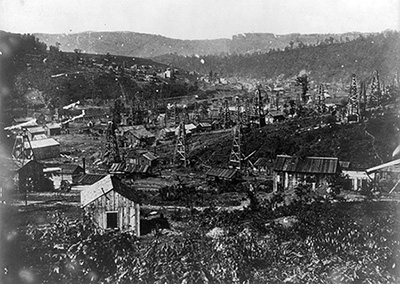
Before the Industrial Revolution brought Europe into the more comfortable, technologically advanced modern age, the shift toward urban living and industrial jobs actually caused a reduction in the standard of living for most people. Families spent the majority of each day working for low wages and then returned to cramped, disease-filled living quarters. Society was completely unprepared for the jump in population and its consequences for workers' quality of life.
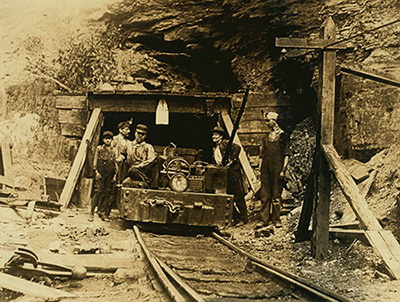
Universal public education was in a primitive form, so everyone in the family--men, women, and children--would go to work, even in dangerous places like coal mines. Children sometimes died by falling down mine shafts or walking in front of a heavy cart carrying coal, but industrialists profited greatly from child labor because they paid the children so little. Women were also employed and were paid less than men.
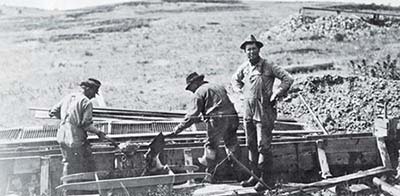
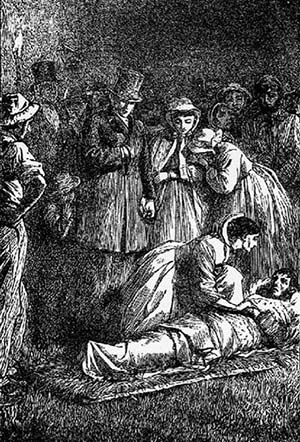
One day in 1838, a stream overflowed into a British coal mine and drowned 26 children who were at work; some of them were 8 years old. Public outrage about the incident and general conditions for workers led to the passing of the 1842 Mines Act, which outlawed the employment of women and boys under 10 years old in coal mines.
The Mines Act didn't do much for workers. The government only hired a few people to enforce the law, so most mines didn't change their policies, and most women and children still needed the money. It became clear that workers would have to push for more political power if they wanted a better life and a safer work environment.
Use these questions to review what you've learned so far.
What did the Mines Act of 1842 do for women and children working in 19th-century coal mines?
- It gave them better working hours.
- It allowed them to wear protective clothing.
- It prevented women and children under 10 from working underground.
- It created a rotation system so they wouldn't spend so much time underground.
The act prevented employers from sending women and very young children to work underground. They had previously been spending up to 12 hours straight in the mines and earning much less than adult men.
The act prevented employers from sending women and very young children to work underground. They had previously been spending up to 12 hours straight in the mines and earning much less than adult men.
The act prevented employers from sending women and very young children to work underground. They had previously been spending up to 12 hours straight in the mines and earning much less than adult men.
The act prevented employers from sending women and very young children to work underground. They had previously been spending up to 12 hours straight in the mines and earning much less than adult men.
Why was child labor still practiced in Britain even after it was outlawed?
- The law had loopholes that allowed most children to work.
- No one actually objected to child labor in mines.
- The church was allowed to send young children into mines.
- There weren't enough people to enforce the law.
Although laws like the Mines Act prevented children under 10 from working underground, only a handful of people were elected to enforce the law. It was becoming clear to workers that lawmakers weren't interested in protecting them.
Although laws like the Mines Act prevented children under 10 from working underground, only a handful of people were elected to enforce the law. It was becoming clear to workers that lawmakers weren't interested in protecting them.
Although laws like the Mines Act prevented children under 10 from working underground, only a handful of people were elected to enforce the law. It was becoming clear to workers that lawmakers weren't interested in protecting them.
Although laws like the Mines Act prevented children under 10 from working underground, only a handful of people were elected to enforce the law. It was becoming clear to workers that lawmakers weren't interested in protecting them.
Summary
 Questions answered correctly:
 Questions answered incorrectly:
