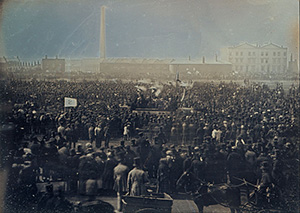
 What would you do if politicians were passing laws that affected your everyday life, but you weren't allowed to vote?
The middle classes--factory owners, merchants, and managers--had gotten what they wanted out of the Reform Act, so they weren't interested in further political action. However, the poorer classes still had few political rights and no representation in Parliament. This difference split England's "commoners" (anyone who wasn't aristocratic) into two groups: It was the workers against everyone else.
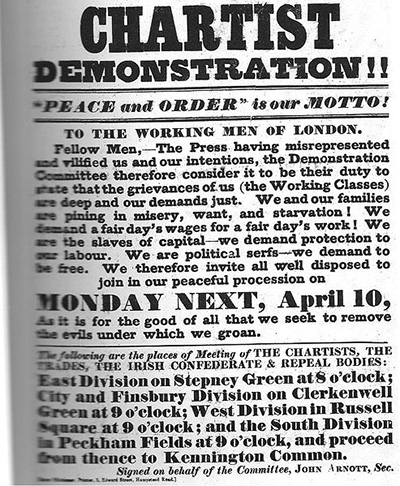
Resentment about the government's lack of concern for workers led to the creation of Chartism, a "working man's" movement that lasted from 1838 to 1848. The movement took its name from the People's Charter of 1838, a document that outlined working people's demands for a more equal society.
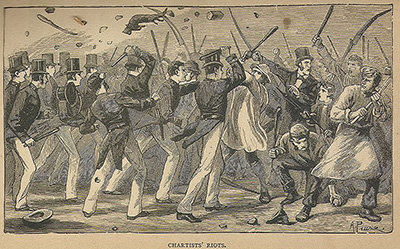
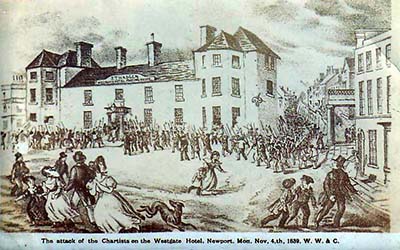
The primary goal of Chartism was equal access to representation. The leaders of the movement wanted even the lowest classes, who owned no property, to be able to vote and and hold political office. Chartists used strikes, protests, and sometimes even violent riots to pursue their agenda, but the elite members of British society refused to make any changes to the rules and structure of government.
Chartism eventually died out because of disorganization and bad leadership, and it failed to cause any significant changes in its own time. However, Chartism did raise awareness about the ordeals involved in working people's daily lives, and almost all of Chartism's demands became reality within 30 years.
Learn more about the progress of Chartism in the slideshow below.
|
Chartism began when a few members of Parliament joined forces with working men and published the People's Charter, a document that demanded universal voting rights in England. The impoverished workers of the country felt inspired to join together and rally behind the document.
Parliament basically ignored the Chartist movement and refused to hear its representatives. The frustration of disenfranchised citizens turned into violence. Fearing a general uprising, British leaders ordered the arrest of Chartist leaders.
The remaining Chartist leaders developed several radical plans, including forming their own Parliament and forcing the queen to recognize its legitimacy, but there was a great deal of disagreement about the best course of action. Ultimately the movement fizzled out. Competing leaders divided the movement, and workers abandoned it when they realized it wouldn't succeed.
|
 |

Question
Why do you think the violent riots associated with Chartism worked against its immediate success?
