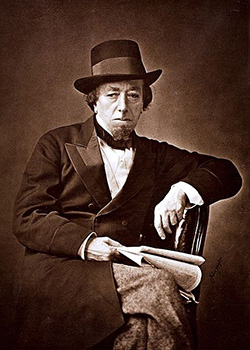
 Benjamin Disraeli (1804-1881) was a conservative politician who served two terms as Prime Minister of Britain. As a young man, he lived recklessly, pursuing several women at once and losing a great deal of money while betting on the stock exchange. He eventually settled down with a much older woman and embarked on a political career that lasted for four decades.
Disraeli's backstory is important because it reflects his place in British politics. The "old guard" of British politicians viewed Disraeli as an irresponsible leader willing to abandon traditional values. To them, Disraeli was still a gambler, a womanizer, and an outsider. Unlike most politicians, Disraeli was ethnically Jewish. He faced prejudice and discrimination because of his Jewish ancestry, but his experience outside of traditional British society probably influenced his support for the working class and other opponents of the wealthy establishment.
In most Western countries today, the word conservative suggests political ideas that are right of center. In Disraeli's time, however, conservatism was a left-leaning set of ideas. Disraeli was a conservative, so he was a left-leaning politician who hoped to unite British society by providing government assistance to the poor and extending voting rights to all citizens.
Review what you've learned so far using the Drag and Drop activity below.
Summary
 Questions answered correctly:
 Questions answered incorrectly:
Question
Why were some traditional British leaders uncomfortable with a Jewish and formerly rebellious Prime Minister?
