The heat transfer equation can be used to find the amount of energy needed to change the temperature of a substance, or it can be used to find the specific heat capacity of an unknown substance if you know the heat that has been transferred to it. Use the tabs below to complete these practice problems using the equation \(\mathsf{ Q = mc \Delta T }\). You can reference the chart of specific heat capacities below to help.
| Substance | Specific Heat Capacity (J/kg °C) |
|---|---|
| water (liquid) | 4186 |
| aluminum | 899 |
| lead | 129 |
| iron | 412 |
| silver | 239 |
| gold | 129 |
Iron
Gold
Unknown
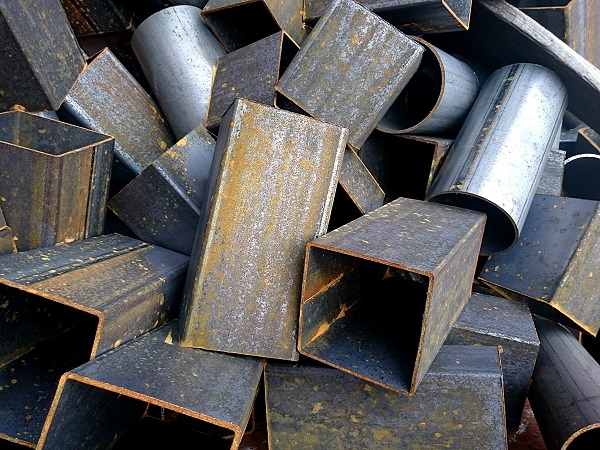
How much energy (heat) is required to change 0.503 kg of iron from 27.0°C to 65.0°C?
\(\mathsf{ Q = mc \Delta T }\)
\(\mathsf{ Q = (0.503 \text{ kg})(412 \text{ J/kg°C})(38 \text{°C}) }\)
\(\mathsf{ Q = 7.87 \times 10^3 \text{ J} }\)
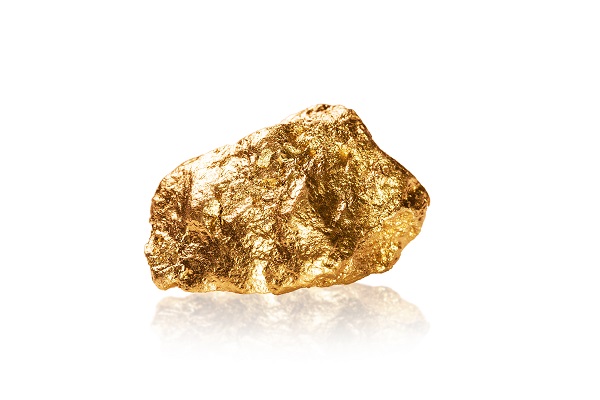
How much energy (heat) is needed to change the temperature of 0.897 kg of gold from 57.0°C to 83.0°C?
\(\mathsf{ Q = mc \Delta T }\)
\(\mathsf{ Q = (0.897 \text{ kg})(129 \text{ J/kg°C})(26 \text{°C}) }\)
\(\mathsf{ Q = 3.01 \times 10^3 \text{ J} }\)
If 10795 J is added to an unknown substance (m = 0.632 kg) to create a temperature change of 19°C, what is the substance that is being heated?
\(\mathsf{ Q = mc \Delta T }\)
\(\mathsf{ 10795 \text{ J} = (0.632 \text{ kg})(c)(19 \text{°C}) }\)
\(\mathsf{ c = \frac{10795 \text{ J}}{(0.632 \text{ kg})(19 \text{°C})} }\)
\(\mathsf{ c = 899 \text{ J/kg°C}}\)
The substance is aluminum.
