Starting in the 1940s, the Brazilian government has worked on programs to help ease the impact of poverty in the country. The focus has been on two main goals. The first is to grow industry. And the second is to get people to settle and develop the interior portions of the country.
In the 40s and 50s, the government started the first steel mill and oil refinery in Brazil. It also supported the building of hydroelectric dams to increase electricity for the growth of industry. The dams were built in areas where rivers dropped over escarpments in between the plateau and the plains areas of the country. In the 1950s, new industries like automotive, chemical, and steel begin to grow. Brazilians began to move from rural areas to the cities looking for work in the factories. Coastal cities like São Paulo became crowded.
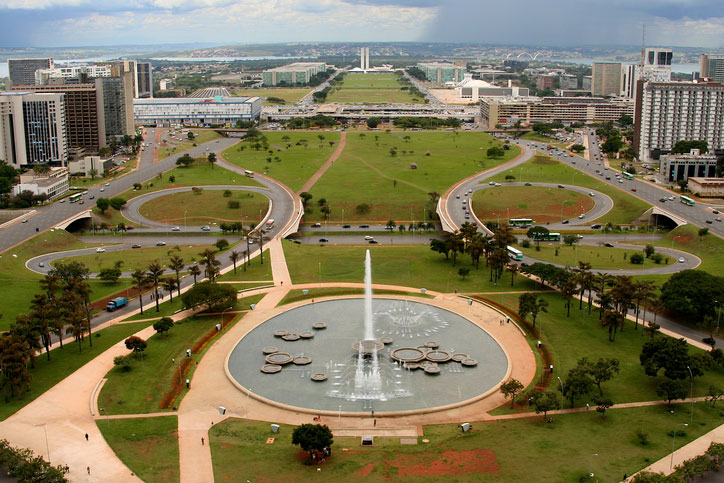
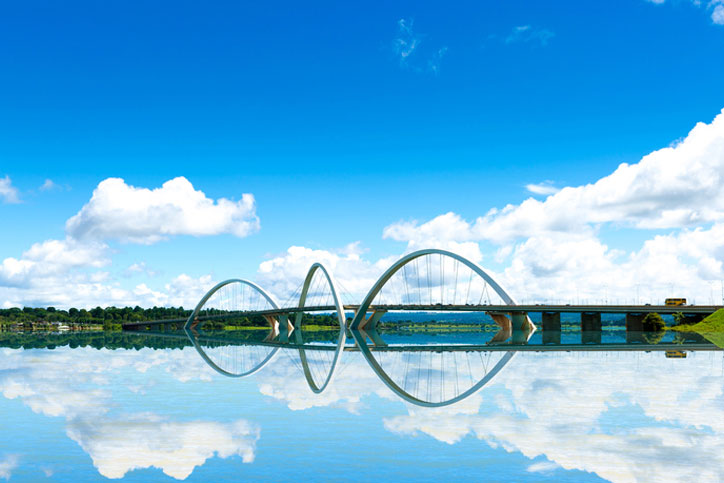
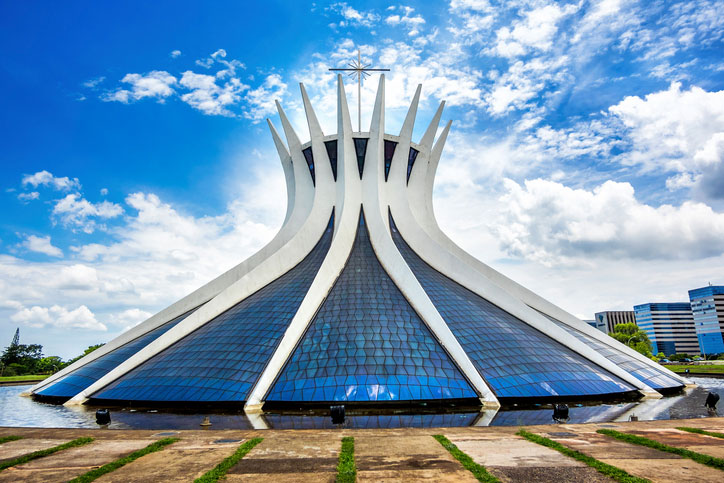
This overcrowding led Brazil’s leaders to recognize the need to develop the interior sections of the country. In the 1950s, the capital city of Brasilia was planned about 600 miles inland from the Atlantic coast in the Brazilian Highlands. This city it was designed to be very modern looking with a lot of glass and steel architecture. Click on the pictures below to see Brasilia.
To support the growth in Brasilia, the country had to build roads between the coastal areas and the Brazilian Highlands. By the 1970s, thousands of new miles of roads led to the Brazilian interior. New roads also lead into the northern Amazon region where the government was giving away thousands of plots of land to encourage settlement. The population of the Amazon basin grew by more than 1 million people between 1970 and 1985.
