Spread by trade with Arab North Africa and with Asia, Islam became the source of much of African unity. Read through the tabs below to review key Islamic empires in West and East Africa.
West Africa: Ghana
West Africa: Mali and Songhay
East African Kingdoms
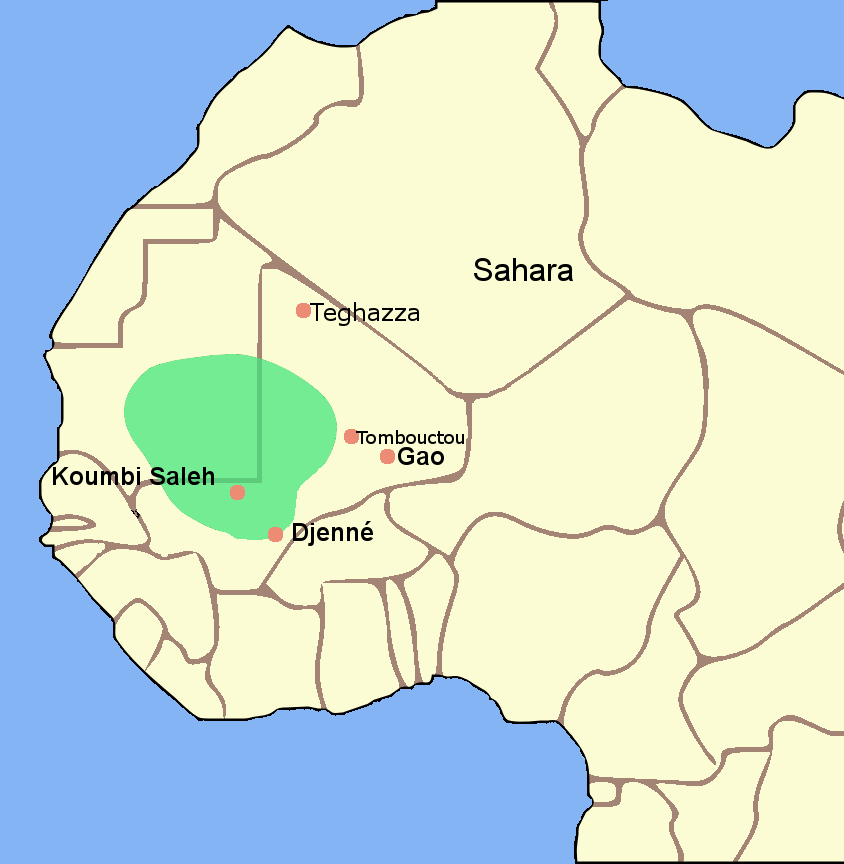
The small kingdom of Ghana had been established long before Muslims arrived. Located between two rivers, Ghana was isolated, and its people generally kept to themselves. By the tenth century, the people of Ghana were not Muslim. Instead, the African kingdom and the Muslim merchants who traded there had more of a business understanding with each other. Even though Ghana's leaders eventually converted to Islam, they did not impose the religion on their people. In the 13th century, Ghana began to lose power to the Mali empire.
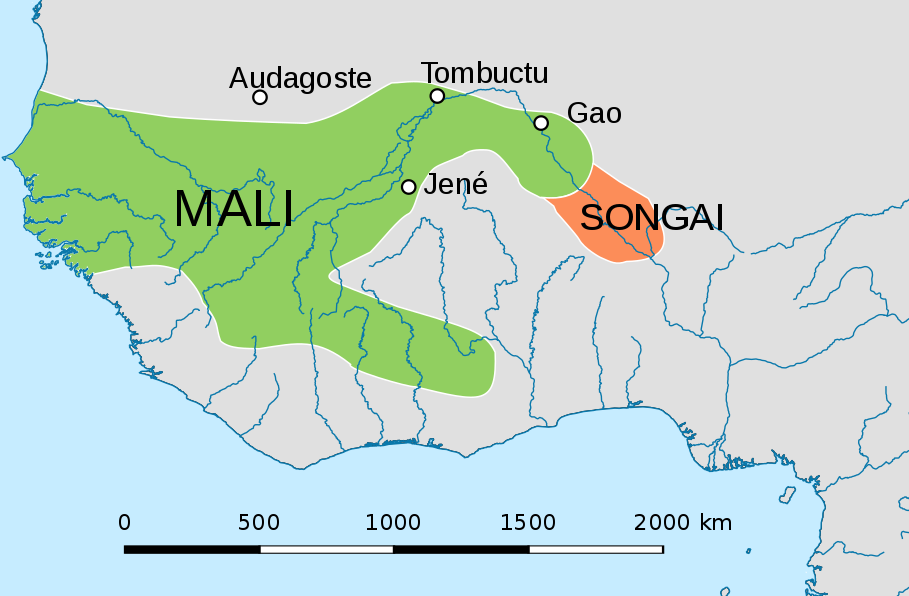
Sundiata, a prince of the Mali empire, greatly expanded Mali's boundaries. Eventually, this kingdom became so large that it took over the kingdom of Ghana, as well as other neighboring kingdoms. Mali taxed incoming goods and controlled much of the trade in western Africa. Similar to Ghana, the leaders of Mali did not expect their people to convert to Islam, but those who did become Muslims received better treatment, especially if they were merchants.
By the 15th century, Mali was in decline and was eventually invaded by the Songhay. The Songhay empire lasted from the 1400s to the 1600s. During this time, Timbuktu became a thriving cultural and trade center of the sub-Saharan region. The city also developed into a place of Islamic study, which helped Muslims solidify the integration of Islam in Africa.

Another important geographical area is East Africa, also known as the Swahili coast. Many Middle Eastern and Asian people traded along the Indian Ocean Basin in places such as Madagascar and other areas up and down the coast. The Bantu-speaking inhabitants of this region later became the developers of the Swahili culture.
In this part of Africa, the wealthy and elite were forced to convert to Islam. Somewhat ironically, this forced conversion resulted in more stable governments than those of the sub-Saharan region. Their conversion to Islam also gave merchants more power.
Question
Was Islam forcefully imposed upon African societies?
In most regions, it was not forced, but it was heavily encouraged. African leaders saw the benefit of joining the faith of their Arab trading partners. Their subjects would, in time, follow suit as occurred throughout much of history.
