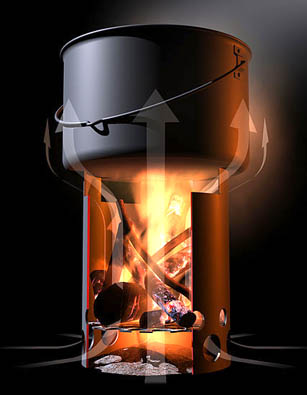
 Convection occurs in fluids, which includes gases and liquids. It cannot occur in solids. This is because convection depends on the movement of the entire substance, not just the molecules. The rule behind it all is quite simple: heat rises. When a liquid or gas warms up, the molecules move around more and the fluid expands (more on that soon). This causes the warm fluid to become less dense, so it rises. As the less dense warm fluid rises and the cooler, denser fluid sinks, a current is produced. This is called a convection current.
Convection
Where does convection occur?
Which material is the BEST conductor of heat?
- wood
- plastic
- aluminum
- wool
Molecules in aluminum can move around and bump into other molecules.
Molecules in aluminum can move around and bump into other molecules.
Molecules in aluminum can move around and bump into other molecules.
Molecules in aluminum can move around and bump into other molecules.
Why are metal pots often used for cooking?
- Metals quickly absorb and transfer heat.
- Metals are poor heat conductors.
- Metals do not absorb or transfer heat.
- Metals prevent food from burning.
The molecules in metals can move about quickly and hit other molecules.
The molecules in metals can move about quickly and hit other molecules.
The molecules in metals can move about quickly and hit other molecules.
The molecules in metals can move about quickly and hit other molecules.
How do the air bubbles in polystyrene foam help it insulate?
- They allow heat to pass through quickly.
- They create a barrier that reduces heat transfer.
- They conduct heat like a metal.
- They reflect light.
Heat cannot go through the air as quickly as it can move through other substances.
Heat cannot go through the air as quickly as it can move through other substances.
Heat cannot go through the air as quickly as it can move through other substances.
Heat cannot go through the air as quickly as it can move through other substances.
Summary
 Questions answered correctly:
 Questions answered incorrectly:
