 Some materials do not transfer heat very well. They are poor conductors of heat and are called heat insulators. If you hold the
bottom part of a long, lighted candle, you do not feel much heat coming through to your fingers, nor does the heat of the flame heat the
candle up making it too hot to hold. Wax, wood, air, and paper are all poor conductors of heat and therefore good heat insulators.
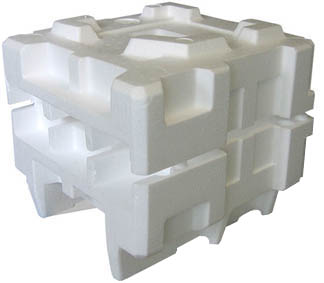
Polystyrene foam is used in houses for insulation of walls and in thermos bottles and ice chests.
Some materials do not transfer heat very well. They are poor conductors of heat and are called heat insulators. If you hold the
bottom part of a long, lighted candle, you do not feel much heat coming through to your fingers, nor does the heat of the flame heat the
candle up making it too hot to hold. Wax, wood, air, and paper are all poor conductors of heat and therefore good heat insulators.
Polystyrene foam is used in houses for insulation of walls and in thermos bottles and ice chests.
Polystyrene is a form of plastic that is full of air bubbles. The air bubbles create an insulating barrier that reduces the transfer of
heat from one side to the other. This foam is used to keep hot things hot and to keep cold things cold.
Insulation is measured in terms of its thermal resistance, which is the resistance of a material to heat flow. You often hear it
referred to as the R-value of the insulation. The higher the R-value, the better the insulation is. In the northern U.S., it is
recommended that the walls of a home have an R-value of 19, and the ceiling has R-38 insulation.
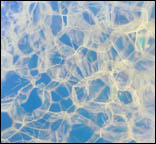
The photo below is a magnification of polystyrene foam.
Practice identifying the properties of insulators and conductors of heat. Read each question and choose the best answer.
Which material is the BEST conductor of heat?
- wood
- plastic
- aluminum
- wool
Molecules in aluminum can move around and bump into other molecules.
Molecules in aluminum can move around and bump into other molecules.
Molecules in aluminum can move around and bump into other molecules.
Molecules in aluminum can move around and bump into other molecules.
Why are metal pots often used for cooking?
- Metals quickly absorb and transfer heat.
- Metals are poor heat conductors.
- Metals do not absorb or transfer heat.
- Metals prevent food from burning.
The molecules in metals can move about quickly and hit other molecules.
The molecules in metals can move about quickly and hit other molecules.
The molecules in metals can move about quickly and hit other molecules.
The molecules in metals can move about quickly and hit other molecules.
How do the air bubbles in polystyrene foam help it insulate?
- They allow heat to pass through quickly.
- They create a barrier that reduces heat transfer.
- They conduct heat like a metal.
- They reflect light.
Heat cannot go through the air as quickly as it can move through other substances.
Heat cannot go through the air as quickly as it can move through other substances.
Heat cannot go through the air as quickly as it can move through other substances.
Heat cannot go through the air as quickly as it can move through other substances.
Summary
Questions answered correctly:
Questions answered incorrectly:
