Do you know why you feel the way you do about politics and government? Where did these ideas come from? Are they simply your own, or have you been influenced by others in your thinking? A person's political outlook is not created by one individual factor;
rather, it is a combination of interactions with many different people
and events, and it generally changes over time. Political scientists refer to this process as political socialization.
You may have learned about political socialization in an earlier lesson. It plays an important role in citizens' decisions about whether or not to join a grassroots movement; for that reason, before learning more about these movements, you should take some time to review how people develop their strongest beliefs about government. Study the slides below to learn how four primary agents influence political beliefs.
|
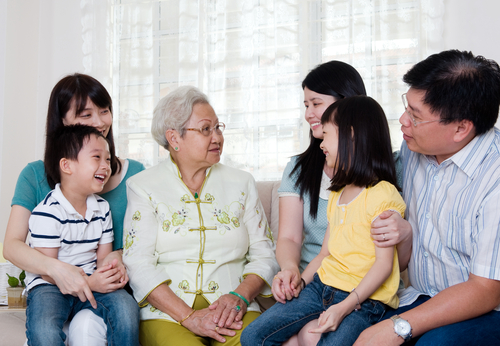
FamilyFamily members have the most significant impact on the development of a person's political beliefs. If your family speaks respectfully about certain political figures or symbols, you may be likely to as well. Likewise, if your parents are involved in a particular cause, or if they speak favorably about it, you may want to join. On the other hand, it's also possible--and not that unusual--for children to adopt political ideas opposed to those of their parents, especially if they were troubled by any of the opinions or actions they encountered growing up.
SchoolThe influence of education in establishing political beliefs begins with instruction about the basics of American government, including the principles of democracy and how citizens can become engaged in politics. Students who learn about the importance of these fundamentals may feel more comfortable about participating in political activity. They are more likely to follow politics in the media and become active members of their communities. Student government is another way schools introduce children and young adults to the political process.
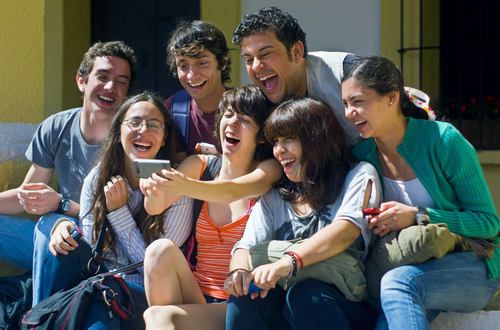
PeersPeers can be very influential in the political socialization process, especially for teenagers, who often adopt the attitudes, views, and behaviors of their peers. Adults do not supervise all peer interactions; therefore, young people are free to interact with others who have the same level of maturity as they do. This kind of environment allows teens to voice ideas and receive feedback from those who are most similar to them, without feeling intimidated by the greater knowledge and experience of their parents or teachers.
Mass MediaMass media plays a much larger role in influencing people's political views than it ever has in the past. The number of media outlets has grown exponentially in recent years, and new technology allows people to stay connected to media all the time. In fact, most people must experience politics through the media since few have direct access to government employees and politicians. |
 |



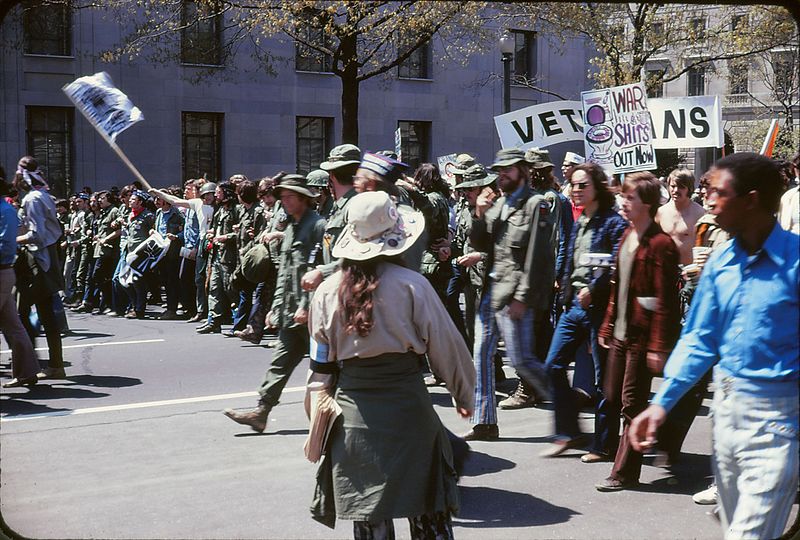
One other factor that influences a person's political beliefs is the generation to which he or she belongs. A political generation is a group of people who, because they are about the same age, share similar experiences, which causes them to share some political beliefs. People of a similar age are exposed to the same historical, social, and political experiences, and because younger people have less clearly defined political beliefs, this makes them more likely to be influenced by key societal events.
![By Fibonacci Blue from Minnesota, USA (Protest against Donald Trump) [CC BY 2.0 (http://creativecommons.org/licenses/by/2.0)], via Wikimedia Commons](https://s3.amazonaws.com/cms.accelerate-ed.com/image/225ae06f-f70e-4148-b2bb-b8ce60e13344.jpg)
The members of a political generation are usually impacted by a momentous political event during their formative years. The event may cause them to think more seriously about politics, which was was the case for many teens and young adults during the 2016 presidential election between Donald Trump and Hillary Clinton. Many young people became interested in politics because of the intense political climate and the significance of the election itself. Even Thomas Jefferson believed that new generations would emerge in response to changing social and political conditions and that this would, in turn, influence public policy.
Complete the activity below to review the ways people obtain their political values and attitudes.
|
The family is the
|
first form of political socialization
least important factor
|
|
Peers are important to political socialization because
|
children copy their friends
teens interact apart from adults
|
|
The first opportunity to actively participate in a political process
usually occurs |
while watching television
through student government activities
|
|
Mass media is
|
the most prominent form of political socialization today
the best way to learn the history of American government
|
Complete
