 Have you ever joined a group or a club that was trying to bring about positive changes in your community? The many environmental, political, and community groups in the United States have similar goals: they want to raise other citizens' awareness of an issue and then gain the support they need to make changes in their community, the nation, or the world. If a movement is started by everyday citizens rather than people who have made a career of influencing government, it is called a grassroots movement. Its influence begins at the root level of society--with individuals who are directly affected by the problem the movement hopes to solve.
In recent years, there has been a great deal of organizing at the grassroots level. Citizens from many different backgrounds and regions of the U.S. have worked together focus the public's attention on issues they consider alarming enough to warrant a dramatic response, such as opioid addiction, school shootings, and mass incarceration. The organizers of these groups work with concerned citizens to craft messaging, implement strategies and tactics, and find volunteers to carry out administrative tasks like requesting permits for protests and interacting with the media. Grassroots movements promote democracy by encouraging ordinary citizens to "assemble" and associate, and to hold elected officials accountable for their decisions, actions, or lack of action.
Sometimes grassroots movements turn into much more highly organized political movements. They may even manage to elect candidates who support their causes in very explicit ways. Use the tabs below to learn about two contemporary American political movements that began as grassroots efforts.
Tea Party
Our Revolution
![By Gage Skidmore (Flickr: Ron Paul) [CC BY-SA 2.0 (https://creativecommons.org/licenses/by-sa/2.0)], via Wikimedia Commons](https://s3.amazonaws.com/cms.accelerate-ed.com/image/381240a8-5e23-44cf-8d35-264fe2f4145e.jpg "Congressman Ron Paul of Texas speaking at the Tea Party Patriots American Policy Summit in Phoenix, Arizona") Congressman Ron Paul of Texas speaking at the Tea Party Patriots American Policy Summit in Phoenix, Arizona. |
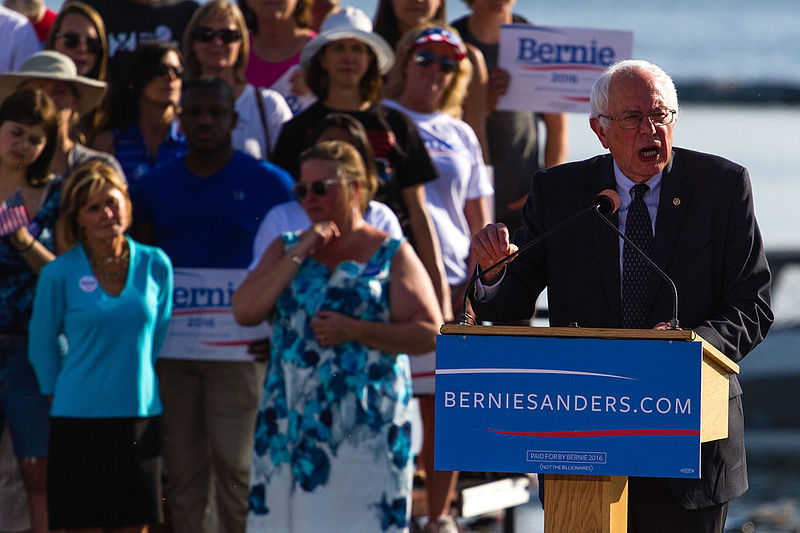 Our Revolution was a grassroots movement inspired by Senator Bernie Sander's 2016 run for president. Although Sanders was a politician himself, he relied on millions of volunteer organizers across the nation to build a movement that had broad appeal--and broader goals than electing Sanders as president. The movement encourages people to join local groups devoted to positive change and tries to inspire and recruit candidates to run for offices across the entire spectrum of government, from school boards to congressional seats. Our Revolution also provides opportunities to work for the movement canvassing and making phone calls.
Grassroots political movements are built from the ground up, meaning that the group forms as people come together with common interests and work as volunteers to make the group successful. What makes a grassroots organization different from a standard political action group is that they have much less money flowing in, and they may not have lobbyists or the backing of financial institutions. Instead, grassroots movements are fueled by volunteers, and they rely on private donations from those who serve in and support the movement itself. Historically, grassroots political movements have been located in specific geographical areas and were only concerned with one particular issue. However, today's grassroots movements are made up of citizens from all over the country, who often connect through social media, and those groups have been able to persuade government officials and politicians to address a wide variety of related issues.
Question
Why are grassroots movements important for democracy?
