Because they involve many people speaking together about the same issue, and demanding the same actions from government, grassroots movements have been quite successful at getting legislation passed. Their achievements include some changes that you might not realize were caused by ordinary citizens gathering together to combine their voices, talents, and resources.
Study the tabs below to learn about some dramatic changes to U.S. public policy that happened mostly because of grassroots movements.
Ending Slavery
Civil Rights
Ending a War
Protecting the Environment
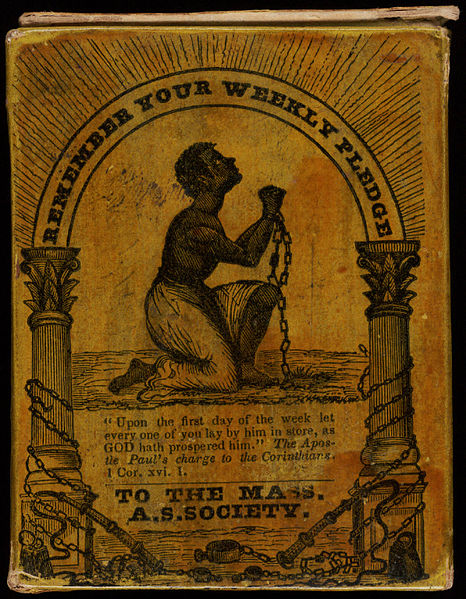 Many Americans were opposed to slavery from the nation's beginning, but the abolitionist movement did not really gain traction as a movement until the 1830s. In 1833, sixty delegates--white and black, male and female--met in Philadelphia to create the American Anti-Slavery Society. This group declared their conviction that slavery was a grave sin and must be abolished immediately; they also endorsed nonviolence as an approach to pushing for change, and they officially condemned racial prejudice.
Two years later, the Anti-Slavery Society had the moral and financial backing of Northern African American communities, and the group had hundreds of branches throughout the free states. The Society inundated the North with antislavery pamphlets, public speakers, and demands that Congress end all support for slavery. Although they achieved their goal in 1863 with the Emancipation Proclamation--the official end of slavery, the movement's leaders continued petitioning Congress until 1870 when the Fifteenth Amendment was passed, granting African American males the right to vote.
 In 1954, the U.S. Supreme Court reversed its ruling allowing “separate but equal” facilities for black and white Americans, a decision that had been used to enforce discrimination in public areas. The decision generated both national and international interest in African Americans’ fight for equal treatment in the United States.
During the next two decades, civil rights activists used nonviolent protests and acts of civil disobedience to attract the attention of Congress and the media, and their tactics eventually brought about change. The largest civil rights protest in American history was the March on Washington for Jobs and Freedom. The result of this march was the creation of the Civil Rights Act of 1964 and the Voting Rights Act of 1965.
![By uwdigitalcollections (Student protesters marching down Langdon Street) [CC BY 2.0 (http://creativecommons.org/licenses/by/2.0)], via Wikimedia Commons](https://s3.amazonaws.com/cms.accelerate-ed.com/image/0af631d9-e880-402a-b0da-e72839ebc85e.jpg "Student protesters marching down Langdon Street") By 1965, the Vietnam War had been going on for ten years, and more and more Americans were joining the antiwar movement. Protests against this war were, by far, the largest, longest, most intense, and most threatening grassroots movement in America's history. The protests started out peacefully enough with campaigns that canvassed American cities--an important step in raising funds and recruiting volunteers. In addition to getting the word out, mass gatherings and peaceful protest marches were also used to garner support. Many believe that the grassroots antiwar movement played an important role in finally persuading the federal government to withdraw American troops from Vietnam.
By 1965, the Vietnam War had been going on for ten years, and more and more Americans were joining the antiwar movement. Protests against this war were, by far, the largest, longest, most intense, and most threatening grassroots movement in America's history. The protests started out peacefully enough with campaigns that canvassed American cities--an important step in raising funds and recruiting volunteers. In addition to getting the word out, mass gatherings and peaceful protest marches were also used to garner support. Many believe that the grassroots antiwar movement played an important role in finally persuading the federal government to withdraw American troops from Vietnam.
 In the 1960s, environmental activism took center stage as people began to fear nuclear annihilation, toxic chemicals, and the destruction of natural resources. In response to numerous grassroots movements aimed at protecting the natural environment, Congress passed and revised a series of laws that called for the creation of regulations on industry and development. Many of these laws were meant to end or limit various types of pollution, thereby protecting the air, land, and water from toxic chemicals.
Grassroots environmental groups come in all sizes. Some are small and only focus on a single issue or location, while others are worldwide, such as Greenpeace. Like other grassroots organizations, environmental activists use mostly indirect lobbying techniques to bring about change, such as petitioning policymakers and businesses, organizing nonviolent protests, and calling on citizens to boycott products that damage the environment.
Question
What tactics do all of these successful grassroots movements share? Why are these types of tactics so critical for success?
