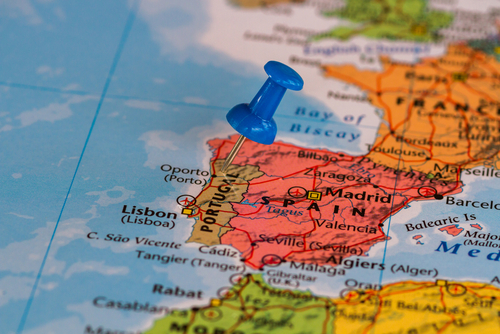
As a small nation, Portugal may seem to be an unlikely leader in exploration and navigational science. Its geographical position, however, helped to shape its course. Bordered to the east and north by Spain and having no outlets on the Mediterranean Sea, Portugal took to the Atlantic Ocean to explore and did so before most European nations.
Beginning in 1420 under the sponsorship of Prince Henry the Navigator, Portuguese fleets began probing southward along the western coast of Africa. There they discovered a new source of gold. The southern coast of West Africa thus became known to Europeans as the Gold Coast.
Portuguese sea captains heard reports of a route to India around the southern tip of Africa. In 1488, Bartolomeu Dias rounded the tip, called the Cape of Good Hope. Later, Vasco da Gama went around the cape and cut across the Indian Ocean to the coast of India. In May of 1498, he arrived off the port of Calicut (Calcutta), where he took on a cargo of spices. He returned to Portugal and made a profit of several thousand percent. Other European nations took notice: There was money to be made from exploration.
In the early 1500s, the Portuguese launched expeditions to China and the Spice Islands. There they signed a treaty with a local ruler for the purchase and export of cloves to the European market. This treaty established Portuguese control of the spice trade. The Portuguese trading empire was complete. However, it remained a limited empire of trading posts. The Portuguese had neither the power nor the population to successfully colonize southern Asia.
Question
Why were the Portuguese the first successful European explorers?
It was a matter of guns and seamanship. Later, however, the Portuguese would be no match for other European forces, such as the English, Dutch, and French.
