European exploration of the world increased immensely in the 16th and 17th centuries. Historians believe that naval exploration boomed, in part, because of new technologies.
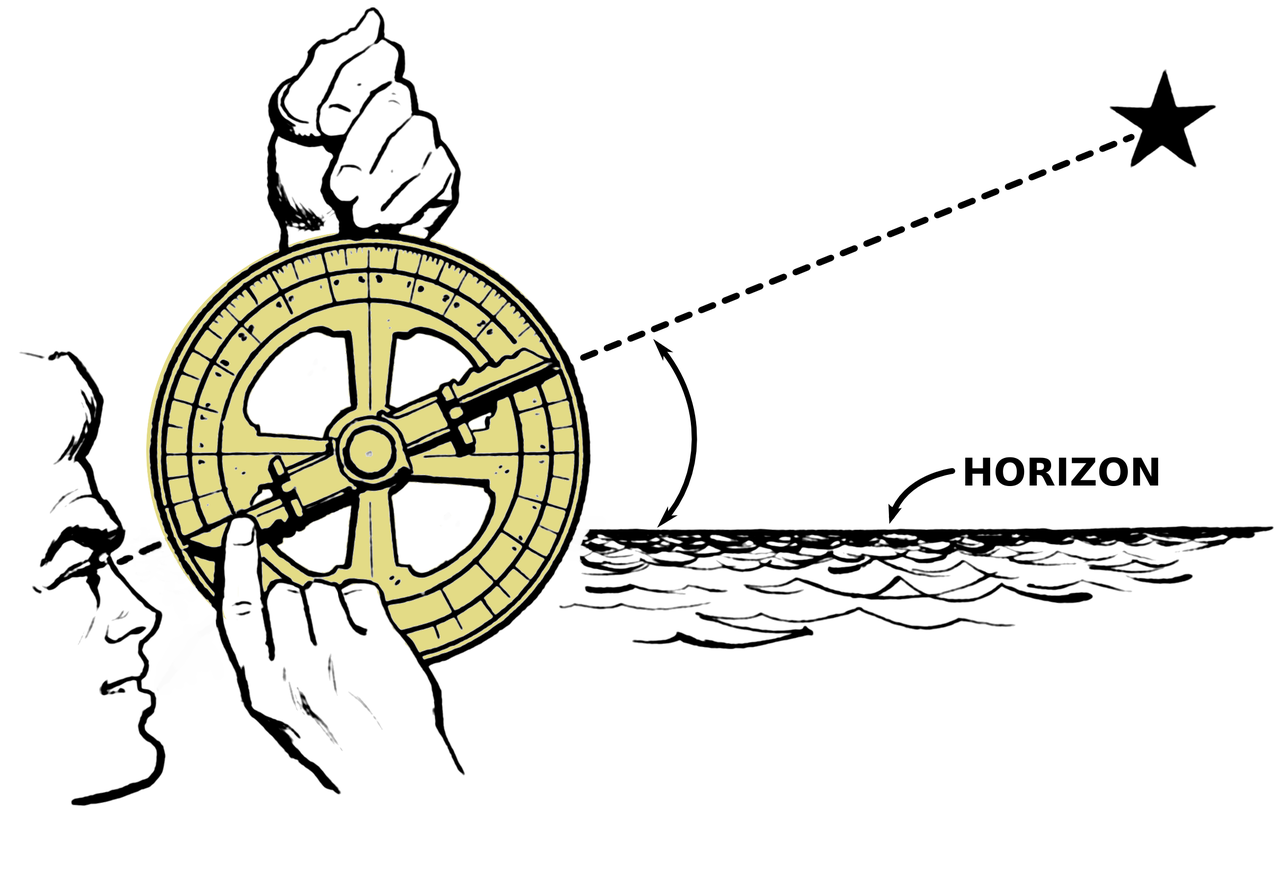
The mariner's astrolabe helped sailors determine latitude.
The following video explores the technologies which made exploration possible. Take notes as you watch.
 The age of exploration began in the late 1400s in Europe. There were many new technologies invented around that time which allowed the European nations to begin to compete for new lands and resources overseas.
Technology helped the Age of Exploration to flourish. New tools helped explorers to travel across the world and make many new significant discoveries. These new technologies led to a race amongst the European powers to acquire new lands, resources, and peoples. In return, there was an influx of goods to and from Europe.
The caravel was a new ship invented at this time. This ship was cheaper to make and was known for its speed and maneuverability. This ship had many uses, including carrying cargo, used as patrol and warships, and was even used by pirates. Its main use was for exploration because it was reliable across the vast open sea.
The galleon was a ship which became popular in the 1600s. This ship had the ability to change and adapt to its current circumstances. It could easily be transferred from a cargo ship to a warship. Many used this ship for trading and fishing, but it was mostly used for exploration. The ship was fast and was built with strong ribs and bracings which could help it withstand gunfire.
The first recorded use of the astrolabe was in 1481 although it was also used by the ancient Romans in the Golden Age of Islam. This instrument was used to measure angle and latitude. The most important part of the traditional astrolabe is a circular plate of metal, usually about 6 inches in diameter, which could be suspended by a ring from which it would hang perfectly vertical. On one side of the disk (the "back") was engraved several circles divided by different kinds of gradations, such as 360 degrees, or 365 1/4 parts for the days, 12 for the months, etc. The engravings could be used for trigonometric calculations. The other side of the plate (which was called the "front") was also engraved. The outer circle had 24 divisions for the hours (here numbered by letters). Another circle was divided as a calendar (using the zodiacal constellations). The tropics and equator were engraved in the central part, the celestial pole being at the center of the disk.
It can be used for:
• position of celestial objects
• measure the time of the night (or of the day, using it as a mobile sundial or, more accurately by measuring the altitude of the sun)
• measure the time of the year
• compute what part of the sky is visible at any time
• determine the altitude of any object over the horizon
• determine the current latitude
The magnetic compass was used to determine an explorers direction of travel. It could display 4-6 directions at any given time. It had a magnetized needle to support its magnetic card
The traverse board helped the explorers stay on their correct course. The traverse board was used to record the direction a ship was sailing, along with the corresponding speed of the ship for the same four hour period. Developed solely for the purpose of maritime exploration, a compass rose with 32 different points was fixed to the top of a wooden board. From the center of the rose, eight holes extended out to each compass point. This formed eight concentric circles and represented eight 30-minute timeframes or the four hours of a watch. These worked with the same peg-in-hole method as the compass rose, but instead of recording direction, these rows were used to record speed. The first row would be used to record the speed at thirty minutes into a watch; the second row recorded speed after an hour; the third row, the speed after an hour and a half, and so on. After the fourth row on the left side was used, recording would continue on the top row on the right side.
These tools, along with the cross staff and lead line, aided in the Age of Exploration and enabled the discoveries of new lands and peoples that would change the direction of history.
Question
What was the galleon ship used for?
Many used this ship for trading and fishing, but it was mostly used for exploration.
