The evolution of technology during the Age of Exploration was driven by necessity because explorers needed to make their journeys more efficient and affordable. Click through the timeline below to read about some of the early explorers from Columbus' accidental landing in America to the Pilgrims purposeful Mayflower voyage.
-
1492
Christopher Columbus - Italy
He sailed westward to reach Asia.
-
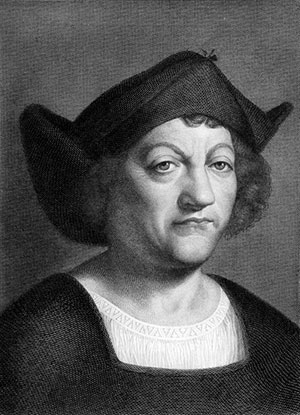
1493
Instead, he landed in the Americas*. Columbus was significant for two major reasons:
1. He landed on two continents that Europe did not know existed.
2. He was the first person to establish a long-term relationship between Europe and the Americas. The sharing of goods and ideas between the New World and the Old World is known as the Columbian Exchange.
*In 1501, Amerigo Vespucci sailed along the coast of Brazil. He went home to Italy and told folks that this was not Asia. In Florence, he sought out Lorenzo de Medici, Europe’s richest banker. Medici popularized Vespucci. Both continents--North and South America--were named after his first name, “Amerigo.” -
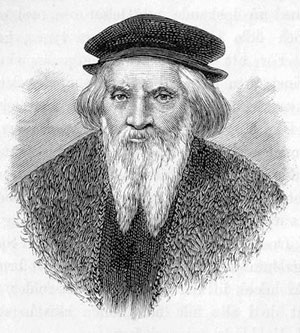
1497
John Cabot – England
John explored eastern Canada. He made the first English voyage to North America. From then on, England claimed the mainland of North America.
-
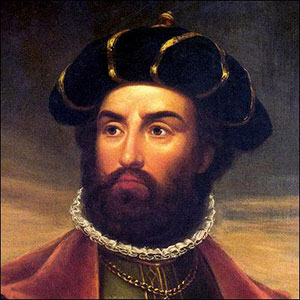
1498
Vasco da Gama – Portugal
He sailed east to Asia. He went around Africa and sailed across the Indian Ocean to India, proving that Asia could be reached by sea.
-
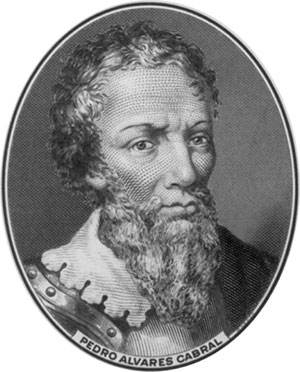
1500
Pedro Alvarez Cabral - Portugal
He sailed to Brazil and claimed Brazil for Portugal.
-
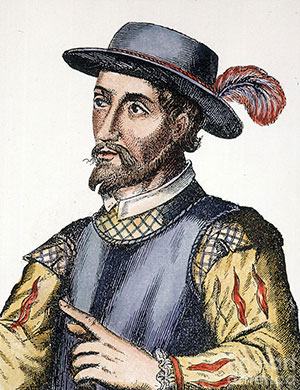
1513
Ponce de Leon - Spain
He sailed to Florida and claimed Florida for Spain. This led to the exploration and settlement of the U.S.
-
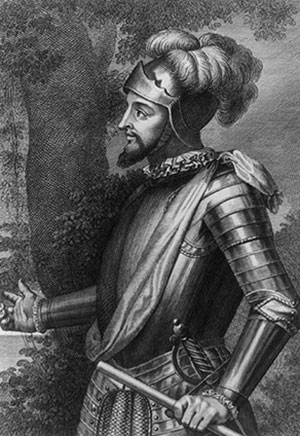
1513
Vasco Nunez de Balboa – Spain
He sailed to Panama. This was the narrowest piece of land between the Atlantic and Pacific. He walked across it and became the first European to see the eastern shore of the Pacific Ocean. His discovery led to Magellan’s voyage west across the Pacific. His discovery led to Pizarro’s voyage south to the Inca empire in Peru.
-
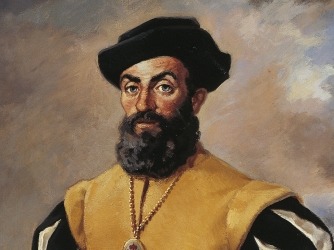
1519
Ferdinand Magellan – Portugal
He sailed around South America and across the Pacific Ocean to get to Asia. His expedition was the first to circumnavigate the world. Because of the danger of his voyage, he is considered to be a top-notch navigator.
-
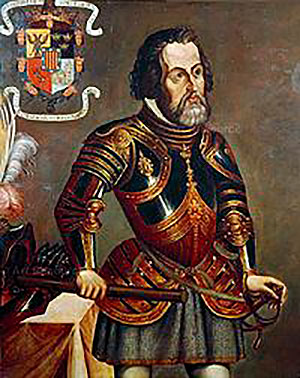
1519
Hernando Cortez - Spain
He sailed to Mexico and conquered the Aztecs. His victory opened North America to Spanish rule.
-
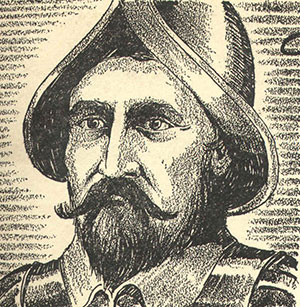
1527
Álvar Núñez Cabeza de Vaca – Spain
From Florida, he sailed across the Gulf of Mexico to Texas. Then he walked across Texas.
-
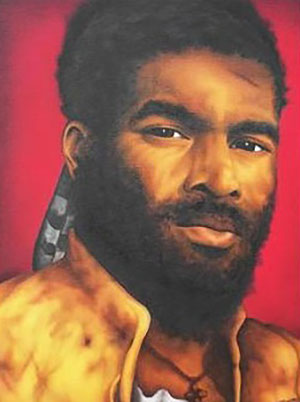
1527
Estevanico – Spain
Estevanico was one of the first native Africans to reach the present-day continental United States. From Florida, he sailed across the Gulf of Mexico to Texas; then he also walked across Texas but traveled further through the U.S. Southwest.
-
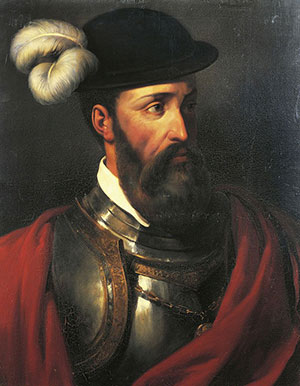
1532
Francisco Pizarro – Spain
He sailed to Peru and conquered the Inca. His conquest of Peru opened South America to Spanish rule.
-
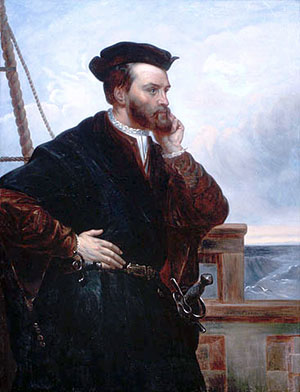
1535
Jacques Cartier – France
He sailed to Canada and up the St. Lawrence River to Montreal.
-
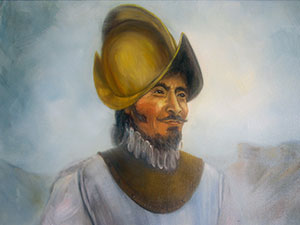
1540
Francisco Vazquez de Coronado – Spain
He led an expedition through the U.S. Southwest. His men were the first Europeans to see the Grand Canyon.
-
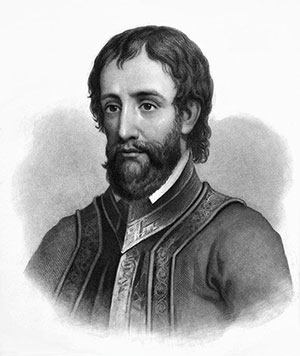
1540
Hernando de Soto – Spain
He led an expedition through the U.S. Southeast. He hunted for gold in places like the Carolinas, Georgia, Alabama, and Mississippi. His men were the first Europeans to see the Mississippi River.
-
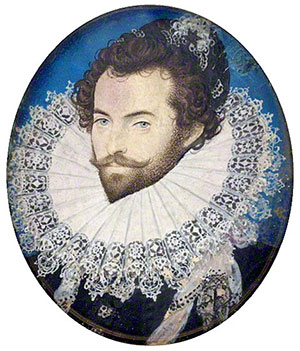
1577
Francis Drake – England
Francis was the first Englishman to sail around the world. He took the same route as Magellan.
-
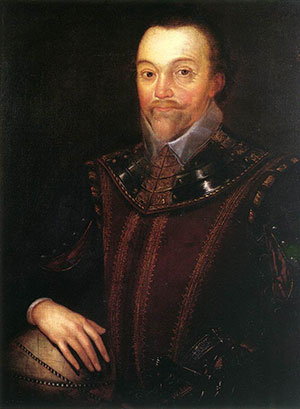
1585
Sir Walter Raleigh - England
He tried to establish a colony at Roanoke, North Carolina. This colony disappeared and became known as the “Lost Colony.”
-
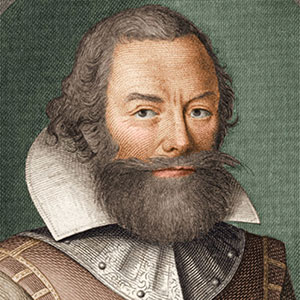
1607
John Smith - England
The first permanent English colony was founded at Jamestown, Virginia. Captain John Smith made sure the colony survived.
-
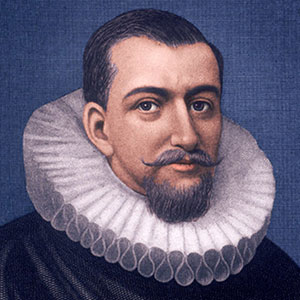
1610
Henry Hudson – Dutch
Henry sailed on behalf of the Dutch. He sailed into Hudson Bay and up the Hudson River (New York). He claimed New York and New York City for the Dutch. He was searching for the Northwest Passage--a mythical waterway to get from the Atlantic Ocean to the Pacific Ocean.
-
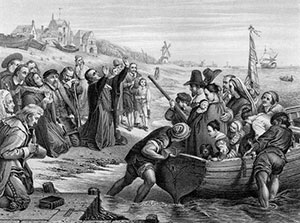
1620
Pilgrims on the Mayflower established a colony at Plymouth, Massachusetts.
Sails Pitch
Which country sent out the most expeditions?
Spain
