Scientists are able to classify animals in many ways. Animal body plans are important because they help classify animals into their particular phyla.
Read through the slide show below to learn how you can classify an animal according to its body plan by asking yourself a series of questions.
Is the animal symmetrical?
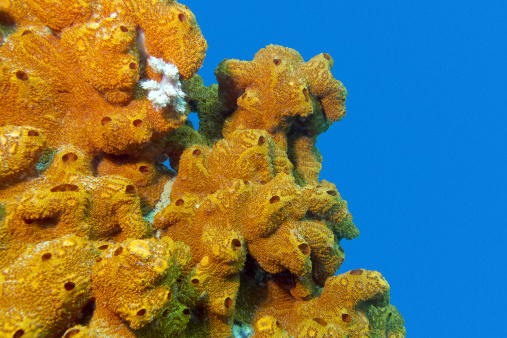
First determine if animal is asymmetrical or symmetrical. Ask yourself, is the animal lopsided without a clear pattern or is there a definite, orderly arrangement of parts? If the animal is lopsided and irregular in shape, it is asymmetrical and can be automatically classified into phylum Porifera with all the asymmetrical animals--sponges--unless it is a tiny glob (2-3 mm in diameter) and lacks the pores of sponges. In this case, the asymmetrical animal can be classified into phylum Placozoa. Look at the pictures and decide which animal belongs in phylum Porifera. Once you have your answer, click the Show Me button to see if you're right.
The kittens have a definite symmetry but the orange sponge is lopsided and irregular. It is the sponge, therefore, that belongs in phylum Porifera. Is it radially symmetrical?
If animal is symmetrical, determine what type of symmetry. There are only two types of symmetries in body plans--radial and bilateral. If the animal is radially symmetrical, it will usually be shaped circularly. A good rule of thumb is to imagine a wheel or a pizza over the animal. If the animal's body is arranged around a central axis like a wheel, then it is radially symmetrical. If you cannot imagine the animal to be evenly divided into pieces like a pizza, it is most likely bilaterally symmetrical. Can you see how the jellyfish is arranged very similarly to a bicycle wheel? What phylum do all radially symmetrical animals classify into? Once you have your answer, click the Show Me button to reveal the correct answer.
All radially symmetrical animals can be classified into phylum Cnidaria. Is it bilaterally symmetrical?
If the animal is symmetrical but is not radially symmetrical, by default it must be bilaterally symmetrical. Most animals have bilateral body plans. Bilaterally symmetrical animals have a central dividing line (not necessarily visible) that runs down the length of the animal's body, from the top of the head down through the tail region. If a central line can be drawn longitudinally down an animal's body and both sides of this line are mirror images of each other, it is a bilaterally symmetrical animal. The butterfly is the perfect example of bilateral symmetry because you can draw a central dividing line down the length of the butterfly to see two exact mirror images of each other. The following phyla are the most common ones that contain bilaterally symmetrical animals: Platyhelminthes, Nematoda, Annelida, Mollusca, Arthropoda, Echinodermata, and Chordata. Is the bilateral animal a worm?
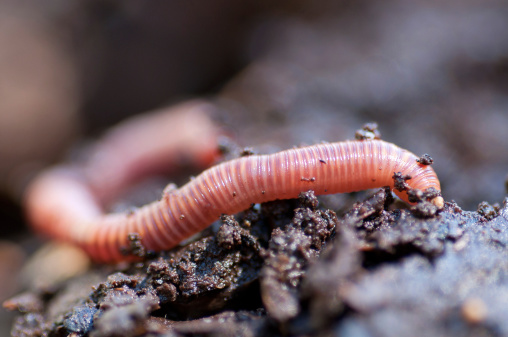
If it is a worm, it can be classified into one of the three common worm phyla--Plathelminthes, Nematoda, or Annelida. Plathelyminthes consists of flat worms. Phylum Nematoda is made up of roundworms, usually microscopic parasites. Phylum Annelida is made up of segmented worms, such as the common earthworm, as pictured. Is the bilateral animal a mollusk?
Snails, octopi, and shellfish are classified into phylum Mollusca. Is the bilateral animal an arthropod?
If the animal is an insect, spider, or crustacean (i.e. crabs), it is classified into phylum Arthropoda. Is the bilateral animal an echinoderm?
Bilaterally symmetrical animals such as starfish, sea urchins, sand dollars, and sea cucumbers are classified into phylum Echinodermata. This group includes an exception to the rule when deciding between radial and bilateral symmetry. Starfish and sand dollars indeed have radial symmetry as adults, but because the very young starfish and sand dollars are bilaterally symmetrical, they are considered as having bilateral body plans. Is the bilateral animal a chordate?
Many well-known and popular animals fall into phylum Chordata, including reptiles, amphibians, birds, fish, and mammals. |
 |









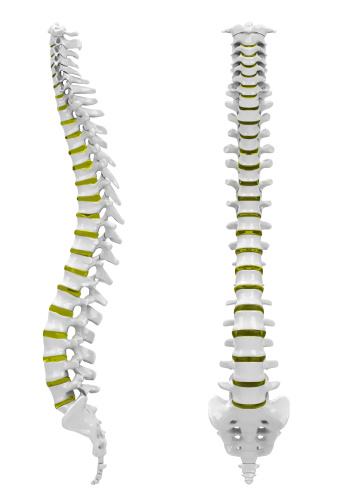
Drag the vocabulary word to the picture that best illustrates or describes it.
bilateral symmetry
|
![By Ed Bowlby, NOAA/Olympic Coast NMS; NOAA/OAR/Office of Ocean Exploration. (NOAA Photo Library: expl0985) [CC-BY-2.0 (http://creativecommons.org/licenses/by/2.0) or Public domain], via Wikimedia Commons]](https://s3.amazonaws.com/cms.accelerate-ed.com/image/07dbcf49-d3d7-4228-bd63-9f3d34f0fd2c.jpg) ![By Flavia Brandi from Roma, Italy (Genova - sonno) [CC-BY-SA-2.0 (http://creativecommons.org/licenses/by-sa/2.0)], via Wikimedia Commons]](https://s3.amazonaws.com/cms.accelerate-ed.com/image/0c490e8d-8036-4f60-b672-1d42812fad2e.jpg) |
radial symmetry
|
![By Jaro Nemčok (http://nemcok.sk/?pic=20304) [CC-BY-SA-3.0 (http://creativecommons.org/licenses/by-sa/3.0)], via Wikimedia Commons]](https://s3.amazonaws.com/cms.accelerate-ed.com/image/46f14dd5-b441-4808-9324-f37c626cad90.jpg) ![By redpandasrule (flat panda) [CC-BY-SA-2.0 (http://creativecommons.org/licenses/by-sa/2.0)], via Wikimedia Commons](https://s3.amazonaws.com/cms.accelerate-ed.com/image/29968436-1817-4610-aa82-ce0d9ae3b96a.jpg) |
asymmetry
|
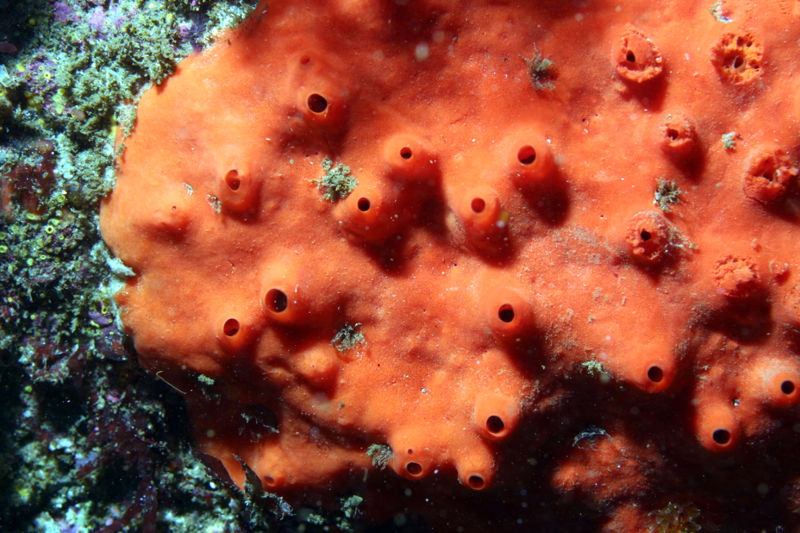 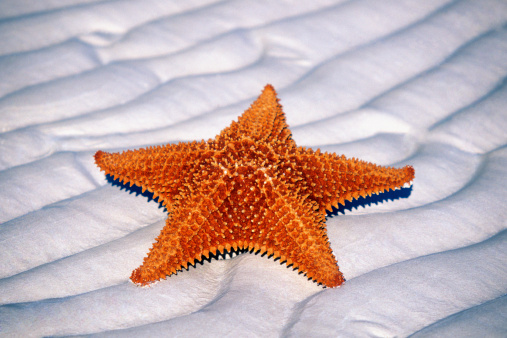 |
cephalization
|
![By Seascapeza (Own work) [CC-BY-SA-3.0 (http://creativecommons.org/licenses/by-sa/3.0) or GFDL (http://www.gnu.org/copyleft/fdl.html)], via Wikimedia Commons]](https://s3.amazonaws.com/cms.accelerate-ed.com/image/3667fb4f-4111-465d-9e23-2729e25d028f.jpg) ![Diego Delso [CC-BY-SA-3.0 (http://creativecommons.org/licenses/by-sa/3.0)], via Wikimedia Commons](https://s3.amazonaws.com/cms.accelerate-ed.com/image/65ad58c5-c1a4-48a4-afc8-75b48bf3c04b.jpg) |
Complete
Click the Activity button below to access the Practice Classifying Animals worksheet. Use what you know about classifying animals according to their body plans to classify the animals in the following worksheet. When you have completed this worksheet, submit it to your teacher.
