The countries of Nepal (nuh PAHL) and Bhutan (boo TAHN) span a great range in altitude, from a low elevation of about 230 feet (70 m) to that of the highest mountains in the world, the Himalayas. The tallest of the towering Himalayan peaks, Mount Everest in Nepal, towers 29,035 feet (8,850 m) high.
The southern lowlands of Nepal and Bhutan are hot and humid, and monsoon rains pour down every summer. Tropical crops flourish here, including citrus fruits, sugar cane, and rice. In the cooler, high areas, people grow wheat, millet, and potatoes. Most crops are grown in terraced fields built into the hillsides.
Nepal is about 90 percent Hindu, while Bhutan is about 75 percent Buddhist. Hinduism is more common in the lowlands, while Buddhism is the religion of the high areas. Yet, each religion has influenced the other. For example, people often celebrate festivals honored by both religions.
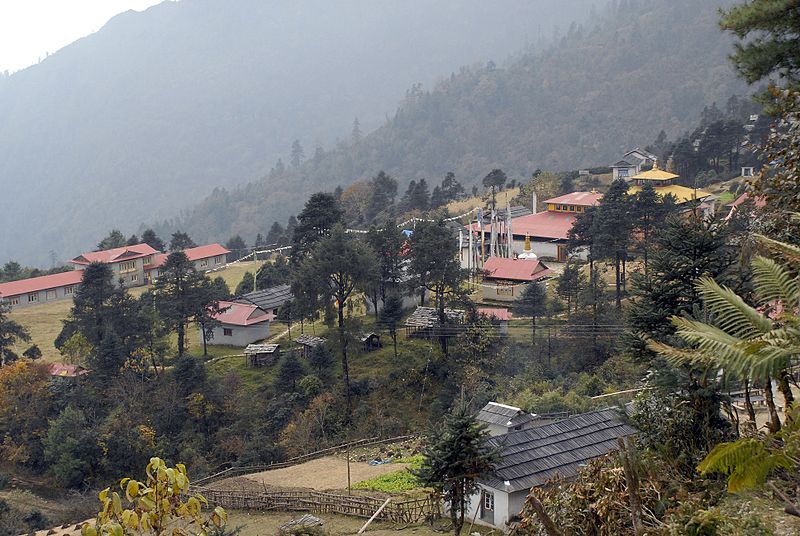
Both high mountains and politics kept Nepal and Bhutan somewhat separated from the rest of the world until the middle of the twentieth century. Today, Bhutan continues to discourage contact with tourists and other foreigners in an effort to preserve its traditional culture. Nepal, on the other hand, welcomes those who come to hike in its mountains and enjoy its magnificent scenery. The Sherpas, who live high in the mountains of Nepal, are skilled mountaineers. Many of them make a living by guiding climbers through the challenging mountain terrain.
