The Indus River is the lifeline of a largely dry country. The river basin contains most of Pakistan's agricultural areas, as well as its major hydroelectric power stations. Hydroelectric power is electricity produced by the movement of water.
Since much of Pakistan receives less than 10 inches (25 cm) of rain annually, farmers must irrigate the land, or supply it with water. The Tarbela Dam was built to control the extreme seasonal changes of the Indus River. It holds more water than any other embankment dam in the world. An embankment dam is a wall of soil and rock built to hold back water.
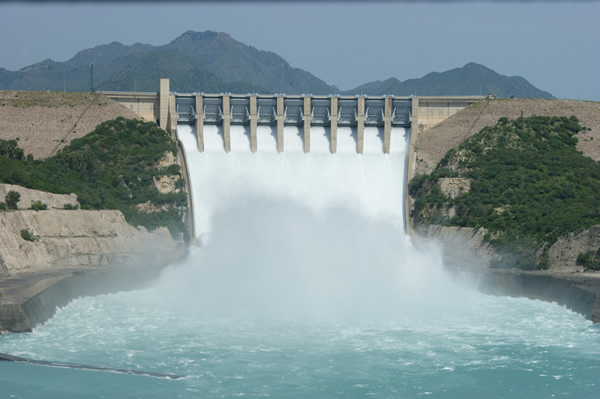
The Tarbela Dam is one of the world's biggest producers of hydroelectric power. It has also turned millions of acres of arid desert into lush cropland. The dam has created problems, however. The river picks up silt as it flows through northern Pakistan, and this silt is piling up behind the dam. Engineers estimate that within 20 years the dam will be unable to supply irrigation water.
