The most well known physical sign of dormancy is a lack of leaves on trees and shrubs. This sign is caused by abscission, the process by which some trees shed parts--like leaves--every year.
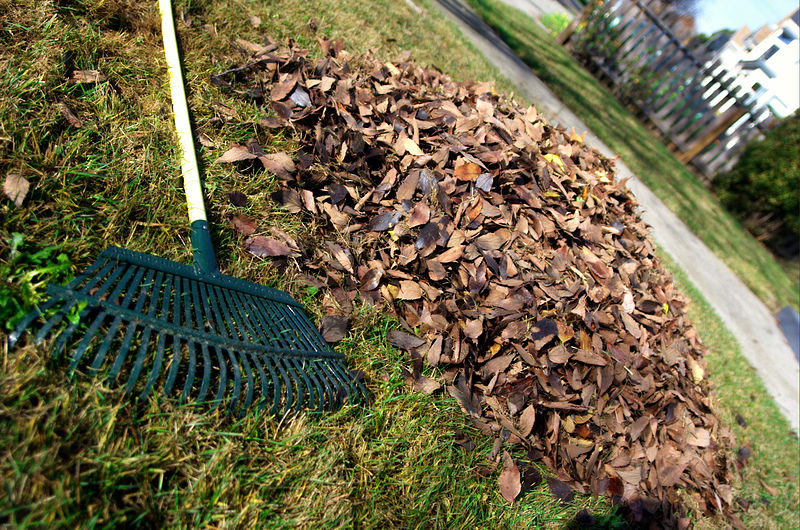
Plants losing their leaves is a physical change caused by changing seasons.
A deciduous plant loses all of its leaves at once. The time that it loses its leaves depends on the season. While you probably think of autumn when you think of trees losing leaves, some trees also shed their leaves before a very dry season. Environmental factors like a lack of water in the soil or freezing temperatures prevent a tree from being able to keep leaves healthy and protected from damage.
Recalling what you learned about dormancy, why would plants shed all of their leaves at once before winter or a dry season? Think about the answer, then click on the Show Me button to see if you are right.

Producing leaves requires a lot of energy. During the winter, plants don't make a lot of energy because cold temperatures and less light mean less photosynthesis. Therefore, plants go through abscission to save energy.
Plants shed other parts besides leaves during abscission. Any plant part that requires too much energy to repair or make is dropped before the season changes or as response to a sudden and harsh change in the environment. These parts include branches, twigs, and unripe fruits. The energy that the plant saves is used to survive until the season changes.
Abscission is a big word for an important process used by plants to save energy. Answer the questions below to see what you understand about abscission.
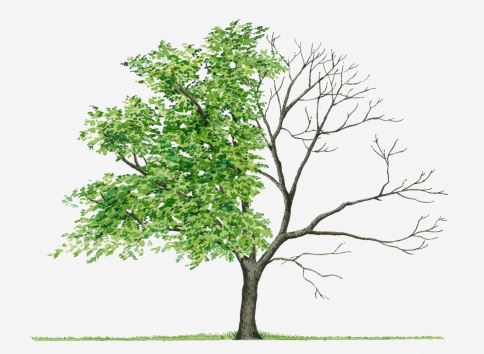
1. Which area(s) of the tree in this image has/have undergone abscission?
- only the branches on the left side
- only the branches on the right side
- only the trunk
- the branches on the left side and the trunk
2. Which describes a physical change that results from abscission?
- the loss of water from leaves
- the loss of only leaves from a plant
- the loss of leaves, stems, or branches from a plant
- the loss of water and fruit from a plant
Summary
 Questions answered correctly:
 Questions answered incorrectly:
