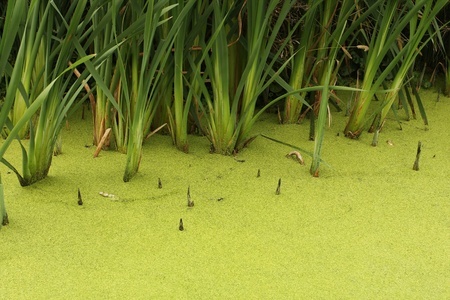
 Have you ever come up to a pond or lake edge that looked like the one in the image? The green slime is algae. All of plant-like protists are called algae, and there are as many as 1 million species. Some of the unicellular algae are as small as 10 µm, and some of the multicellular algae can grow up to 60 meters long. Like plants, most of them contain the chlorophyll, the pigment that plants need in order to make food through photosynthesis. Though there is some variation in the specific types, they all generally have the same structures.
Plant-like protists, which are called algae, are classified into six types based on the cell structure, number and position of flagella, the type of chlorophyll, and the pigments they have. Click through the tabs below to learn more about the six types of algae.
|
Dinoflagellates
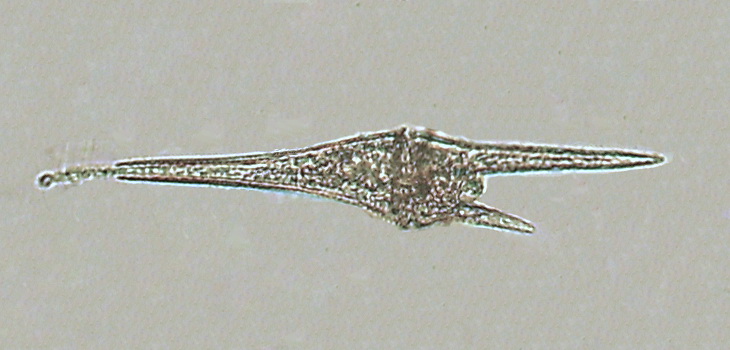
Dinoflagellates are unicellular protists containing two flagella for their movement. They have chlorophyll and yellow-brown pigments.
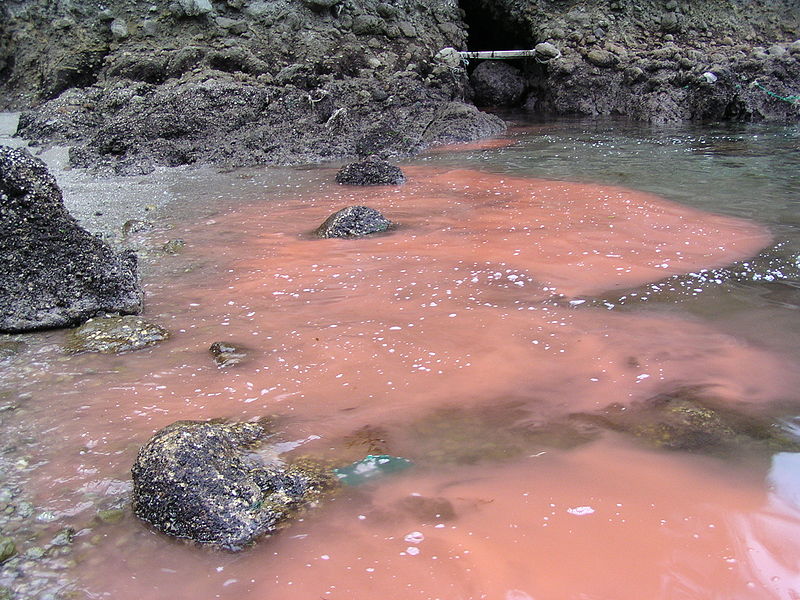
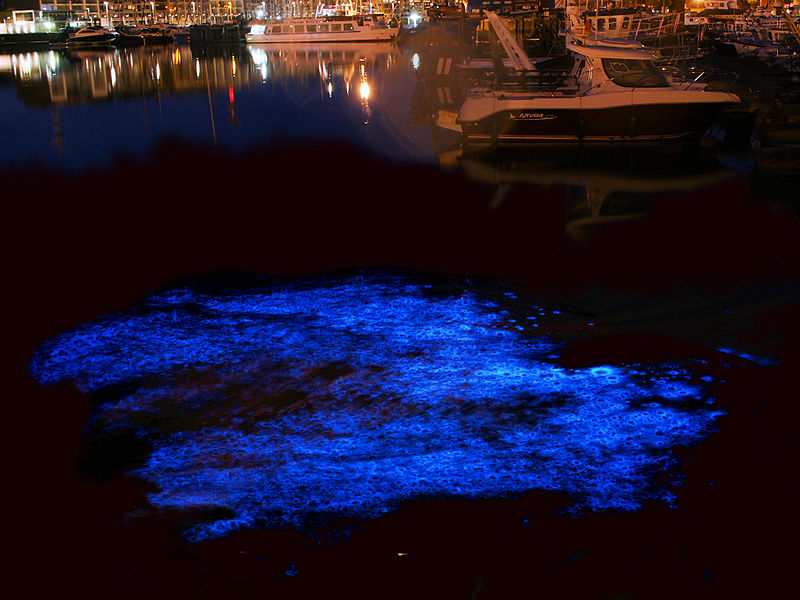
Dinoflagellates are responsible for causing red tide in oceans and rivers when there is an overgrowth. Some of their species are bioluminescent, which means they glow in the dark. Diatoms
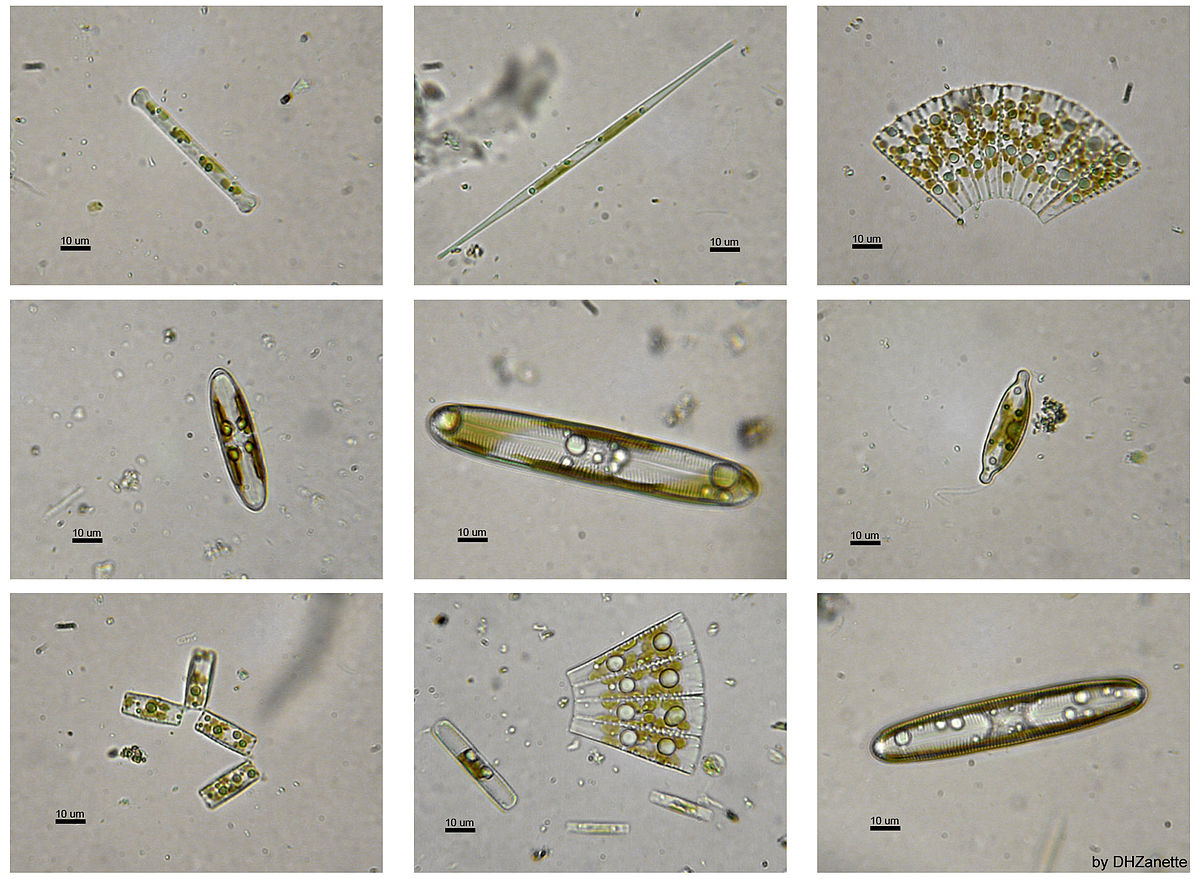
Diatoms are unicellular protists that actually have silica (a substance in that is in glass) in their cells. They do not have flagella. Diatoms live in water or damp soils. They also have chlorophyll along with yellow-brown pigments. Diatoms do not readily decay because of the silica-based cell wall. Euglena
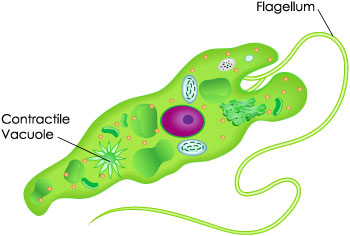
Euglena are unicellular, flagellated protists containing chlorophyll pigments. They also contain carotenoid (a yellow orange pigment found in tomatoes). Euglena are found in salty as well as fresh water and contribute to the green coloring of the waters. They contain a single flagella as shown in the figure and have an organelle called the contractile vacuole, which is used to pump excess water out of the cell. Brown Algae
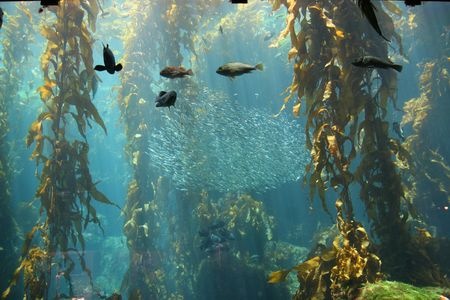
Brown algae is a multicellular protist known as kelp or seaweed. It is found in oceans. Brown algae often provides shelter for fish and actually resembles a forest-like atmosphere for marine life. It also has chlorophyll, carotenoids, and yellow-brown pigments. Red Algae
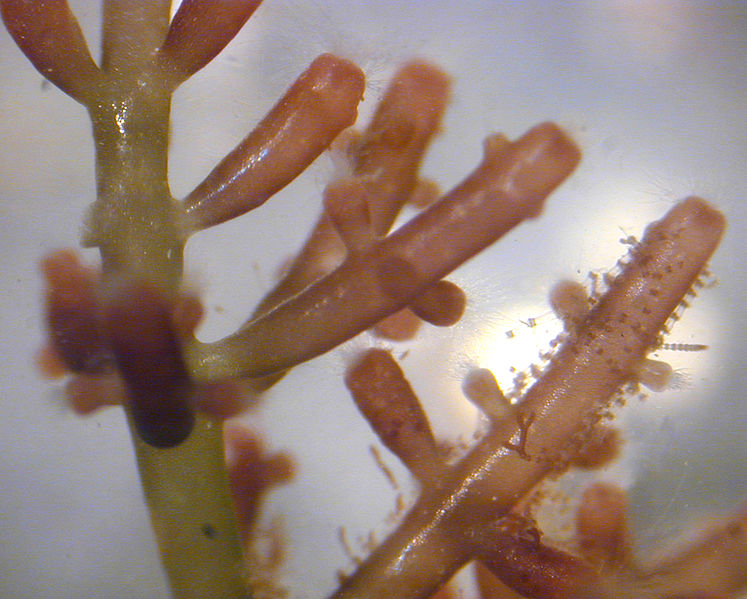
Red algae is a multicellular protist that is also a type of seaweed. It is usually found in the ocean and on some coral reefs. It also has chlorophyll, carotenoids, and yellow-brown pigments. Green Algae
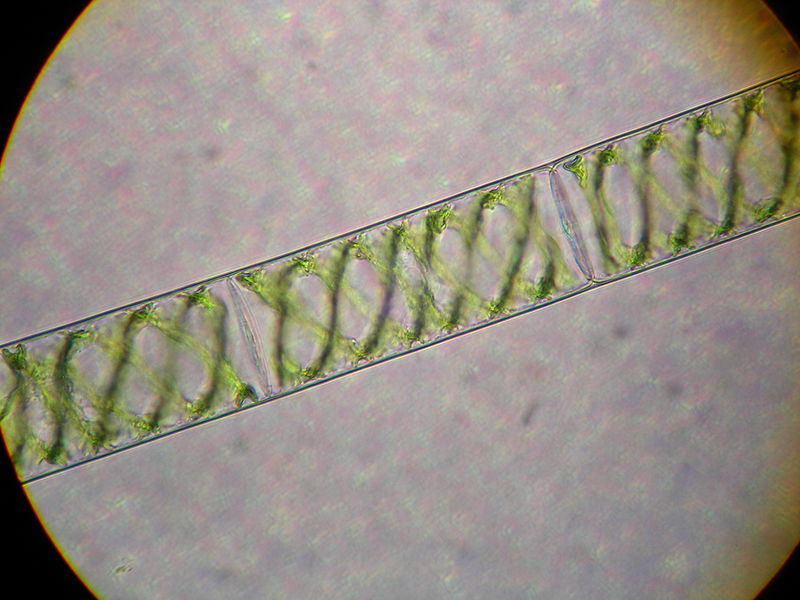
Green algae is a multicellular protist which is probably the most well-known of all the algal types. It contains chlorophyll and carotenoids. Green algae is found in moist environments and on ponds and lakes. It often causes eutrophication, which is the addition of nutrients into lakes that causes huge algal blooms that kill fish. This group contains both green-colored algae (like spirogyra shown in the figure) and colorless algae. The colorless algae do not contain chlorophyll and thus cannot create their own food. They feed off of dead matter. |
 |

Question
Which of the plant-like protists are multicellular?
