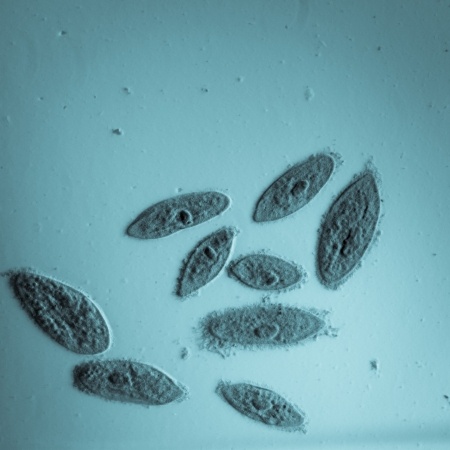
 A protozoa |
They are found in moist, wet environments and on the inside of animals. Protozoa have been classified into four types based on their locomotion (movement from one place to another). Read through each tab below to learn about each of these four types of protozoa.
Sarcodines
Flagellates
Sporozoans
Ciliates
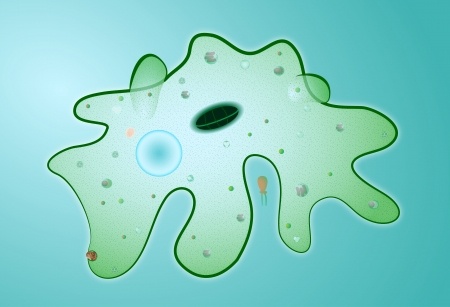
Amoeba proteus
Sarcodines are protists that have an amoeboid movement. They move by producing extensions of their cytoplasm. Amoeba, one species of sarcodine, live by feeding off of unicellular bacteria in fresh water. One type of sarcodine called Entamoeba hystolitica feeds off of the nutrients in the colon, causing amoebic dysentery. The symptoms can range from mild digestive discomfort to fever and bloody stools.
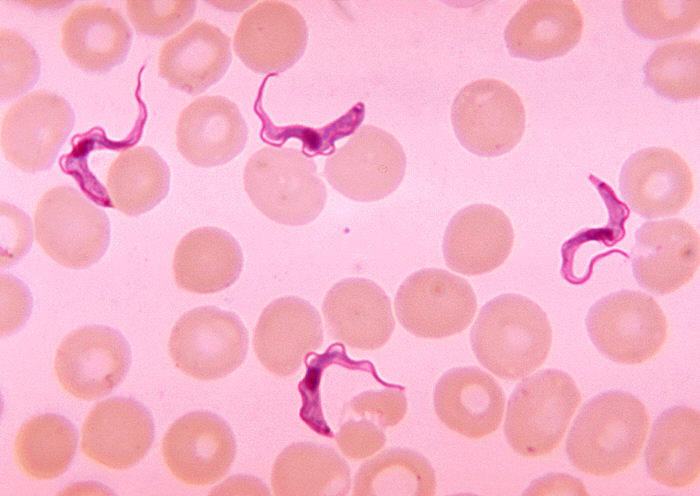
These animal-like protists are called flagellates because they have one or more flagella that move side-by-side to propel them. Some of them are parasites, like the Trypanosoma shown in the image. Trypanosoma is a flagellate carried by the Tsetse fly in Africa. When the tsetse fly bites a human, Trypanosoma is injected into the victim's blood, causing African sleeping sickness. This illness causes confusion, headaches, numbness, and difficulty sleeping. It is difficult to diagnose, but it is treatable.
![By Jfbranch14 (Own work) [CC-BY-SA-3.0 (http://creativecommons.org/licenses/by-sa/3.0)], via Wikimedia Commons](https://s3.amazonaws.com/cms.accelerate-ed.com/image/da72e215-9355-4c05-a839-b84b14268e80.png)
Sporozoans are mostly non-motile parasites. They form spores during their reproductive cycle. The most famous sporozoan is Plasmodium vivax, which is one of the six species known to cause malaria. Sporozoans like plasmodium contain a very strong protein coating that is instrumental in surviving in the human body. The plasmodium integrates successfully into the red blood cells of human beings and reproduces asexually. Then the red blood cells rupture releasing new plasmodium.
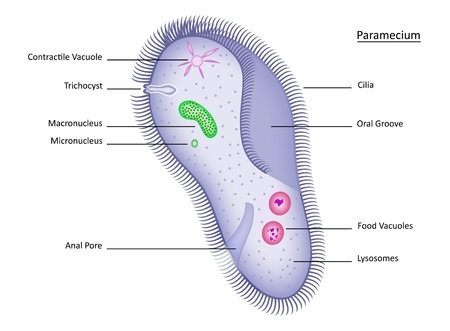
Ciliates are a type of protozoa that move using hair-like structures called cilia, which you can see in the image of the ciliate called paramecium in the image above. The cilia help with movement as well as with feeding the organism by pushing food into the food vacuole. Balantidium coli is a type of ciliate protozoa that can live in the large intestine of humans and cause diarrhea.
Question
Of the protozoan types, which is the only one that relies on the movement within the host to reproduce?
