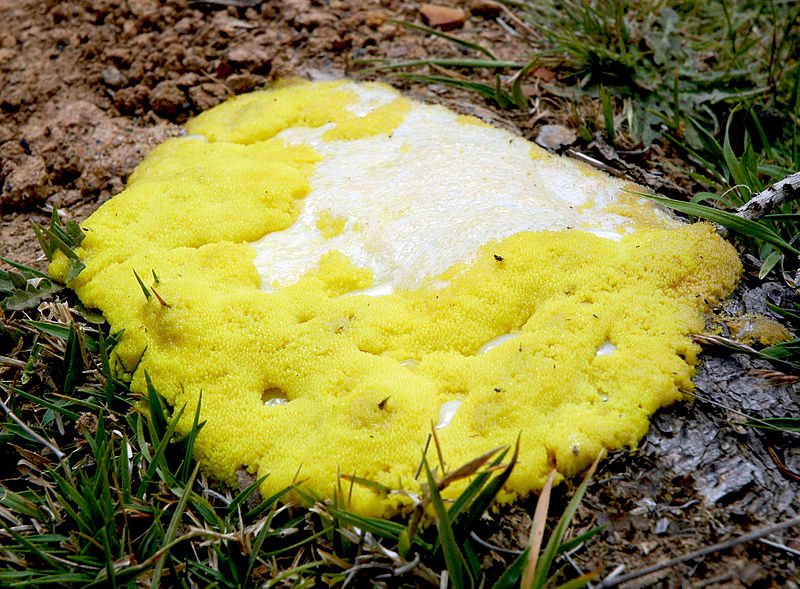
 Have you ever seen something like what's shown in the image? It's often referred to as the dog vomit or scrambled egg slime because of its appearance. It is one of the fungi-like protists that are referred to as mold. But that term is misleading. Many years ago, scientists thought the slime was a fungus, but they later found out that was not the case. Since mold is the name most scientists still use for these fungi-like organisms, they will still be called molds here.
Fungi-like protists cannot make their own food. They feed on dead wood or other dead organisms, thus they are saprophytes. These protists are responsible for plant diseases like potato blight. There are two types of fungi-like protists: slime molds and water molds. Click on each tab below to learn the specific characteristics of these two types of molds.
Water mold
Slime mold
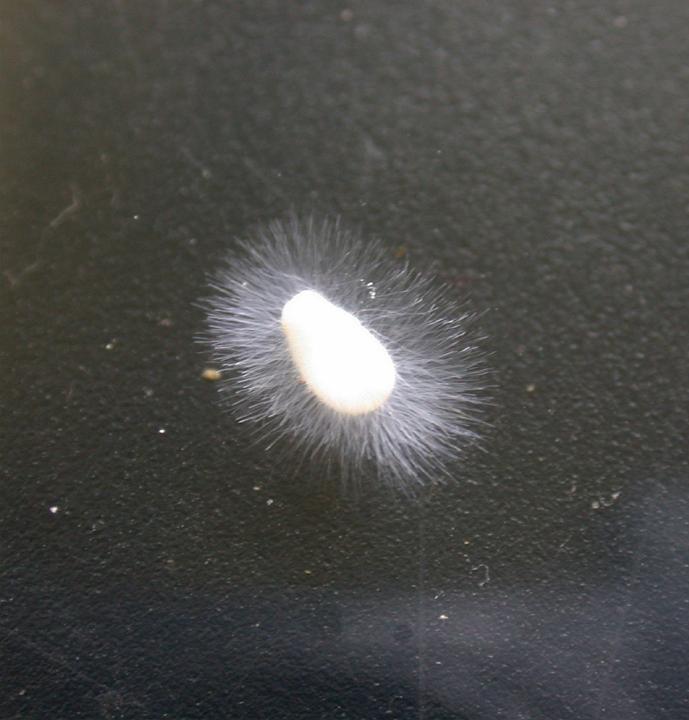
Water mold is also called white rust or downy mildew. The appearance of water mold resembles fungi because of the filamentous hyphae (branching projections used by fungi to feed). Water mold extends its filamentous hyphae structures into wood, dead fish, or flies and extracts the nutrients from them. Phyophthera infestans is the kind of water mold that infected potato plants and caused the Irish potato famine in the 1840s.
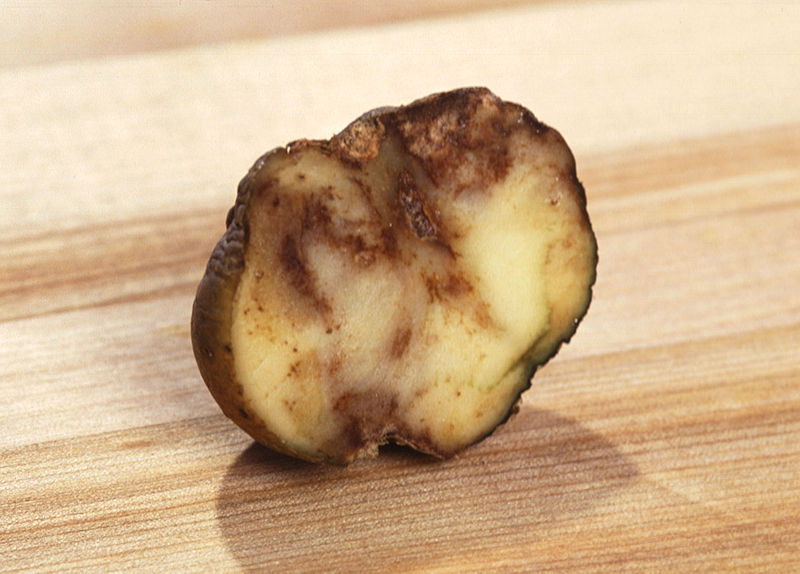
Potato Mold
![By Farnishk (Own work) [CC-BY-SA-3.0 (http://creativecommons.org/licenses/by-sa/3.0)], via Wikimedia Commons](https://s3.amazonaws.com/cms.accelerate-ed.com/image/645475b5-15c4-4052-9d3d-6179efb0269c.jpg)
Slime mold looks like a blob or a vomit-like substance on moist soil or decaying wood. It feeds off bacteria or dead organisms. Even through dry conditions, the spores will survive, and when wet conditions return, they germinate and become like the slime mold you see in the image.
Question
Though they look different, slime and water molds are both fungi-like protists. What characteristics do they share?
