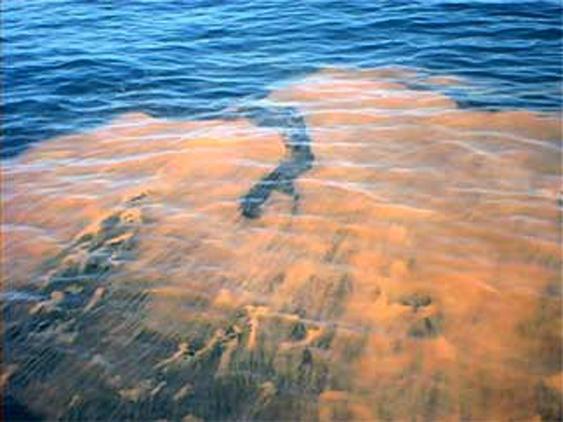
 Have you heard of pond scum, red tide, or glow-in-the-dark algae? All of these are actually small unicellular organisms called algae from the Protista kingdom, also known as protists. Algae are a lot like plants, but have unique characteristics that prevent them from being classified as plants. Other species of protists are similar--they show characteristics like other kingdoms but don't quite fit into them because of their simplicity. That's the reason scientists classified them into Kingdom Protista.
So, these organisms are "like" other organisms, but just how can you tell them from these other kingdoms? Watch the video below to find out.
 It’s easy to mistake a protist for another type of organism. Take this kelp for example—it looks a lot like a plant. In fact, many people still call it a plant. Now you’ll have the upper hand, because you know it’s a protist. Kelp isn’t a plant because it lacks some of the key features of plants, like roots.
And look at this brown algae. Would you call it a plant too? So did Christopher Columbus, but—no matter—it helped him know that land was near when he “in 1492 sailed the ocean blue.”
Take a look at this harmless looking organism. It has slender thread-like filament a lot like a fungus does, but it’s not a fungus—it’s much too simple for that. It’s a protist.
And, its wreaked havoc sucking the nutrients out of growing potatoes causing the great potato famine of the 1840’s.
Is this an animal? This tiny creature moves like an animal, but really doesn’t have all the same characteristics and lacks the complexity of animals. It’s a protist known for causing sleeping sickness in humans.
So, now you have a little more knowledge and you can brag knowing that these plant-like, fungi-like, and animal-like organisms that are much too simple to be plants, fungi, or animals are really called protists.
It’s easy to mistake a protist for another type of organism. Take this kelp for example—it looks a lot like a plant. In fact, many people still call it a plant. Now you’ll have the upper hand, because you know it’s a protist. Kelp isn’t a plant because it lacks some of the key features of plants, like roots.
And look at this brown algae. Would you call it a plant too? So did Christopher Columbus, but—no matter—it helped him know that land was near when he “in 1492 sailed the ocean blue.”
Take a look at this harmless looking organism. It has slender thread-like filament a lot like a fungus does, but it’s not a fungus—it’s much too simple for that. It’s a protist.
And, its wreaked havoc sucking the nutrients out of growing potatoes causing the great potato famine of the 1840’s.
Is this an animal? This tiny creature moves like an animal, but really doesn’t have all the same characteristics and lacks the complexity of animals. It’s a protist known for causing sleeping sickness in humans.
So, now you have a little more knowledge and you can brag knowing that these plant-like, fungi-like, and animal-like organisms that are much too simple to be plants, fungi, or animals are really called protists.
