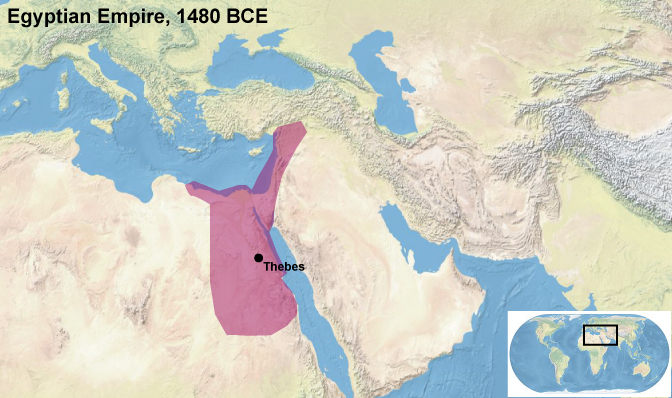
Situated along the Nile River, the Egyptian Empire lasted from 1539-30 BCE and stretched from present-day Sudan up to the Euphrates River in Iraq. Egypt was ruled by a long line of pharaohs, dynastic leaders who claimed absolute authority over their people. Because its rulers were so absolute in their approach to governing, Egypt's government during this time is considered authoritarian.
Click the question to see the answer.
Question
Egypt was originally two kingdoms that were united around 3100 BCE. Knowing what you know about how Egypt was ruled, how do you think the kingdoms were united?
Question
The Egyptians developed writing, monumental architecture, and a complex religion. What famous Egyptian creation combined all three?
Question
If the Egyptian empire at its height (1539-1075 BCE) reached from Sudan to the Euphrates River, what other empires would it have come into conflict with?
Question
The Egyptians left much evidence of their beliefs and practices--artifacts that continue to fascinate scientists, scholars, and everyone else to this day. Can you list the Egyptian artifacts and practices that most people associate with ancient Egypt?
