The ancient empires of China included four dynasties: the Shang (1700–1100 BCE), the Zhou (1027–221 BCE), the Qin (221–206 BCE), and the Han (206 BCE–220 CE). Together, these dynasties produced Confucianism, the Great Wall of China, and the unified region we now know as China. Like other ancient empires, Ancient China was ruled by several different types of political systems.
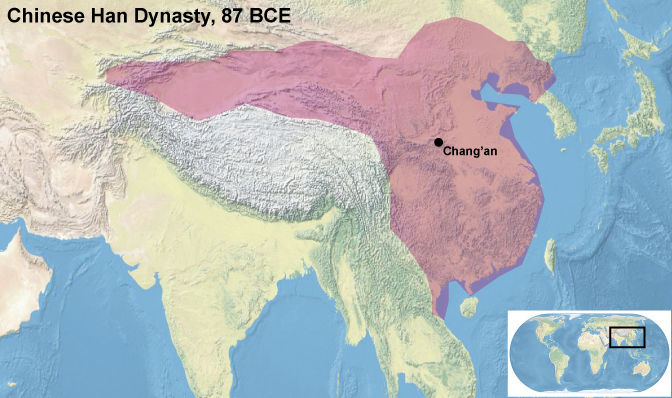
The empires in Ancient China are the last ones you'll study for this lesson.
| Time Frame | Achievements | Fall | Dynasty |
| 1700-1100 BCE | Bronze work, farming innovations | Its king was overthrown by a neighboring people. | Shang |
| 1027–221 BCE | Developed feudal society, produced writings of Confucius | Its overthrow led to the 200-year Warring States period. | Zhou |
| 221–206 BCE | Produced the first emperor and gave China its name; began the Great Wall | Overthrown by common people angry over harsh laws and taxes | Qin |
| 206 BCE–220 CE | Based its government on Confucian principles; less harsh. Increased trade | Overthrown by regional warlords; led to another period of chaos | Han |
Question
What triggered the fall of each Chinese dynasty?
popular uprisings
