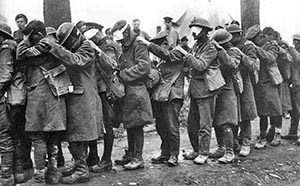
- Chemical weapons: During World War I, the German Empire was the first country to use chemical weapons, which are toxic or poisonous chemicals used to injure or kill enemy soldiers. Mustard gas was the most famous chemical weapon of the war. Named for its mustard-like odor, mustard gas burned human skin and tissue. If you inhaled mustard gas, the inner tissues of your lungs would be painfully burned. There is also a good chance that you would eventually develop lung cancer.
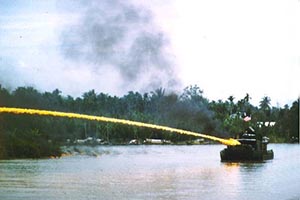
- Flamethrowers: These weapons fire a stream of gasoline, which is ignited as it flies through the air. Flamethrowers were developed to clear out trenches and bunkers during the First World War. They were terrifying to enemy soldiers because they caused a horrific, painful death.
- Napalm: Napalm is a mixture of fuel and gel. Mixing gasoline and sticky rubber, for example, would make napalm. The goal of napalm is to make burning weapons deadlier and more destructive. Regular gasoline rolls off its target, but the gasoline in napalm will cling to its target. First developed in the Second World War, napalm caused widespread destruction against Japan. However, its most famous use came during the Vietnam War, when planes would drop enormous quantities of napalm on Vietnamese jungles and villages.
Unlike guns and explosives, these weapons are designed to torture, mutilate, and terrify their victims, in addition to killing them. For this reason, all of them are considered morally questionable and they have legal restrictions today. The use of chemical weapons is banned by international law, and napalm technically cannot be used against civilian targets, although it was used primarily against civilian targets in the past.
Review your knowledge of these new technologies in the following Drag and Drop activity.
|
Today, chemical weapons and napalm are considered ____________.
|
necessary evil
morally problematic
|
That is correct.
You should review this topic.
|
Both chemical weapons and flamethrowers were effective at ___________.
|
clearing trenches
destroying tanks
|
That is correct.
You should review this topic.
|
Napalm is a mixture of fuel and _________.
|
flame
gel
|
That is correct.
You should review this topic.
Complete
Question
How did these weapons represent "total war"?
In total war, nothing was off-limits, and anyone could be a target. Victory wasn't about territory or honor, but about national survival. That these weapons were cruel and "unfair" didn't matter during the two world wars because atrocities and suffering were already widespread. If countries didn't use these weapons in some situations, it was because there wasn't an advantage to using them, not because of any feelings of sympathy for the enemy.
