What happens after double fertilization is complete and the seed is ready for dispersal? You can sometimes tell by simply observing the shape of a fruit or a seed. This is because "form follows function"; in other words, fruit and seed structures are designed to perform a particular job.
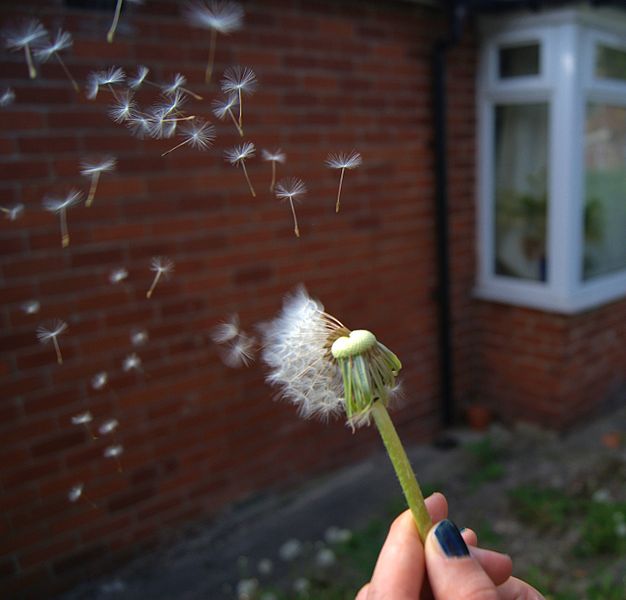
How do you think "form follows function" in the way that this dandelion disperses its seeds?

The dandelion uses the wind to disperse its seeds. Each seed is attached to a piece of fluff called a pappus that helps carry the seed on the wind far away from the parent plant.
In this activity, read each tab to learn about three methods of seed dispersal. As you read through each tab, see if you can tell in each case how form follows function.
Wind
Water
Animals
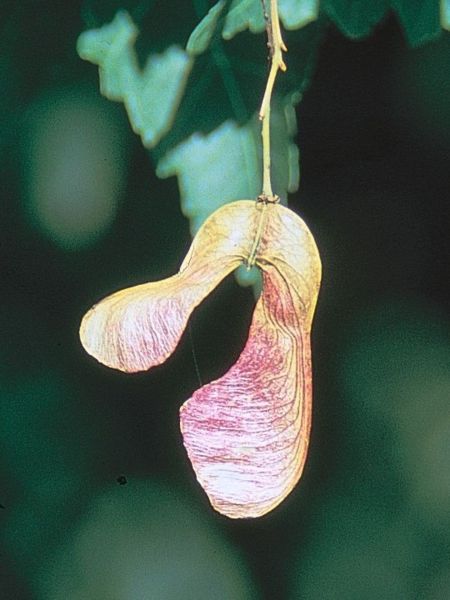
Wind can carry seeds very long distances. Seeds dispersed by the wind usually have a sail-like structure, like the maple seeds shown in this picture. These structures allow air currents to move the seeds far away from the parent plant. Plants that use the wind for seed dispersal include thistle, milkweed, maple, and dandelion.
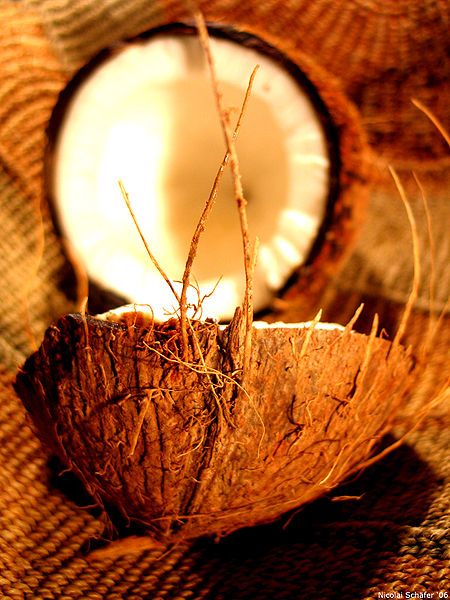
Many plants rely on water to carry their seeds. Plants that use water for seed dispersal may grow in water, or just near it, like the tree that made this coconut. As you might expect, these plants have seeds that float, are made of buoyant materials (materials that are able to float), and are water-resistant. In some cases, like the coconut shown, seeds even have air spaces inside of them that help them to stay on or near the surface of water. Plants that use this method include willows, mangroves, and foxgloves.
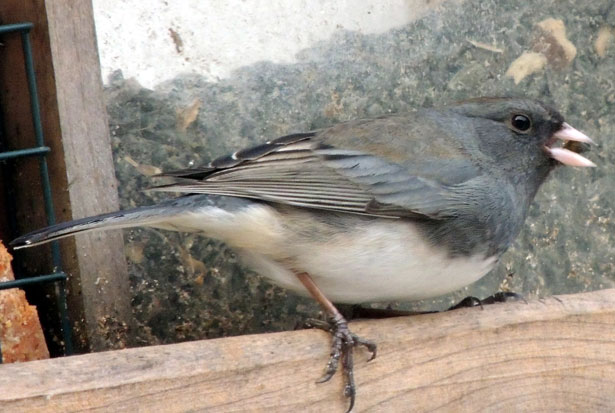
Some plants count on animals like the bird shown to disperse their seeds. A fruit's bright color or tempting smell encourages animals to eat them. In most cases, the seed coat around the embryo is strong enough to withstand the animal's digestive tract. The seed is transported where the animal's waste falls. Other plants like burdocks have hooks on their seed pods that stick to fur or feathers. Plants that count on animals to help disperse their seeds include berries of all kinds, oak and other nut trees, and sunflowers.
