Can you recall a time when you were participating in an activity and you lost your balance? More than likely, it was because you where not stable in your footing or body position. The next time you watch a basketball or football game, notice what happens before a player falls down or is knocked down. Most likely, the athlete did not or could not keep his center of gravity. The center of gravity is when the weight of the body or an object is evenly distributed and is balanced or in a state of equilibrium.

Stability and the center of gravity go hand-in-hand. Stability means the lower the center of mass, the greater the base of support. The closer the center of the mass and the base of the support are to each other, the greater the stability. In physical activity, the center of mass is the center of gravity. Therefore, stability comes from having a center of gravity that is in equilibrium.

Balance is being able to control or stabilize your body while it is static or in motion. Balance is the the same as the body being in equilibrium. The connection here is that when the center of gravity is stable, the body will be in balance.
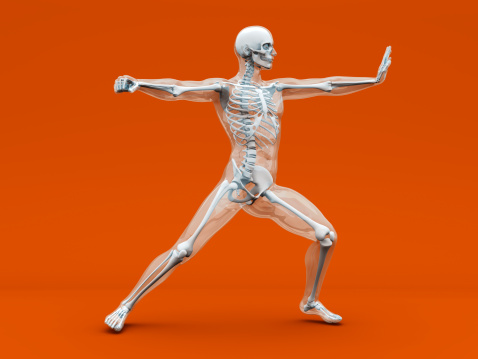
If your center of gravity has a larger base of support and is lower to the ground, the better your balance and stability will be when performing your activity. In most activities, you can increase your base of support by widening your stance and slightly bending your knees.
Centre of Gravity
What is it called when your body is stable while static or in motion?
