The process by which a cell divides, creating two cells, is sometimes called the cell cycle. The most common cell cycle can be illustrated using cheek cells as an example. Cheek cells experience a great deal of wear and tear as you brush your teeth and chew and swallow food. This constant action means that the death of cheek cells is a routine occurrence in your mouth. Fortunately, though, cell division replaces them.
Cheek cells belong to the category of somatic (body) cells. This is important to remember because non-somatic cells such as those found in your reproductive system follow a different pattern of cell division than somatic cells.
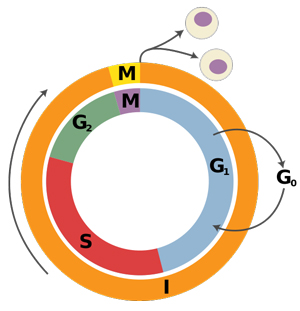
Carefully observe the phases of the somatic cell cycle by clicking through the slide show below.
|
G0 is the resting phase for cells that are currently in the process of division or cells that do not intend to divide, such as the nerve cells in your brain.
When your cheek cell decides to divide--because more cheek cells are needed--it leaves the G0 stage and enters the G1 phase (first gap) of the cell cycle.
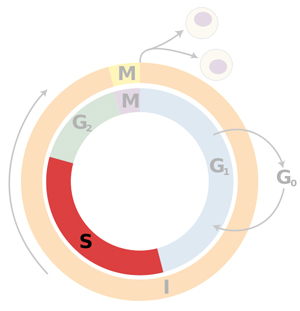
The G1 phase is followed by S phase (S stands for synthesis), when the cheek cell creates copies of its DNA or genetic material.
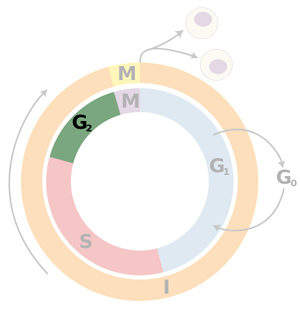
Next is the G2 phase (second gap). The G1 and G2 phases are called gap phases because they show a pause in activity between the S phase and the M phase. Together, the G1, S, and G2 phases are called the interphase.
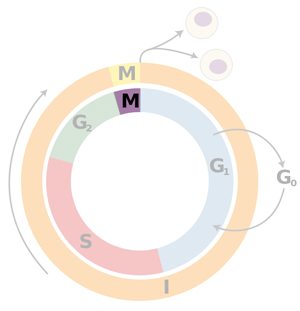
The M phase (M stands for mitosis and cytokinesis) is the part of the cell cycle in which the cell actually divides into two cells. In some ways, the other phases were preparation for this phase. A typical cheek cell takes twenty-four hours to divide. However, it spends twenty-three of those hours in the interphase before using the last hour (the M phase) to divide itself in two. |
 |


Question
What would happen if there were no G0 phase, or resting state, for cells?
