These questions will help you prepare for the lesson quiz. Be sure to read the feedback carefully for any questions you answer incorrectly, and review those topics before leaving this lesson and taking the quiz.
Look closely at this picture. What activity does the image represent?
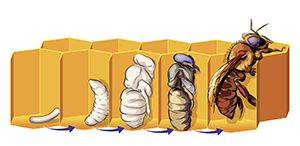
- fission due to cell division
- decomposition due to cell division
- growth due to cell division
- cancer due to cell division
The property of cell division that you are observing is mitosis.
The property of cell division that you are observing is mitosis.
The property of cell division that you are observing is mitosis.
The property of cell division that you are observing is mitosis.
In which phase of the cell cycle does the cell grow, replicate its DNA, and prepare for cell division?
- prophase
- anaphase
- cytokinesis
- interphase
The interphase stage of the cell cycle includes the G1-S-G2 phases in which the DNA is duplicated.
The interphase stage of the cell cycle includes the G1-S-G2 phases in which the DNA is duplicated.
The interphase stage of the cell cycle includes the G1-S-G2 phases in which the DNA is duplicated.
The interphase stage of the cell cycle includes the G1-S-G2 phases in which the DNA is duplicated.
What is the sequential order of the cell cycle?
- G1-G2-S-M-C
- G1-M-G2-S-C
- G1-S-G2-M-C
- G1-C-G2-M-S
The logic behind remembering the sequential order is to understand that the preparatory phase precedes the cell division phase.
The logic behind remembering the sequential order is to understand that the preparatory phase precedes the cell division phase.
The logic behind remembering the sequential order is to understand that the preparatory phase precedes the cell division phase.
The logic behind remembering the sequential order is to understand that the preparatory phase precedes the cell division phase.
What are sister chromatids?
- chromatin fragmentation
- duplicated chromosomes
- duchromatin structures
- chromatids of daughter cells
These structures form an X shape and are connected by centromeres.
These structures form an X shape and are connected by centromeres.
These structures form an X shape and are connected by centromeres.
These structures form an X shape and are connected by centromeres.
What is the name of the process where the nucleus divides and the duplicated chromosomes separate to form two genetically identical daughter nuclei?
- cytokinesis
- metaphase
- S phase
- M phase
This process follows the interphase and is responsible for separating the duplicated chromosomes into two different cells.
This process follows the interphase and is responsible for separating the duplicated chromosomes into two different cells.
This process follows the interphase and is responsible for separating the duplicated chromosomes into two different cells.
This process follows the interphase and is responsible for separating the duplicated chromosomes into two different cells.
Mitosis is concerned with the separation of the duplicated chromosomes (sister chromatids) and their allocation to two new cells. What molecular structure within the cell helps mitosis to happen?
- mitochondria
- mitotic aperture
- mitotic spindle
- mitotic apparatus
This molecular structure is made up of microtubules that emerge from centrosomes and attach to the centromeres of the sister chromatids. They pull the sister chromatids apart as mitosis proceeds.
This molecular structure is made up of microtubules that emerge from centrosomes and attach to the centromeres of the sister chromatids. They pull the sister chromatids apart as mitosis proceeds.
This molecular structure is made up of microtubules that emerge from centrosomes and attach to the centromeres of the sister chromatids. They pull the sister chromatids apart as mitosis proceeds.
This molecular structure is made up of microtubules that emerge from centrosomes and attach to the centromeres of the sister chromatids. They pull the sister chromatids apart as mitosis proceeds.
Summary
 Questions answered correctly:
 Questions answered incorrectly:
