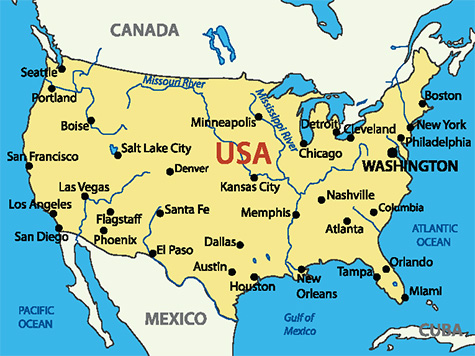
In addition to the campaign in the Chesapeake Bay, the British sent troops up the Mississippi River. With a British naval blockade along the coast and British Canada to the north, controlling the Mississippi River would enable the British to surround the United States and most likely win the war.
The British underestimated the resistance they would receive, however, at the mouth of the Mississippi. Use the information on the slide below to learn how the Americans won the Battle of New Orleans.
|
New Orleans To control the Mississippi River, the British would first have to take control of the port city at the site where the river entered what is now the Gulf of Mexico. In December of 1814, a British force numbering 10,000 landed fifteen miles from New Orleans. On December 25, Major General Edward Pakenham arrived and took command of the British assault force. Pakenham was a veteran of the Napoleonic Wars and one of the best battlefield commanders in the British Army.
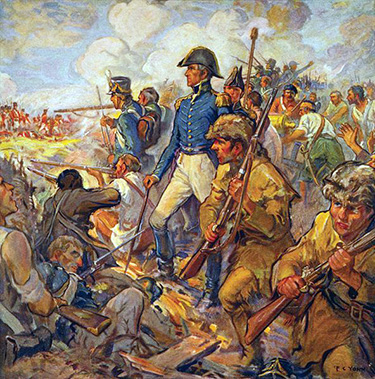
Andrew Jackson and His Army A couple of weeks before the British landed their army, Major General Andrew Jackson arrived to oversee the American defense of New Orleans. He commanded a rag-tag group of regulars, militia, Choctaw Indians, and freed slaves from Haiti. In addition, he accepted the services of pirates led by Jean Lafitte. The pirates carried cannons from their ships to aid in the defense of the city.
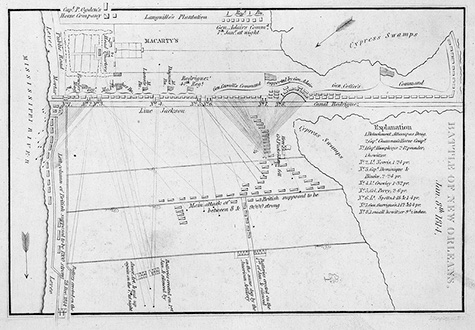
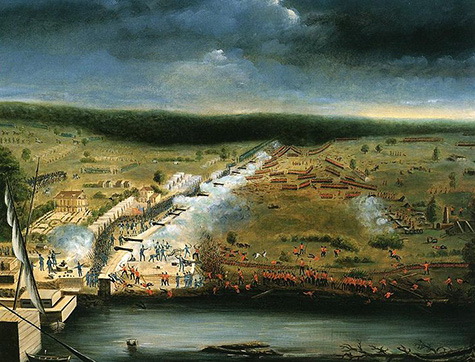
Jackson's Defenses Andrew Jackson ordered his men to convert a dried out canal into a defensive line. The men dug out the canal, piling the dirt in front of the canal to block incoming gunfire. They also built wooden barricades and positioned bails of cotton all along their defensive line.
Artillery Duel Pakenham appreciated the strength of Jackson's defenses and decided to attack with his artillery. On January 1, 1815 the British and American cannons dueled with one another for three hours. Eventually the American gunners were able to knock out several of Britain's cannons. The British artillery had failed to destroy Jackson's defenses.
Infantry Assault Once his artillery failed, Pakenham decided to launch an assault with his infantry. On January 8, British foot soldiers charged the American defensive line. After half an hour of fighting, Pakenham was dead, and the British battle line cut to pieces. The British suffered nearly 2000 casualties, compared to just 62 on the American side. The Battle of New Orleans became the most celebrated American victory of the War of 1812. |
 |

![attribution: By Djmaschek (Own work) [CC BY-SA 4.0 (http://creativecommons.org/licenses/by-sa/4.0)], via Wikimedia Commons](https://s3.amazonaws.com/cms.accelerate-ed.com/image/f7d58871-3f01-4718-82df-66599af3b639.jpg)
How well do you understand what transpired during the Battle of New Orleans? See if you place these events in the correct chronological order.
|
The Americans convert an old canal into a defensive line outside of New Orleans.
British artillery fires on New Orleans for 3 hours but fails to break the American line.
Major General Andrew Jackson arrives to command the American defense.
The British launch a ground assault against the American defenses.
A British army lands fifteen miles from New Orleans.
British Major General Edward Pakenham is killed.
|
1
2
3
4
5
6
|
