You can't believe everything you hear, and that's even more true for historical sources. Just because you've found an authentic primary source or a very detailed secondary source doesn't mean you've figured out what really happened. People who write about history are sometimes dishonest, but that's not the biggest problem historians face when they try to piece together an accurate version of an event. The classic Indian tale The Blind Men and the Elephant illustrates the real problem.
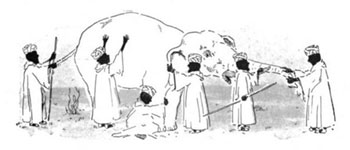 Five blind men are all examining an elephant, trying to figure out what it is.
The first man touches its leg and says, "This is a tree."
The second man touches its tusk and replies, "No, it's a spear."
The third man touches the tip of its tail, and says, "You're both wrong; it's a paintbrush."
The fourth one touches the elephant's side and says, "I think it's a wall."
The last man, touching its ear, says, "You are all mistaken. It's a fan."
As the story shows, it's hard for people in the middle of a situation to see the bigger picture. From his frame of reference, each man is being truthful about what he believes he is encountering. However, each man's limited perspective makes it hard for him to step back and understand how all of the evidence connects to provide an accurate picture.
In a very similar way, Hurricane Katrina victims may provide really accurate accounts of what is happening to them, but they are also likely to share their interpretations of the event, based on the one piece of it they can see. Someone in a neighborhood that received only mild flooding, for instance, may describe the event as much less frightening than someone who lost her house or members of her family. A good historian looks critically at any evidence he or she finds and takes the time to compare the evidence to other artifacts of the time.
Question
Why do historians need many different sources to find out the facts about an event or situation?
