In the years following World War II, black Americans began a long push for the right to vote, equal protection of the law, and other privileges that white citizens enjoyed. Today, we call that push for equality the civil rights movement, and it peaked in the 1960s and 1970s. However, black Americans weren't the only racial group being denied their civil rights. Mexican-Americans faced similar hardships; they weren't black, but many white Americans didn't consider them "white" either, so they also experienced segregation, abuse, conflicts with police, and economic exploitation in the early 20th century.
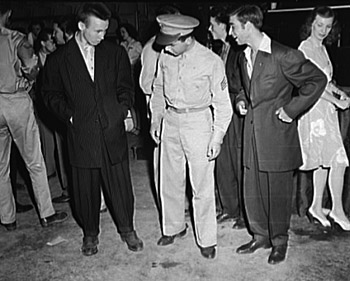 This 1942 picture shows a soldier checking out some zoot suits at a dance in Washington, D.C. |
The fight was a quick scuffle that lasted just a few minutes, but events quickly spiraled out of control over the next week. Gangs of soldiers began roaming the city looking for any young Latinos in zoot suits so they could beat them and burn their suits. When they couldn't find any, they began attacking Mexican-American neighborhoods in general, and at first the police refused to stop them, citing their respect for the American military.
When soldiers from other parts of the country started driving to Los Angeles to participate in the riots (and attack the city's black neighborhoods, too), leaders finally stepped in and banned all military personnel from the city--and they banned zoot suits, too. The riots remain a defining example of American attitudes toward Mexican-Americans in the early 20th century.
Question
Why was the Los Angeles Police Department's reaction to the Zoot Suit Riots so significant?
