From the early 1300s through the 1500s, the Aztecs ran a powerful empire throughout most of south central Mexico. They were based out of their capital city of Tenochtitlán. This city was built on an island in the middle of Lake Texcoco. The Aztecs chose to settle on the island because of an ancient prophecy that said that they would find a location for a great city when they came across an eagle eating a snake while sitting on a cactus. The importance of this mythology is seen today in the imagery adorning Mexico’s flag.
The location in the middle of the lake protected the inhabitants of Tenochtitlán from attacks by neighboring villages. The island was connected to the mainland by causeways in the north, south, and west. The causeways had bridges that could be pulled away when the Aztecs needed to defend the city. The water surrounding the island was fairly swampy so the Aztecs build a levy that kept, spring-fed waters surrounding the city.
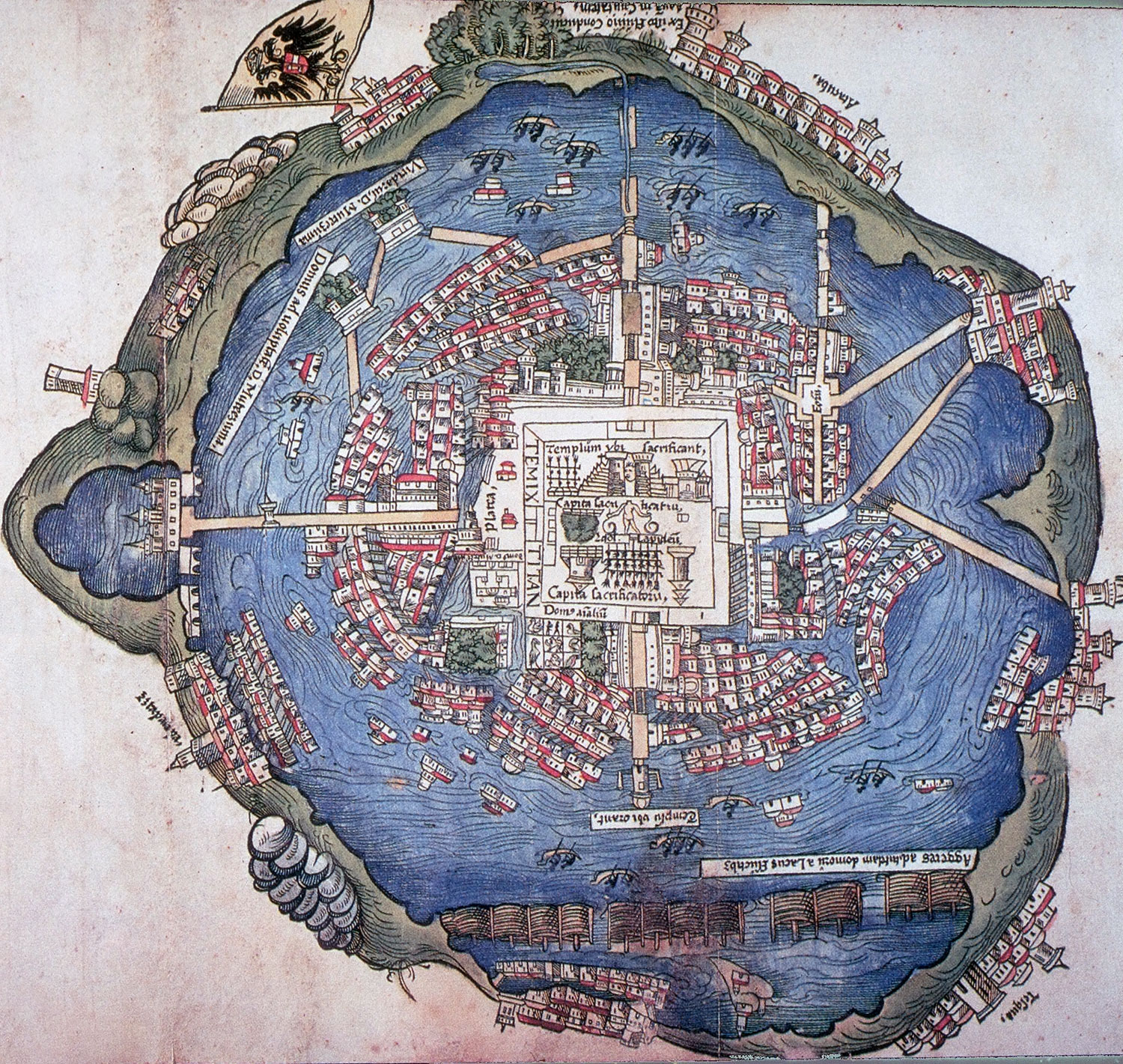
Click image to enlarge.
In the capital city, the Aztecs had bustling marketplaces. The Spanish conquistador who overtook the city estimated that the marketplace held about 60,000 people who were there to trade goods on a daily basis. In addition to the market, in the center of the city, there were temples and palaces, as well as platforms for ritual sacrifice and religious ceremonies. The Aztec leader, Moctezuma II, lived in a palace with 100 rooms. The rooms were for visiting ambassadors of the city-states that were friendly with the Aztecs, as well as for the leaders of people that they Aztecs had conquered. Moctezuma’s palace also had zoos, a botanical garden, and an aquarium.
Today, Mexico City sit on the ruins of Tenochtitlán.
Tenochtitlán
What do you notice about the layout of Tenochtitlán?
It was located on an island with just three ways to access the mainland. The center of the island housed temples, palaces, and public buildings. There were many roads on the island to allow access to different areas.
