![By Wibowo Djatmiko (Wie146) (Own work) [GFDL (http://www.gnu.org/copyleft/fdl.html) or CC-BY-SA-3.0-2.5-2.0-1.0 (http://creativecommons.org/licenses/by-sa/3.0)], via Wikimedia Commons]](https://s3.amazonaws.com/cms.accelerate-ed.com/image/126a54ce-8aef-4ed0-a19b-65e6546d37a8.jpg) Mystery Plant |
Eukaryotic Plants are eukaryotic, which means they have a "true nucleus" and membrane-bound organelles, or specialized structures that perform certain functions. What makes a nucleus "true" is that its membrane encloses DNA. Bacteria differ from plants in that they do not have a true nucleus and they lack many of the organelles found in eukaryotic cells. Eukaryotic cells have membranes around their nucleus and organelles. What is a possible function of membranes?
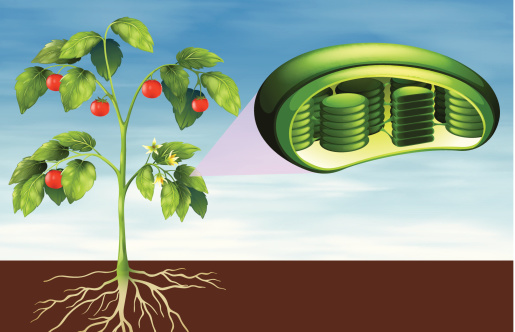
The membranes protect the structures. Multicellular Plants are multicellular, which means they are made up of more than one cell. This feature allows plants to have specialized cells that perform a certain function. Within one plant, different specialized cells perform different functions. In the image shown above, this cell is part of which specialized structure?
The cell is part of a leaf. Autotrophic
Plants are autotrophic, which means they make their own food. The food-making process that plants use is photosynthesis. This process occurs in specialized membrane-bound organelles called chloroplasts. Within each chloroplast, chlorophyll molecules absorb light energy and begin the process of converting it into the chemical energy stored in glucose. What food do plants make?
Plants make glucose. Strengthened by Cellulose This diagram shows a section of the cell wall in a plant cell. You can see that cellulose is an inner component of a plant cell wall. Other organisms, such as fungi and bacteria also have cell walls, but only plants contain cellulose as its strengthening substance. If you knew that an organism had a cell wall, could you automatically conclude that the organism is a plant? Explain.
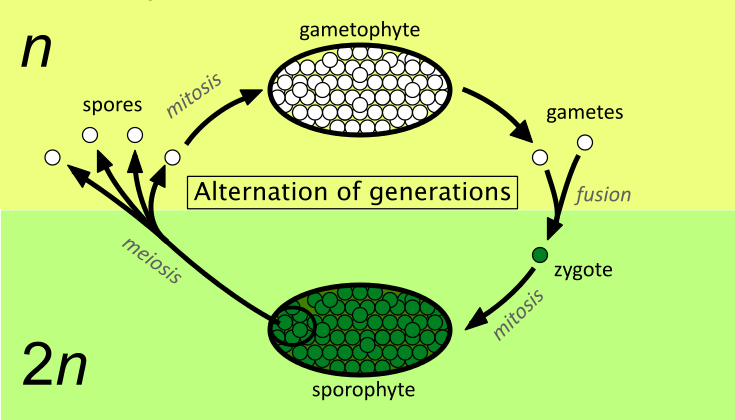
No. Plants, fungi, and bacteria all have cell walls. Two-part Reproduction Plants undergo an alternation of generation, which means they have an asexual plant form and a sexual plant form in order to reproduce. The asexual plant form is the sporophyte, and the sexual plant form is the gametophyte. Sporophytes produce asexual reproductive structures called spores. Gametophytes produce sexual reproductive structures called gametes. Specialized Organs
Plants have organs, which are a group of specialized structures that perform a certain function. Roots, stems, leaves, and flowers are plant organs. Roots absorb water and nutrients from the soil. Stems transports water and nutrients and hold up the leaves so they can receive the maximum amount of sunlight to photosynthesize. Flowers are reproductive structures; although, not all plants have flowers. Although not all plants have flowers, do all flowers come from plants?
Yes, all flowers come from plants. Immobile Plants are immobile, which means they do not travel from one place to the next. The reproductive structures of plants, spores and gametes, can travel, but not the entire plant itself. Plants can turn or bend toward or away from a stimulus, such as sunlight or gravity. This turning/bending is called a tropism. When plants turn in response to sunlight, it is called phototropism. Even when plants turn or bend in response to a stimulus, they are still immobile because they do not move from one place to another. |
 |





Question
Of all the characteristics listed above, which one should Jonas research to identify the mystery plant?
