When Jonas and his friends left to go hiking the next morning, he included a sketch book and some colored pencils in his backpack. Even though he also took a camera, Jonas knew from experience that the biggest difference between taking a picture and sketching is the power of observation. By sketching something instead taking a picture, he can pick up on more details. The more details, the more information he has to identify the plants that interest him.
The best thing about sketching plants is that they all have three general parts: roots, stems, and leaves. Plants can be identified by their leaf arrangement, which describes the pattern of leaves on the stem. Leaves are attached to the stem at a location, the node.
Jonas was pleasantly surprised to see that for all the diversity among plant leaves, there are three main types of leaf arrangement: alternate, opposite, and whorled. Click on the lightboxes below to read about the difference among these leaf arrangements.
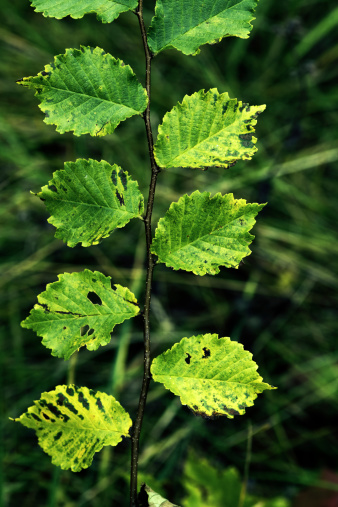 |
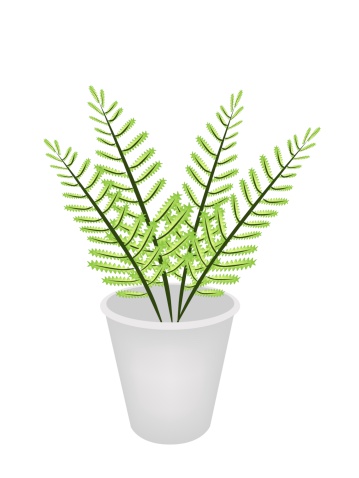 |
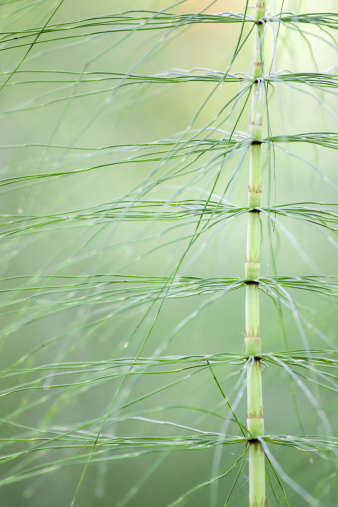 |
Alternate Leaf Arrangement |
Opposite Leaf Arrangement |
Whorled Leaf Arrangement |
What feature dictates which leaf arrangement is shown?

The number of leaves at the node.
Now its time for you to test how much you understand leaf arrangement. You will do this by identifying three plants using a dichotomous key. A dichotomous key is a tool that allows for the identification of an organism based on a series of paired statements that are based on characteristics.
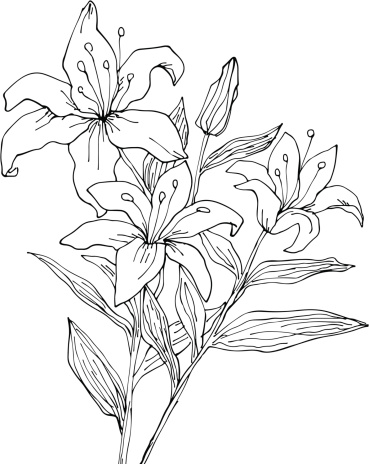
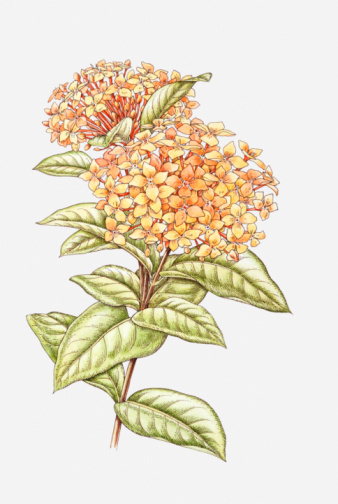
Begin by looking at the sketch of Plant A. Then, read both statements. When you find a statement that describes a characteristic shown in the plant, follow the line as directed until you have correctly identified the plant. Then, use the key to identify the next plant. Write down your answers for the identification of Plants A, B, and C before checking the answers.
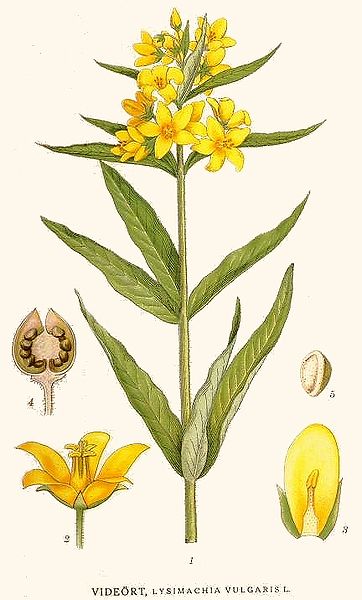 |
 |
 |
Plant A |
Plant B |
Plant c |
1A One leaf per node..................................Lily
1B More than one leaf per node................Go to line 2
2A Two leaves per node.............................Viburnum
2B More than two leaves per node............Lysimachia vulgarism
Question
What are the identities of Plant A, B, and C?
