Maintaining control of your speed is essential when you are first starting out. You will first walk, then glide. As you start down a slope, you may also use a technique called the wedge (or snow plow) or traversing to control how fast you are going. Once you get down a hill, you might also want to come back up using either the side-step or the herringbone. Click through the tabs below to learn more about each of these.
WALKING AND GLIDING
SIDE STEP
WEDGE
HERRINGBONE
TRAVERSING
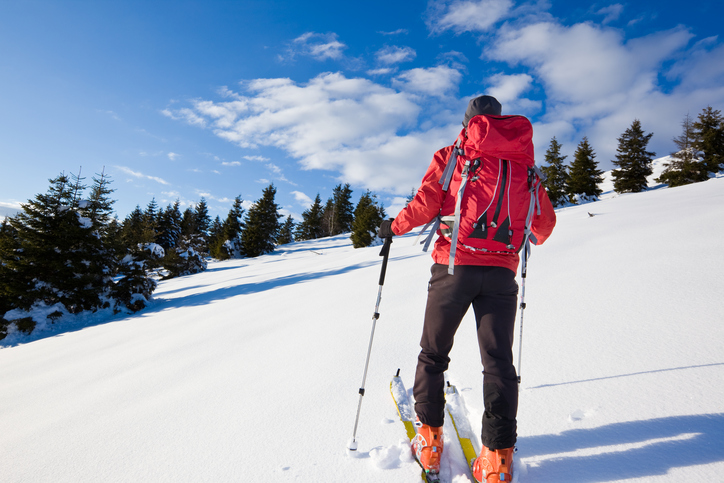
When you walk on skis, use the same motion you’d use if you were walking without skis! The only difference is that you need to use a sliding motion when you walk. The poles are used to balance and to push you along. The change of weight from one ski to another sets the ski, making it easy to push off for the next step. Following the natural bend of your arms, extend your arm and pole opposite your extended leg and pull against it. As you bring your other leg forward, brace against your opposite pole. Keep your weight on the balls of your feet so your knees can bend properly.
To glide, lunge forward and upward from a slight crouch and pull against your poles to create the momentum for a gliding movement.
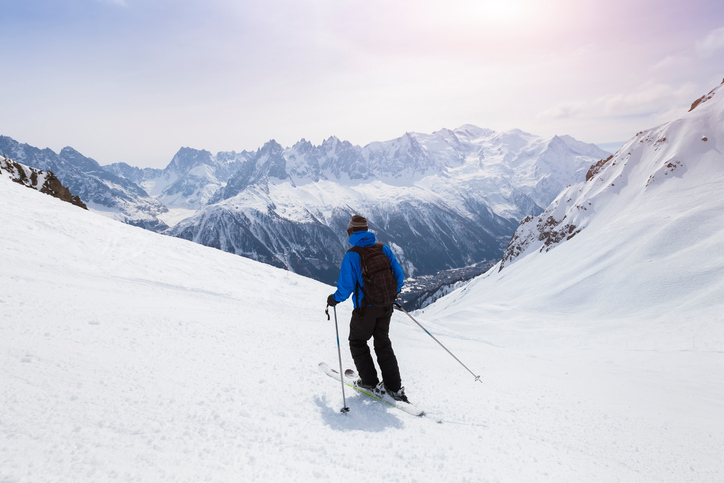
When a hill becomes too steep for you to walk up, the side step is recommended. With your skis pointing across the hill, place your uphill ski a foot above the other, and then draw up the lower one. For very steep slopes, put pressure on the downhill edges of your skis and poles.
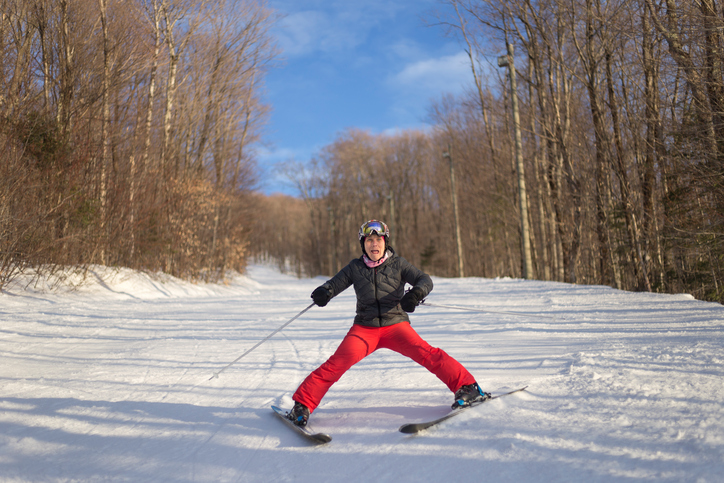
The wedge (or snow plow technique) is a braking technique used by beginners. Facing down the fall line in the downhill schuss position, push off with a brushing motion into a V ski position, with the ski tips together and the tails wide apart. The wider the V, the slower you will go. The illustration on the right is of a wedge.

The herringbone is a faster means of climbing a hill than is the side step, provided the hill is not too steep. Face directly up the hill with your skis in a V position. Keep your ski tips wide apart and the tails close together. Put weight on the inside edges, and use your poles to propel yourself upward and prevent yourself from slipping back as your weight is shifted from one ski to the other.
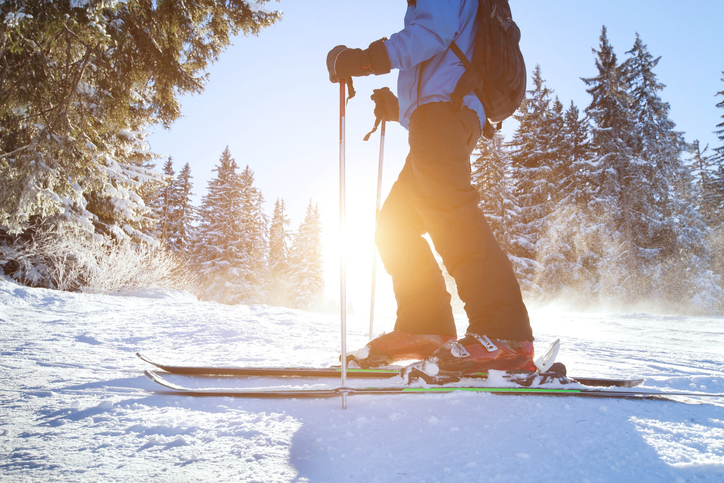
Skiing across the slope, rather than directly down the fall line, is called traversing. Traversing is useful whenever you have to cut across the slope in order to reach a specific location. It is also a good way to control your speed: acceleration is greatest when you’re pointing straight down the fall line and least when you ski across it. The same flexed body position used for downhill skiing is used in traversing. Your knees and ankles are bent, but relaxed. Your waist is bent slightly. Your back should be fairly straight with your skis comfortably apart for balance. Your poles should be held parallel and pointed back uphill in line with your shoulders. This position is the most important position in skiing.
