There are two types of ecological succession, and both begin with a disturbance and progress to a stable environment. Primary succession is one type of ecological succession. It basically begins with nothing and leads to a more diverse climax or stable community. The primary succession process often takes many years.
Primary succession follows disturbances like lava flows or severe landslides. It begins on a bare area, such as rock, without vegetation or soil. The development of a bare site is a process called nudation. Click through the slides to learn about the stages of primary succession.
Pioneer Plants
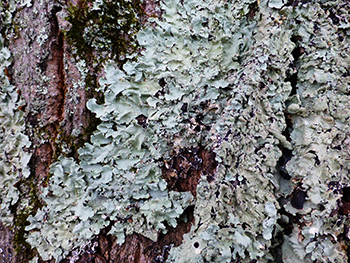
As the name implies, pioneer plants are the first to arrive and colonize a disturbed or damaged area. These plants are very hardy species, capable of surviving harsh environments devoid of soil or other vegetation. Lichens, as seen in this image, are often the first life forms to appear on a bare area. Lichens form when fungi and algae join together and form a relationship that benefits both. Lichens are very, very important. Not only are they are able to grow on rocks, they break down that rock into soil in a process called pedogenesis (which means "the formation of soil"). Forming soil is the most important process during primary succession. How do lichens do this? Lichens secrete acidic substances that help break down rocks into soil. More Pioneer Plants
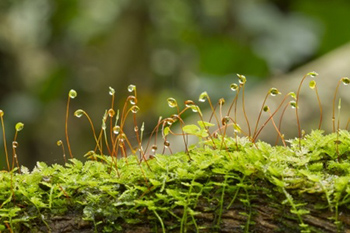
In addition to algae and fungi that form lichens, mosses may appear. At first, all these pioneer plants dominate and form soil. Pioneer plants are good at showing up and forming soil, yet they are not good at competing with larger plants that appear as soil is formed. Eventually, the pioneer species die and decompose (break down), adding to the very soil they helped form. Earthworms and Ants
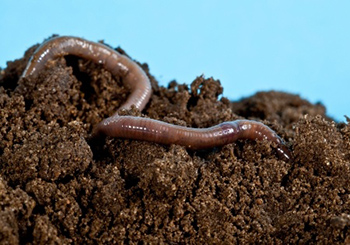
As soil forms, soil bacteria and fungi appear. These are the most important groups in the decomposition of the dead pioneer plant material. As the soil continues to form and deepen, earthworms and ants also appear. Both organisms alter the soil characteristics by aerating (introducing oxygen) and moving soil particles. Grasses and Ferns
Pioneer species, bacteria, fungi, earthworms, and ants all play a part in transforming the once barren area so that larger plants can grow. As the soil layer deepens, grasses, ferns, and wildflowers appear next. They dominate the area for several years before shrubs and trees appear. Shrubs and Trees
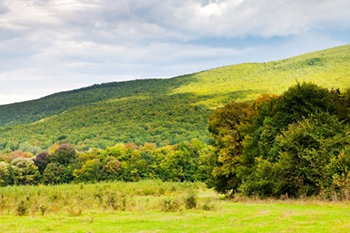
As the soil continues to form and deepen, it supports more and more plants. In this final succession stage, shrubs and trees are maturing. After many years, the once barren rock is now home to many plants and animals. |
 |


Check your understanding of the process of primary succession by placing these stages in an order that represents the process of primary succession from beginning to end.
|
Soil forms (pedogenesis)
Grasses dominate
Volcano erupts
Bacteria decompose plants
Shrubs and trees mature
Pioneer species colonize
Lava flow cools into rock
Earthworms aerate soil
|
|
