Primary succession begins in areas without soil, so soil formation is the most important process in this type of succession. Another type of ecological succession, secondary succession, occurs under different conditions. Secondary succession occurs in areas where soil already exists and once supported vegetation. It begins when that vegetation is destroyed by some disturbance, such as a flood, hurricane, tornado, fire, deforestation, overgrazing, or agricultural crop. Some plants and animals may still exist in the area, yet sometimes it's only plant seeds and roots in the soil.
Since soil is already present for secondary succession to begin, there is no need for those pioneer species (algae, fungus, lichens, and moss) that form soil. What plants do you think begin secondary succession? Click through the slides below to check your answer and learn about the stages of secondary succession.
A Disturbance
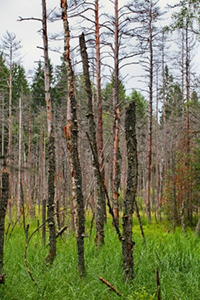
Secondary succession begins with some type of disturbance that destroys most of the vegetation in an area. Looking at this photo, you can see the difference in vegetation on both sides of the fence line. The left side has been disturbed by animals overgrazing (eating too much), leaving bare soil and few plants. On the right side of the fence line, you see there has been little, if any, grazing activity. If the animals who are overgrazing in the area are removed, secondary succession will begin. Herbaceous Plants
After a disturbance that destroys most, if not all, vegetation in an area, grasses and other herbaceous plants grow back first. Herbaceous plants have leaves and non-woody stems that die at the end of a growing season, leaving the roots in tact. This means that a herbaceous plant's roots may still be active in the soil even after a disturbance. Shrubs and Trees
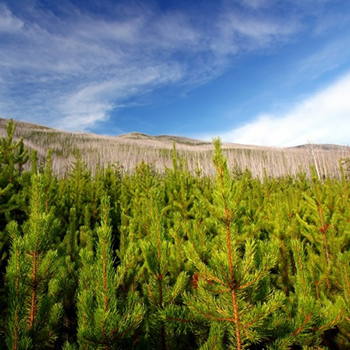
After grasses and other herbaceous plants are established for a few years, you will see small shrubs and young trees appearing and growing. This photo shows young pine trees growing tall above the grasses several years after a forest fire in Flathead National Forest, Montana. Mature Forest
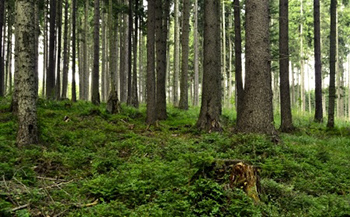
It may be many years after the initial disturbance, but secondary succession will eventually slow down and reach a climax or stable state. The end result may look like this mature forest. It may look like this for many years--unless another disturbance destroys it. |
 |

![By Boobook48 of Blogspot (The author's own work.) [CC-BY-SA-3.0 (http://creativecommons.org/licenses/by-sa/3.0)], via Wikimedia Commons](https://s3.amazonaws.com/cms.accelerate-ed.com/image/77db13d1-9855-4f64-9b75-27c187ae9d01.jpg)
Test your knowledge of secondary succession by placing these stages in an order that best represents the process of secondary succession from beginning to end.
|
Bare soil remains
Wildfire destroys vegetation
Trees mature
Shrubs appear
Grasses dominate
|
|
Question
Which do you think takes less time, primary or secondary succession? Why?
