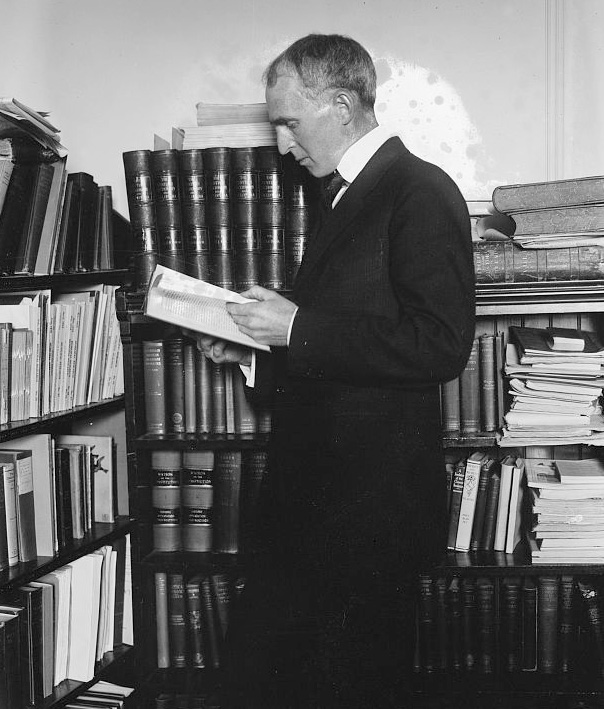
 "Now among the ideas which have held sway in public and private affairs for the last two hundred years, none is more significant or likely to exert more influence in the future than the concept of progress." —Charles A. Beard
For a species that went from hunting and gathering to walking on the moon in just a few thousand years, you might think that the pursuit of progress comes naturally. But as the influential American historian Charles A. Beard has pointed out, few Western people gave any thought or energy to the concept of progress until very recently. For most of human history, life was seen as a never-ending cycle: Generations were born, grew up, and died in a world where real change was rare, random, and mysterious.
Then the scientific revolution ushered in an "Age of Enlightenment." People throughout Europe and the United States began to picture society not as a wheel spinning in pointless circles, but as a long path leading toward a better tomorrow. In a phrase that would later be made famous by Abraham Lincoln and Martin Luther King, Jr., the abolitionist Theodore Parker described the moral universe as a long arc, stretching so far into the future that it's impossible to tell where it ends. And although he couldn't see the whole curve from his limited perspective, he was sure that this moral arc represented progress, that it "bends toward justice."

What factors and forces help drive humans toward a more just, equal, and tolerant society? And how does informational text help us talk about and track this kind of progress? In this lesson, we'll look at some technological and cultural changes that have occurred in recent American history, and we'll examine the structures and styles of texts that document these changes.
Question
Why is it important to read and write about social change using informational text?
