Readers use an amazing human ability when they read poetry—they visualize a scene that is not happening right in front of them. When readers imagine the scene created by a poem's words, it's as though they're creating the poem again, using the material of their own experience.
Collages, like other visual art forms, take this ability to visualize—to imagine pictures in our minds—and make it concrete so that others can share and discuss what a poem asks its readers to imagine. Poems with multiple-meaning words are great subjects for collages because the various meanings suggest an array of interesting images.
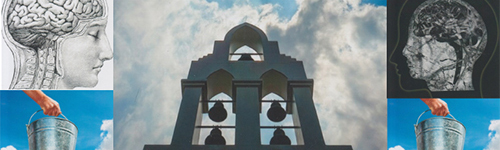
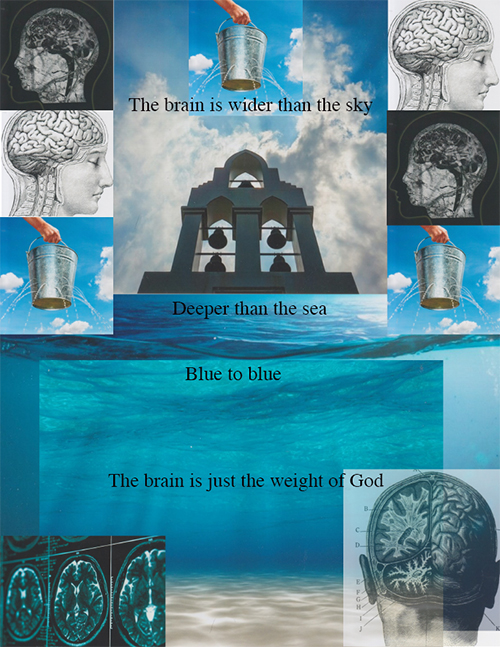
Remember Emily Dickinson's poem "The Brain—is wider than the Sky—"? Read it once more, thinking about the images it brings to your mind. Then click the image of a collage to see a larger version.
Question
What idea in the poem seems to matter most to the reader who created the collage? How do you know?
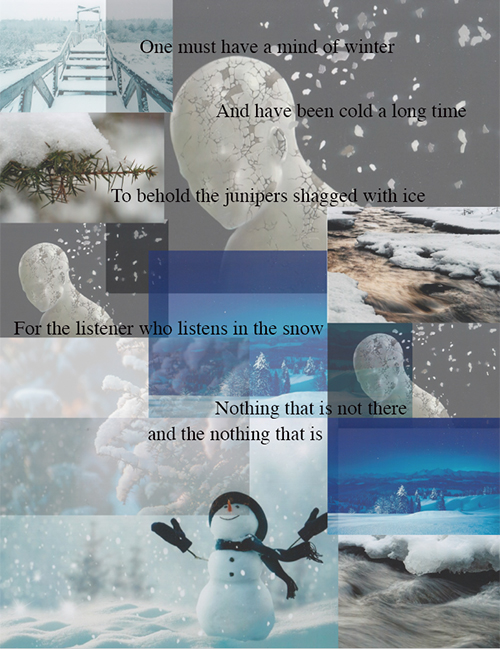
Another poem that uses multiple-meaning words to suggest evocative images is Wallace Steven's "The Snow Man." As you read it, think about how you might represent the poem visually. Then click the image of a reader's collage to see a larger version.

Question
How would you describe the way the reader feels about the snow as it's presented in the poem?
