You may recall that there are three basic parts of an argument: the claim, the reasoning that supports the claim, and the factual evidence that is used to prove the reasons or claim. Click each of the parts below to see how that argumentative element might appear in a court case.
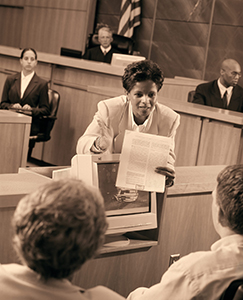 |
|
| Claim | My client is not guilty of this crime. |
| Reason | Whoever committed the crime had to be present at the time the crime was committed. |
| Evidence | Two witnesses have testified that my client was with them, miles away from the crime scene, when the crime occurred. |
If the jury accepts the reason that links the evidence to the claim, then they will have to agree with the defense attorney and find the accused not guilty.
Question
Why might a jury NOT be persuaded by the reason given above?
The accused may not have been present at the time the crime was committed, but he or she could still be involved somehow. The prosecution might suggest that the accused hired someone else to commit the crime or had an accomplice. The accused person's attorney will need to address these concerns in further arguments.
