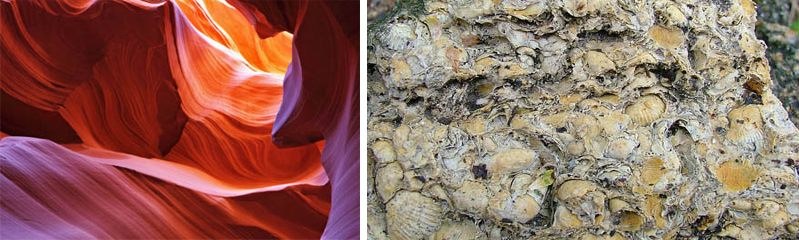
Heavier materials settle first and are later covered by lighter, finer materials. As the water evaporates, minerals act like cement and harden into layers of rock. Rocks that are formed in this way are called sedimentary rocks. Rock salt, limestone and sandstone are all examples of sedimentary rocks. When sediments are exposed to wind they form into piles called dunes. Eventually the dunes become "petrified" or hardened into rock formations such as the formations to the bottom left.
Some sedimentary rocks are formed from living things. Layers of seashells that sank to the bottom of their watery homes when the animals that formed them died, unite to form particular types of sedimentary rock. Coquina limestone is a sedimentary rock formed by layer upon layer of seashells. Sometimes processes cause these shells to be broken into very small pieces which may become sand on a beach, or may naturally cement together to form shell limestone.
Question
Can you find any other examples of sedimentary rock?
