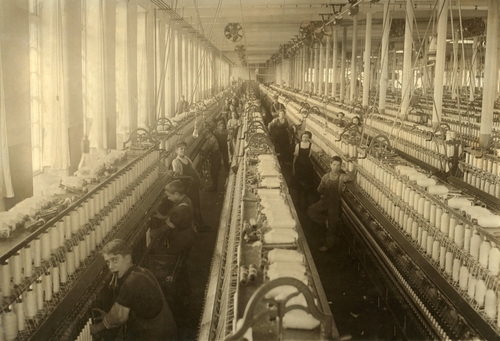
Prior to the Civil War, the Northern states in America were experiencing a boom in technology and manufacturing. New technologies--such as Robert Fulton's steamboat, John Deere's horse-drawn reaper and riding plow, Samuel Morse's telegraph, and Charles Goodyear's vulcanization of rubber--were making production of goods faster, cheaper, and easier. For this reason, the North experienced an increase in factories used to manufacture goods. Along with these factories came jobs. Men, women, and children began moving from the countryside to the cities to work in the factories. In addition, immigrants were also traveling to the United States by the boatload.
Read the following information about the rise of the factory system. Take notes as you read.
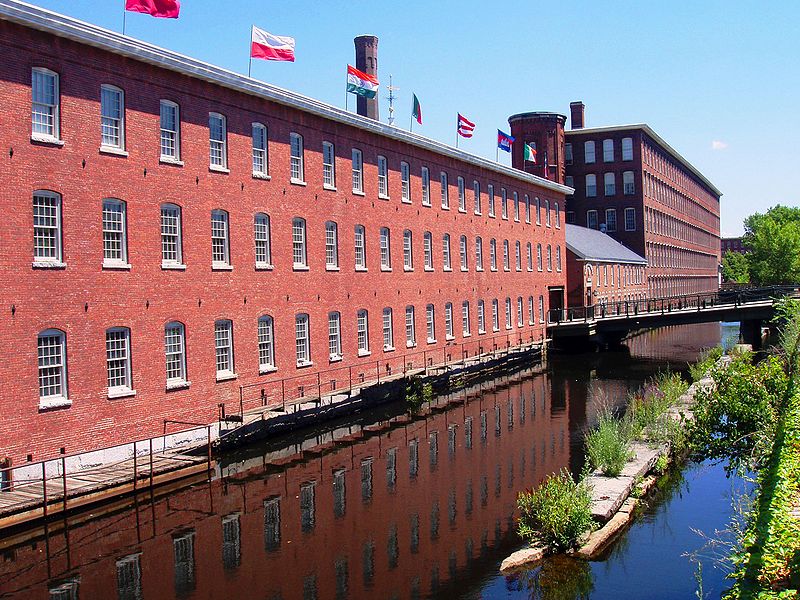
This historic mill building in Lowell, Massachusetts, is now a museum.
The North turned away from farming and increasingly toward industry. It was difficult making a living farming the rocky soil of New England, but industry flourished in the area. The number of people who worked in factories continued to rise, and so did problems connected with factory labor. Between 1820 and 1860, more and more of America’s manufacturing shifted to mills and factories. Machines took over many of the production tasks. In the early 1800s, in the mills established in Lowell, Massachusetts, the entire production process was brought together under one roof—setting up the factory system. In addition to textiles and clothing, factories now produced such items as shoes, watches, guns, sewing machines, and agricultural machinery.
As the factory system developed, working conditions worsened. Factory owners wanted their employees to work longer hours to produce more goods. By 1840, factory workers averaged 11.4 hours a day. As the workday grew longer, on-the-job accidents became more and more common. Factory work involved many dangerous conditions. For example, the long leather belts that connected the machines to the factory’s water powered driveshaft had no protective shields. Workers often suffered injuries such as lost fingers and broken bones from the rapidly spinning belts. Young children working on machines with powerful moving parts were especially at risk.
Workers often labored under unpleasant conditions. In the summer, factories were miserably hot and stifling. The machines gave off heat, and air-conditioning had not yet been invented. In the winter, workers suffered because most factories had no heating. Factory owners often showed more concern for profits than for the comfort and safety of their employees. Employers knew they could easily replace an unhappy worker with someone else eager for a job. No laws existed to regulate working conditions or to protect workers.

Steadily deteriorating working conditions in the 1830s led both skilled and unskilled workers to unionize and strike
By the 1830s, workers began organizing to improve working conditions. Fearing the growth of the factory system, skilled workers had formed trade unions—organizations of workers with the same trade, or skill. Steadily deteriorating working conditions led unskilled workers to organize as well. In the mid-1830s, skilled workers in New York City staged a series of strikes, refusing to work to put pressure on employers. Workers wanted higher wages and to limit their workday to 10 hours. Groups of skilled workers formed the General Trades Union of New York. In the early 1800s, going on strike was illegal. Striking workers could be punished by the law, or they could be fired from their jobs. In 1842, a Massachusetts court ruled that workers did have the right to strike. It would be many years, however, before workers received other legal rights.
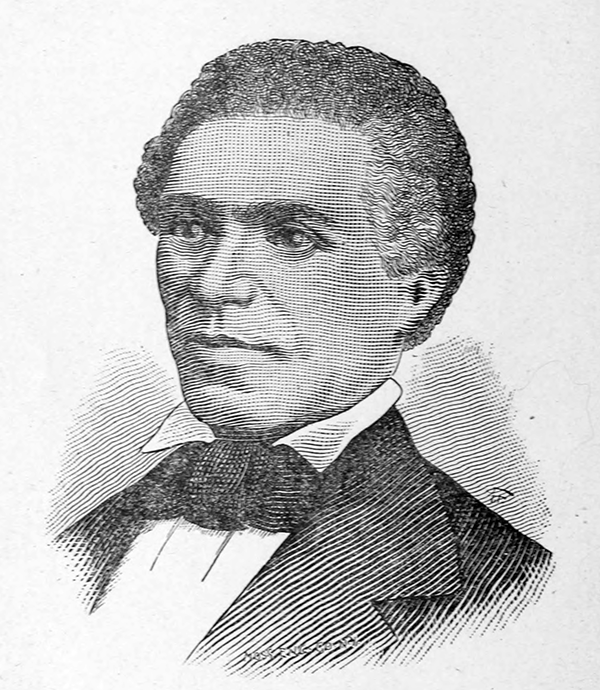
John B. Russwurm
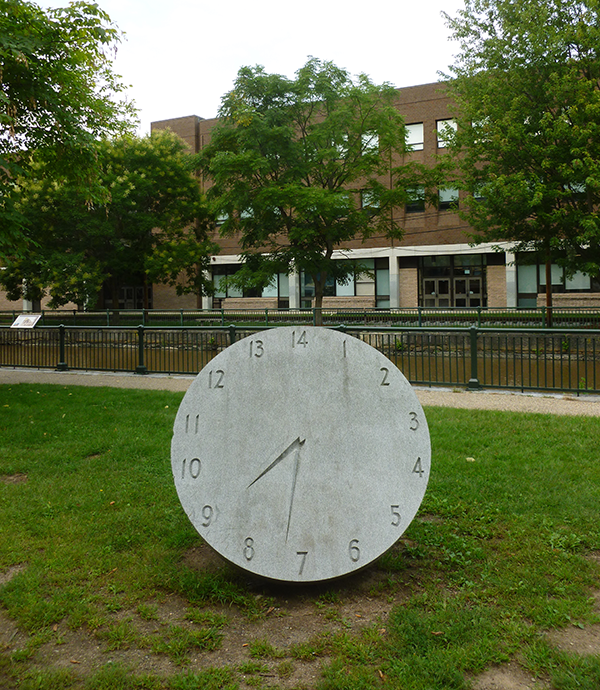
A 14-hour clock monument at Lucy Larcom Park, made by Ellen Rothenberg in 1996, memorializes the 10-hour movement of the early 1800s, spearheaded by female workers in Lowell, Massachusetts.
Slavery had largely disappeared from the North by the 1830s. However, racial prejudice, an unfair opinion not based on facts, and discrimination, unfair treatment of a group, remained in Northern states. For example, in 1821 New York eliminated the requirement that white men had to own property to vote. Yet, few African Americans were allowed to vote. Both Rhode Island and Pennsylvania passed laws prohibiting free African Americans from voting. Most communities would not allow free African Americans to attend public schools and barred them from public facilities as well. Often African Americans were forced into segregated, or separate, schools and hospitals.
A few African Americans rose in the business world. Henry Boyd owned a furniture manufacturing company in Cincinnati, Ohio. In 1827, Samuel Cornish and John B. Russwurm founded Freedom’s Journal, the first African American newspaper, in New York City. In 1845, Macon B. Allen became the first African American licensed to practice law in the United States. The overwhelming majority of African Americans, however, were extremely poor.
Women had played a major role in the developing mill and factory systems. However, employers discriminated against women, paying them less than male workers. When men began to form unions, they excluded women. Male workers wanted women kept out of the workplace so that more jobs would be available for men. Some female workers attempted to organize in the 1830s and 1840s. In Massachusetts, the Lowell Female Labor Reform Organization, founded by a weaver named Sarah G. Bagley, petitioned the state legislature for a 10-hour workday in 1845. Because most of the petition’s signers were women, the legislature did not consider the petition. Most of the early efforts by women to achieve equality and justice in the workplace failed. They paved the way, however, for later movements to correct the injustices against female workers.
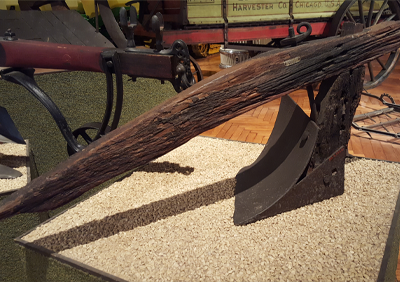
An early John Deere plow, made in Grand Detour, Illinois, around 1845, is displayed at The Henry Ford Museum in Dearborn, Michigan.
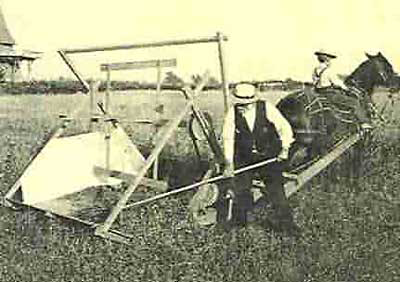
Cyrus McCormick's reaper
Meanwhile, agriculture grew in areas with fertile soil. The railroads gave farmers access to new markets to sell their products. Advances in technology allowed farmers to greatly increase the size of the harvest they produced. In the early 1800s, few farmers had ventured into the treeless Great Plains west of Missouri, Iowa, and Minnesota. Even areas of mixed forest and prairie west of Ohio and Kentucky seemed too difficult for farming. Settlers worried that their wooden plows could not break the prairie’s matted sod and that the soil was not fertile.
Two revolutionary inventions of the 1830s changed farming methods and encouraged settlers to cultivate larger areas of the West. One was the steel-tipped plow that John Deere invented in 1837. Far sturdier than the wooden plow, Deere’s plow easily cut through the hardpacked sod of the prairies. Equally important was the mechanical reaper, which sped up the harvesting of wheat, and the thresher, which quickly separated the grain from the stalk. For hundreds of years, farmers had harvested grain with handheld sickles. Cyrus McCormick’s reaper could harvest grain much faster than a hand-operated sickle. Because farmers could harvest wheat so quickly, they began planting more of it. Growing wheat became profitable.
McCormick and Deere ensured that raising wheat would remain the main economic activity in the Midwestern prairies. New machines and railroads helped farmers plant more acres in “cash” crops, crops planted strictly for sale. Midwestern farmers began growing more wheat and shipping it east by train and canal barge. Farmers in the Northeast and Middle Atlantic states increased their production of fruits and vegetables that grew well in Eastern soils.

,_Lowell,_Massachusetts.JPG)