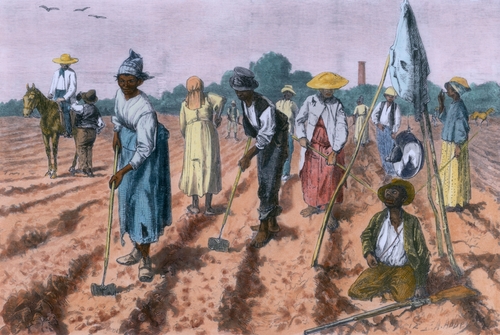
Slavery. The word alone conjures up images of enslaved men, women, and children bound by force to serve others. Slavery thrived in the American South during the 1800s. As you will read, slaves numbering in the millions, suffered extensively under their masters. However, no one can describe what it was like to be a slave better than someone who lived as one.
In the 1930s, the federal government initiated a project that would pay writers to interview and record the stories of people who had lived under slavery before the Civil War. Below are two stories from that project.
Sarah Frances
John W. Fields
Sarah Frances “Aunt Sally” Shaw Graves, Age 87
“You see there was slave traders in those days, jes’ like you got horse and mule an’ auto traders now. They bought and sold slaves and hired ‘em out. Yes’m, rented ‘em out. Allotted means somethin’ like hired out. But the slave never got no wages. That all went to the master. The man they was allotted to paid the master.”
“I was never sold. My mama was sold only once, but she was hired out many times. Yes’m when a slave was allotted, somebody made a down payment and gave a mortgage for the rest. A chattel mortgage. . . .”
“Allotments made a lot of grief for the slaves,” Aunt Sally asserted. “We left my papa in Kentucky, ‘cause he was allotted to another man. My papa never knew where my mama went, an’ my mama never knew where papa went.” Aunt Sally paused a moment, then went on bitterly. “They never wanted mama to know, ‘cause they knowed she would never marry so long she knew where he was. Our master wanted her to marry again and raise more children to be slaves. They never wanted mama to know where papa was, an’ she never did,” sighed Aunt Sally.
John W. Fields, Age 89
“In most of us colored folks was the great desire to [be] able to read and write. We took advantage of every opportunity to educate ourselves. The greater part of the plantation owners were very harsh if we were caught trying to learn or write. It was the law that if a white man was caught trying to educate a negro slave, he was liable to prosecution entailing a fine of fifty dollars and a jail sentence. We were never allowed to go to town and it was not until after I ran away that I knew that they sold anything but slaves, tobacco, and wiskey. Our ignorance was the greatest hold the South had on us. We knew we could run away, but what then? An offender guilty of this crime was subjected to very harsh punishment.”
