Why do you need to know how to write different kinds of sentences? When you know the different structures that are available for you to use, you can build sentences in different ways to achieve different effects. Use the tabs below to learn (or review) the three most common sentence varieties.
Simple Sentences
Compound Sentences
Complex Sentences
A simple sentence includes a subject and a predicate (a verb, plus the words that follow and belong with it).
The alligator dug a nest. [The subject is alligator; the predicate is dug.]
In a simple sentence, the subject, the predicate, or both may be compound--made up of more than one part.

|

|
Both alligators and sea turtles dig nests. [The compound subject is alligators and sea turtles; the predicate is dig.]
Both alligators and sea turtles dig nests and lay eggs in them. [The compound subject is alligators and sea turtles; the compound predicate is dig and lay.]
A compound sentence consists of at least two joined independent clauses. An independent clause is a group of words that contains a subject and a predicate and can stand alone as a complete sentence. Does that definition look familiar? It should! It's almost identical to the definition of a simple sentence.
Take a look at the compound sentences below.
 Carlos will bring a tossed salad, and Dwayne will make spaghetti. [two independent clauses]
Carlos will bring a tossed salad, Dwayne will make spaghetti, and Anna will bake bread. [three independent clauses]
The examples above show the most common way to join independent clauses to make a compound sentence: Add a comma and a coordinating conjunction. The coordinating conjunctions are the words and, but, for, nor, or, so, and yet.
Compound sentences can also be joined in other ways. Look at the examples below.
Carlos will bring a tossed salad; Anna will bake bread.
Carlos will bring a tossed salad; however, he will be fifteen minutes late.
A complex sentence contains one independent clause and at least one subordinate, or dependent, clause. A subordinate clause has a subject and predicate, but it cannot stand alone as a complete sentence.
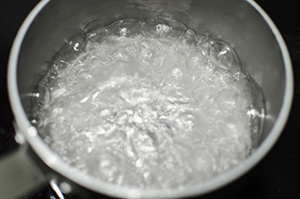 When you boil water, [subordinate clause] you kill the harmful microorganisms [independent clause] that live in it. [subordinate clause]
Common words that begin subordinate clauses are the following: although, after, because, during, since, that, when, which, while.
Question
Is this sentence simple, compound, or complex? How do you know?
After rehearsal, Janine stopped by the corner store on her way home and bought a loaf of bread and some orange juice.
Simple. The sentence consists of a single independent clause that contains the subject Janine and the compound verb stopped and bought.
