As you probably learned earlier in high school, revision requires you to "see" your written work again in a new way. Revision also requires thinking like a reader—searching for places in your narrative where you can add, omit, or change the text to create a better reading experience. The point of revising a narrative is to find ways to keep readers caring about what will happen next and, in the end, satisfied with what did happen.
If you're new to revision or if you don't have a great deal of practice with this stage in the writing process, it may help to focus on just a couple of ways to improve your draft. For this assignment, consider how much dialogue appears in your narrative and how authentic and meaningful the dialogue is likely to seem to readers. Also, assess your use of precise words and phrases and sensory language. Use the examples and questions on the tabs to learn more about these two revision skills and how you can apply them to your draft.
Dialogue
Precision and Sensory Language
Dialogue, or the speaking that takes place between characters, is an easy addition that can breathe life into your narrative. The spoken words set off by quotation marks make readers feel as if they are eavesdropping on actual conversations. Dialogue can also provide critical information that moves the narrative forward or reveals insights into character. The words that introduce or conclude the speech can also convey a great deal about the situation or the people talking.
Dialogue doesn't have to be long and complicated to achieve this. Sometimes, a little dialogue goes a long way. Look at the following example from "Peak to Peak" by Mac Goad.
 I saw the Rocky Mountains for the first time at almost twenty-two, out to find my first apartment. Before then, whenever conversation turned geographic, my confession of love for the Appalachians, and especially the section called the Blue Ridge, met the same scoffs. "Those aren't real mountains," as if only the dramatic could be important and beautiful.
Question
Even though the writer doesn't identify the speaker of the dialogue, who can you infer "scoffs" the dialogue in this sentence?
The dialogue sounds like it is a repeated expression the narrator hears from multiple people who live near and favor the Rocky Mountains over any others. The word "scoffs" allows readers to easily imagine the tone of the speaker and how the narrator feels in reaction.
Read another example of a brief but realistic exchange between two characters in Morgan Kayser's "Pillowcases."
 "You likey dog, si?" your grandfather asks. You said he didn't speak English, but he seems to know more than I do of Spanish.
"Si," I say. In a few months, you and I are going to get a German Shepherd. I want to tell him about this, and I wish you were here so you could translate.
Your grandfather points to Chico. "Perro," he says.
I remember there's a restaurant back home in Tallahassee called "Super Perros" and they serve hot dogs. It's Columbian, I think. "Perro" must mean "dog." I smile and repeat the word, and your grandfather looks satisfied.
Question
Even though only a handful of words are exchanged, what do you learn about these two characters from this dialogue?
Both characters are trying hard to make a connection despite their limited understanding of one another's language.
If you wrote your narrative about a specific personal memory, you can probably still imagine the sights, sounds, smells, textures, and even tastes involved. Your readers, on the other hand, are dependent upon your descriptions in order to "experience" the incident. This is why revising your draft for precise language and sensory details can be so helpful.
Precise words and phrases provide the exact names of things instead of general or vague ones. Read an example of this kind of precision from the narrative "Peak to Peak."
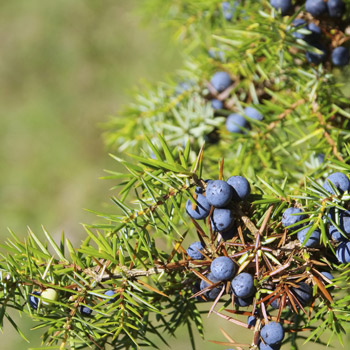 The Rockies are juniper, ponderosa pine, fir, and spruce. Quaking, quaking aspens. Western wheatgrass, dropseed, needle-and-thread. They are igneous, sedimentary, metamorphic. Sagebrush. Columbine.
The Appalachians are hickory, poplar, Virginia pine and sugar maple. Beech, hemlock, and chestnut (dead from blight). They are granite, gneiss, limestone. Mountain laurel, Johnson grass, eastern cedar, dogwood.
Question
What is the overall effect of the writer's precise labels for plants and rocks unique to the Rocky and Appalachian Mountains?
Not only do the words and phrases in the lists create beautiful sounds, but they also show the writer is an authority on this subject.
Selecting precise words and phrases that appeal directly to readers' senses can make writing much more powerful in its effect. Notice the sensory language in this passage from "Pillowcases."
In between hugs, I try to look around. A little black dog jumps from chair to chair, trying to lick people's faces. I smell rice and beans and hear chicken sizzling. It smells spicy with all the things you've taught me the names of: sofrito and adobo and sazon. Furniture is packed into the small space, funneling your family into a tight little square by the door. I grip your hand so tightly that my hand gets all sweaty and we start to slip apart.
Question
What senses does the writer appeal to in this paragraph to help readers imagine the scene?
The writer uses all five senses. Readers can see the small apartment packed with furniture and the little black dog. They can smell, taste, and even hear the cooking of the food. Finally, they can feel the wet sweatiness of the hands.
